
To find a comfortable saddle, focus on your sit bone width and choose a wider model that supports your anatomy. Consider your riding style—whether upright or aggressive—and pick a saddle that matches your position. Look for options with appropriate padding and breathable covers to prevent chafing. Adjust the saddle’s height, tilt, and fore-aft for perfect alignment. Keep exploring to discover how small tweaks can make your cycling experience truly enjoyable.

Get your wardrobe favorites delivered free with Prime
- Fast, free delivery on millions of items
- Prime Video, Amazon Music and more included
- Member-only deals all year
Key Takeaways
- Measure sit bones to select a saddle width that evenly distributes weight and enhances comfort.
- Choose saddle padding and materials based on personal preference for support, breathability, and reduced chafing.
- Adjust saddle height, tilt, and fore-aft position to align hips properly and prevent strain.
- Consider riding style and anatomy to find a saddle that minimizes pressure points and maximizes comfort.
- Test different saddles with trial periods to identify the best fit for your body and riding needs.
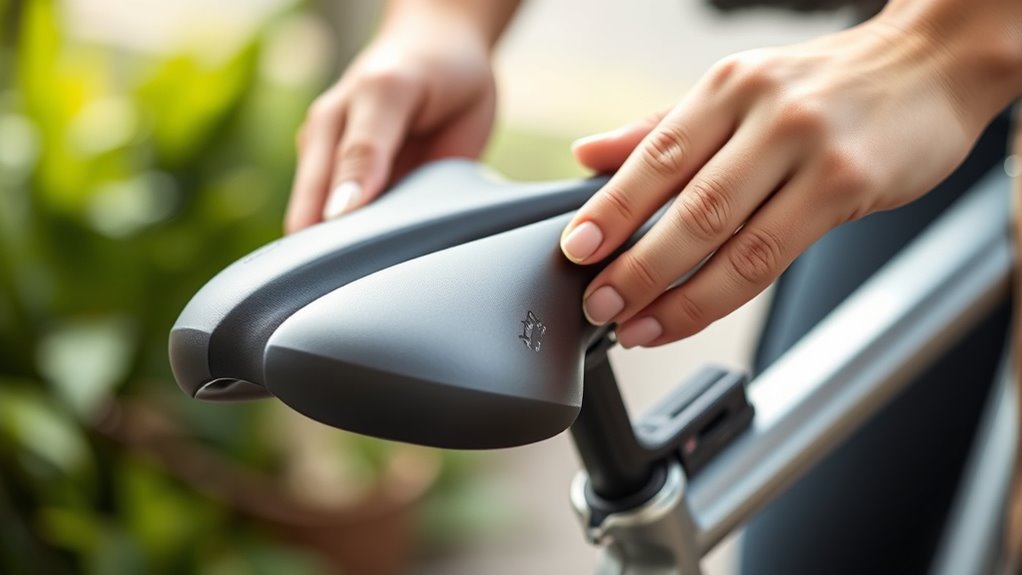
Have you ever wondered why your ride feels uncomfortable or causes soreness? The answer often lies in the saddle you’re using. Your saddle is a critical part of your bike, directly affecting your comfort, performance, and overall enjoyment. When it doesn’t fit right, every ride can become a challenge, leading to aches in your hips, groin, or lower back. Finding the perfect saddle isn’t just about choosing the most expensive one or the most popular brand; it’s about understanding your unique body and riding style.
First, recognize that women’s anatomy requires a saddle designed specifically for our shape. Women generally have wider sit bones compared to men, so a saddle that’s too narrow can cause pressure points and discomfort. Look for saddles labeled as women’s-specific or those with a wider rear section that provides better support. The width of the saddle should match the width of your sit bones, which you can determine by visiting a bike shop that offers a fitting session or using a sit bone measurement tool. Proper width ensures even weight distribution and reduces pain during longer rides. Additionally, anatomical differences play a significant role in saddle comfort and should be considered when choosing your saddle. Being aware of these differences can help you select a saddle that promotes better pressure distribution, minimizing discomfort.
Women’s sit bones are wider; choose saddles designed for our anatomy for better comfort and support.
Next, consider the saddle’s padding and material. While some riders prefer minimal padding for a more direct feel, others find extra cushioning more comfortable, especially for longer distances. However, too much padding can sometimes cause chafing or saddle sores by shifting during your ride. Look for a balance—firm enough to support your sit bones comfortably, but with enough padding to absorb road shocks. The cover material also matters; smooth, breathable fabrics can prevent chafing and help keep you cool, especially during warm weather. Choosing the right material can also influence the saddle’s durability and how well it withstands daily use. Some advanced saddle designs incorporate ventilation channels to enhance airflow and reduce heat buildup, which can be particularly beneficial for long rides.
Your riding position influences the ideal saddle choice as well. If you’re mainly commuting or riding upright, a wider, more cushioned saddle might suit you best. For road racing or more aggressive positions, a narrower, lighter saddle that minimizes weight and allows for better movement can be preferable. Adjusting the saddle height, tilt, and fore-aft position is equally important. A properly positioned saddle aligns your hips and legs, reducing strain and enhancing power transfer. Small tweaks can make a significant difference in comfort and efficiency. Additionally, paying attention to saddle design and how it complements your body can significantly improve your riding comfort.
Lastly, don’t forget that comfort can be subjective. What works for one rider might not work for another. It’s worth trying out several options and taking advantage of shops that offer trial periods or return policies. Remember, investing time in finding the right saddle can transform your cycling experience, making every ride more enjoyable and pain-free. Your perfect fit is out there—just a few adjustments away.
women's bike saddle with adjustable height
As an affiliate, we earn on qualifying purchases.
As an affiliate, we earn on qualifying purchases.
Frequently Asked Questions
How Often Should I Replace My Cycling Saddle?
You should replace your cycling saddle when it shows significant signs of wear, like cracks, tears, or loss of padding, which can cause discomfort. If you notice persistent soreness or numbness after rides, it’s time for a new saddle. Typically, high-quality saddles last around 2,000 to 3,000 miles, but daily use or rough conditions may shorten that. Regularly inspect your saddle to guarantee it remains comfortable and supportive.
Can Saddle Height Affect Comfort During Rides?
Think of your saddle height as the sail on a boat—setting it just right catches the wind smoothly. Yes, saddle height greatly affects your comfort during rides. If it’s too high or low, you may experience discomfort, numbness, or even pain. Adjusting it properly helps you pedal efficiently and reduces strain on your knees and hips. Take the time to find that perfect height for a smoother, more enjoyable ride.
Are Men’s Saddles Suitable for Women?
Men’s saddles aren’t typically suitable for women because they’re designed with different anatomical needs in mind. Women generally have wider sit bones and different pelvic structures, so a saddle that fits men may cause discomfort or even pain. To guarantee a comfortable ride, look for saddles specifically designed for women, with a wider nose, appropriate padding, and a cutout to reduce pressure in sensitive areas.
What Materials Are Best for Women’s Saddle Comfort?
Did you know that gel saddles can increase comfort by up to 40%? When choosing materials, opt for gel padding, memory foam, or foam cushions—they provide excellent shock absorption and conform to your shape. Leather offers durability but might require more maintenance. Prioritize lightweight, breathable materials to stay cool and comfortable during long rides. Your ideal saddle combines these materials to enhance stability, reduce pressure, and boost overall riding enjoyment.
How Do I Prevent Chafing With My Saddle?
Chafing can be uncomfortable, but you can prevent it by wearing moisture-wicking shorts that reduce friction. Make sure your saddle fits well and isn’t too tight or loose, as improper fit causes chafing. Applying anti-chafing creams or powders before your ride creates a protective barrier. Keep your skin clean and dry after cycling. Adjust your saddle height and position regularly to prevent unnecessary rubbing, ensuring a comfortable, chafe-free ride.
ergonomic women's bicycle saddle
As an affiliate, we earn on qualifying purchases.
As an affiliate, we earn on qualifying purchases.
Conclusion
Choosing the right saddle can boost your comfort and confidence on every ride. Remember, about 80% of female cyclists experience discomfort due to improper saddle fit, so don’t settle for less. Take the time to try different options and adjust as needed. With the right saddle, you’ll enjoy longer, more enjoyable rides—so go ahead, find what works for you and pedal with confidence!
As an affiliate, we earn on qualifying purchases.
wider sit bone bike saddle for women
As an affiliate, we earn on qualifying purchases.
As an affiliate, we earn on qualifying purchases.
Fall Picks
fall essentials
As an affiliate, we earn on qualifying purchases.