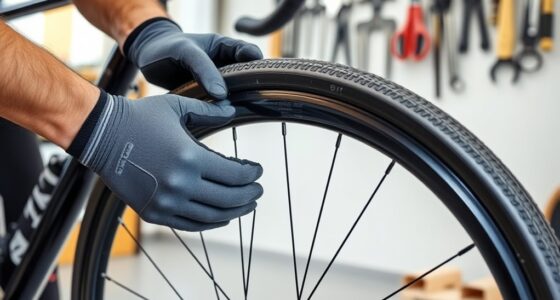

In city riding, even small wheel misalignments can cause big problems. Wobbly wheels lead to uneven tire wear, reduce your bike’s control, and can make steering less responsive. This increases safety risks, especially on rough, debris-filled streets. Misaligned wheels also cause vibrations that tire your arms and shorten tire life. Staying on top of wheel true helps you ride smoother, safer, and saves money. Keep going to discover how these issues can be minimized effectively.
Listen free for 30 days with Audible
Thousands of audiobooks and originals — cancel anytime.
As an affiliate, we earn on qualifying purchases.
Key Takeaways
- Slight wheel deviations cause significant vibrations and control issues on uneven city surfaces.
- Proper wheel truing improves steering responsiveness during frequent stops and quick maneuvers.
- Misaligned wheels accelerate tire wear, increasing the risk of flats in urban riding conditions.
- Regular wheel checks enhance safety by maintaining stability amid city debris and obstacles.
- Well-trued wheels ensure smoother, less fatiguing rides in stop-and-go city traffic.
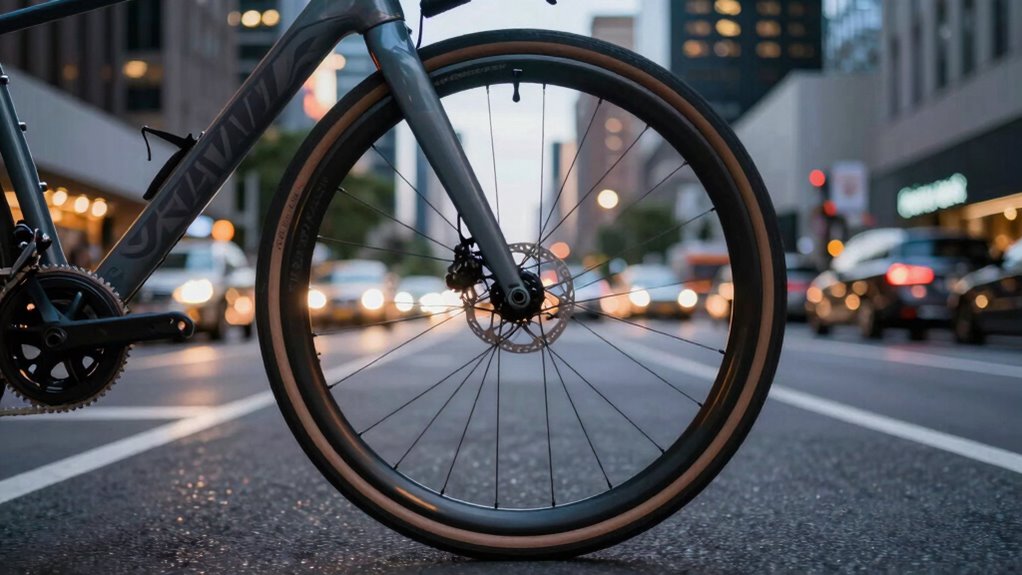
Have you ever noticed how a slightly untrue wheel can turn into a big problem when you’re steering city streets? It might seem minor at first, but in urban terrain, even small deviations can cause significant issues. City streets are full of tight corners, potholes, uneven surfaces, and sudden stops, which demand precise wheel alignment. When your wheel isn’t perfectly true, it affects how smoothly your bike rolls, and that ripple effect can lead to uneven tire wear over time. If you ignore this, you might find yourself replacing tires more often than necessary, spending extra money and risking a sudden breakdown in the middle of rush hour.
A slightly untrue wheel can cause significant issues on city streets, leading to uneven tire wear and safety risks.
In urban terrain, the pavement isn’t always smooth or predictable. Rough patches, debris, and frequent stops challenge your bike’s stability. When your wheel isn’t perfectly true, you’ll notice vibrations or wobbling that make steering more difficult. This isn’t just uncomfortable; it’s dangerous. A misaligned wheel can cause your tires to wear unevenly, which shortens their lifespan and reduces your grip on the road. Over time, uneven tire wear can even lead to flats or blowouts at the worst possible moments. So, keeping your wheel true isn’t just about comfort—it’s about safety and efficiency. Regularly checking wheel alignment can help prevent these issues before they become serious problems. Additionally, being aware of wheel balance can further improve ride quality and safety.
You might think that a small wobble isn’t a big deal, but in the city, it can translate into less control, especially when you’re trying to navigate crowded streets or make quick turns. A wheel that isn’t true makes your steering less responsive, forcing you to exert more effort to keep your balance. This added effort can tire you out faster, especially during longer commutes. Plus, the constant strain on your tires accelerates their wear, meaning you’ll need to replace them sooner. That’s not just a cost; it’s a hassle that can interrupt your daily routine. Regularly checking and adjusting your wheel true alignment can help prevent these issues before they become serious problems. Moreover, proper wheel maintenance can extend the lifespan of your entire riding setup. Recognizing subtle signs of misalignment early can save you time and money, making preventative care a smart choice for city riders.
Maintaining wheel true in an urban environment requires regular checks and adjustments. It’s a simple step that pays off in smoother rides, longer-lasting tires, and safer navigation. When your wheel is properly aligned, you get better control, less vibration, and a more comfortable ride overall. You’ll also notice improvements in braking and handling, which are crucial in city traffic. So, the next time you’re out riding, pay attention to how your bike feels—small issues like a slightly untrue wheel can have big consequences when it comes to urban terrain, tire wear, and your safety. Keeping your wheel true isn’t just maintenance; it’s a key to smarter, safer city riding.
As an affiliate, we earn on qualifying purchases.
Frequently Asked Questions
How Often Should City Bike Wheels Be Trued?
You should true your city bike wheels every 1 to 3 months, depending on your urban cycling habits. Regular wheel maintenance helps prevent uneven wear and improves ride quality. If you notice wobbling, vibrations, or uneven tire wear, it’s time for truing. In city riding, potholes and rough roads can knock wheels out of alignment more frequently, so stay vigilant and keep your wheels in top shape for a safer, smoother ride.
Can a Wheel Be Too True for City Riding?
Yes, a wheel can be too true for city riding, especially if it compromises urban durability and trail compatibility. Overly trued wheels might become too stiff, reducing shock absorption and making your ride harsher on rough city streets. You want a balance—wheels that are true enough to roll smoothly but flexible enough to handle potholes and uneven surfaces, ensuring comfort and durability without sacrificing performance.
What Tools Are Best for Truing Bike Wheels?
For truing bike wheels, you’ll want a quality spoke wrench and a truing stand. These tools help you adjust rim alignment and spoke tension precisely, ensuring a true wheel. Use the truing stand to identify wobble and side-to-side misalignment, then tighten or loosen spokes accordingly. Maintaining proper spoke tension prevents future misalignment, especially important for city riding where potholes and debris can quickly throw your wheel out of true.
Does Wheel Truing Improve Ride Comfort?
Yes, wheel truing improves ride comfort by enhancing riding smoothness. When your wheel is properly trued, it maintains consistent spoke tension, reducing vibrations and wobbling that can cause discomfort. A true wheel spins evenly, making your ride more stable and enjoyable. By regularly checking and adjusting spoke tension, you guarantee your bike responds smoothly to city roads, preventing fatigue and making your commute more comfortable overall.
How Does Truing Affect Bike Safety?
A bike with proper wheel alignment is safer because it handles predictably, reducing the risk of accidents. When your wheels are true, your tire pressure stays even, preventing blowouts or loss of control. Think of it as keeping your wheels on the straight and narrow—wobbly wheels are like a ship tossed by rough seas. Regular truing keeps your ride steady, safe, and in control, especially steering through city streets.
As an affiliate, we earn on qualifying purchases.
Conclusion
So, when you’re zooming through the city streets, don’t forget the importance of a true wheel. It guarantees smooth spins, safer stops, and a better ride overall. Keep your wheels true, and you’ll avoid unnecessary setbacks and sudden sags. Stay steady, stay sharp, and stay safe on the busy boulevards. Because in the city, a true wheel isn’t just technical — it’s your ticket to a smoother, safer, and more sensational ride.
As an affiliate, we earn on qualifying purchases.
As an affiliate, we earn on qualifying purchases.
Fall Picks
fall essentials
As an affiliate, we earn on qualifying purchases.