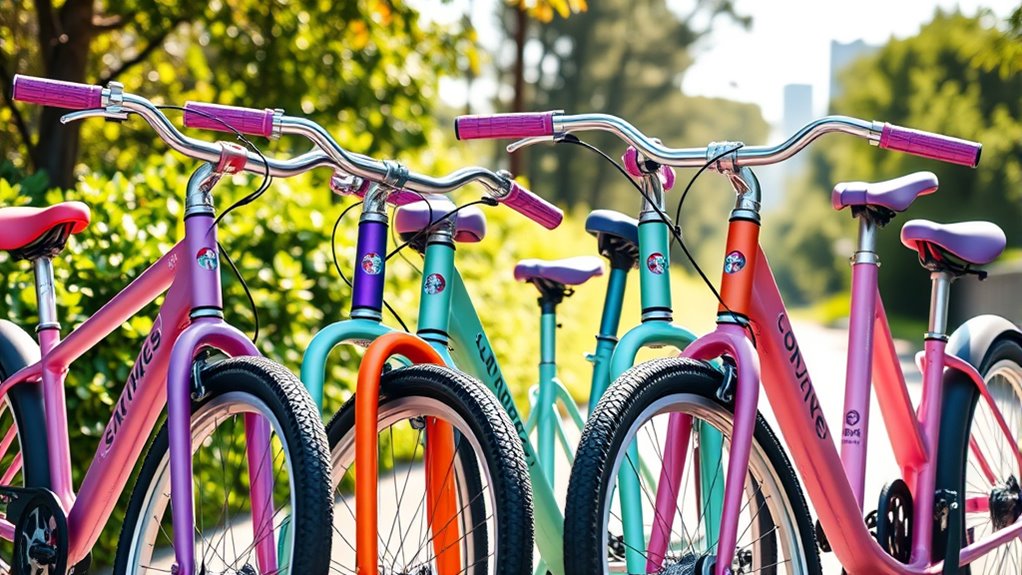

For shoppers searching for specialized womens bikes, these two choices serve different everyday needs rather than competing as like-for-like models. I’d start with the 24/26 Inch Women’s Mountain Bike for varied pavement, paths, and light off-road riding: its 21-speed Shimano shifting, front suspension, and disc brakes offer more control when routes change. The Vevor Women Bike is my pick for relaxed trips around town, especially if a basket and rear rack matter more than trail capability.

Get your wardrobe favorites delivered free with Prime
- Fast, free delivery on millions of items
- Prime Video, Amazon Music and more included
- Member-only deals all year
The main tradeoff is straightforward: the Vevor favors upright comfort and carrying convenience, while the low-step mountain bike favors terrain range and braking control. Neither description supplies a complete fit chart or bike weight, and those gaps matter when choosing a size or handling a heavy steel frame. I rank the mountain bike first for its broader riding range, then the cruiser for shoppers whose plans are mostly flat, casual, and practical.
Key Takeaways
Choose the 21-speed low-step mountain bike if your routes include hills, uneven paths, or light off-road sections; its suspension fork and dual mechanical disc brakes give it a wider use range than the Vevor cruiser.
Choose the Vevor cruiser for errands and easy rides: its upright position, front basket, and rear rack suit shopping and relaxed neighborhood trips better than a trail-oriented setup.
Low-step access differs from adjustable fit. The mountain bike is described as easy to mount and dismount, while the Vevor lists an adjustable saddle; neither listing provides enough sizing detail to confirm the right fit for every rider.
Both use steel frames, so shoppers should expect sturdiness to come with possible extra weight. Neither listing gives a bike weight, which makes lifting, carrying, or storing it harder to assess before purchase.
Check the assembly and capacity details. The mountain bike arrives 85% assembled, while the Vevor lists a 330 lb maximum load and a basket capacity of up to 110 lb; the mountain bike listing does not state a weight limit.
| 24/26 Inch Women’s Mountain Bike with Low-Step Frame |  | Best Overall for Mixed Routes | Wheel size: 24 or 26 inches | Frame: Low-step high-carbon steel | Gearing: 21 speeds with Shimano shifting | VIEW ON AMAZON | See Our Full Breakdown |
| Vevor Women Bike, 7-Speed and 1-Speed, 24-26 Inch Pink and Light Blue Beach Cruiser Bike with Basket and Rear Rack |  | Best for Errands and Relaxed Rides | Wheel size: 24 or 26 inches | Frame: Carbon steel | Gearing: One-speed or seven-speed versions | VIEW ON AMAZON | See Our Full Breakdown |
| specialized womens bike | Wheel size | Frame | Gearing | Brakes |
|---|---|---|---|---|
| 24/26 Inch Women’s Mountain Bi | 24 or 26 inches | Low-step high-carbon steel | 21 speeds with Shimano shifting | Dual mechanical disc brakes |
| Vevor Women Bike | 24 or 26 inches | Carbon steel | One-speed or seven-speed versions | — |
More Details on Our Top Picks
24/26 Inch Women’s Mountain Bike with Low-Step Frame
I rank this model first because it covers more kinds of riding than the Vevor cruiser. The 21-speed Shimano drivetrain gives riders more gear choices for hills and changing pace, while a lockout front fork lets the bike adapt between smoother roads and light rough terrain. The Vevor is the more convenient option for carrying shopping, but it is not described with suspension or comparable terrain equipment.
The low-step frame is a practical advantage for riders who prefer easier mounting and dismounting, particularly when stopping frequently or wearing everyday clothing. Dual mechanical disc brakes add a stronger braking setup than a basic cruiser description suggests, though the product information does not specify rotor dimensions or brake performance in particular conditions. The bike is presented for commuting and light off-road use—not demanding trails, jumps, or technical mountain riding.
There are meaningful compromises. The steel frame may add weight, but no total bike weight is supplied, and the listing does not state a maximum load. It arrives 85% pre-assembled, so buyers should plan for remaining assembly and setup; that may be inconvenient for anyone who cannot adjust a bike or arrange help. The 24- and 26-inch wheel choices also make checking fit important, and the description cautions that the design may not suit very tall riders. Compared with the Vevor, this is the stronger pick for variable terrain, but the Vevor wins for ready-to-use cargo features and stated carrying limits.
Pros:- Low-step frame makes mounting and dismounting easier.
- 21-speed Shimano shifting offers more gearing choices than the Vevor’s stated one- or seven-speed options.
- Dual mechanical disc brakes and a lockout front fork suit varied routes better than a basic cruiser setup.
- Designed for commuting and light off-road riding.
Cons:- Arrives only 85% pre-assembled, so setup is still required.
- No maximum load or bike weight is provided, and very tall riders may find the design unsuitable.
- Its steel frame may be heavy, and the description does not support use on demanding trails.
Best for: Riders who want a low-step bike for commuting, paved paths, hills, and occasional light off-road routes, and who can complete or arrange the remaining assembly.
Not ideal for: Riders seeking a technical trail bike, a lightweight bike for frequent carrying, a clearly stated high-capacity model, or a bike with confirmed sizing for a very tall rider.
- Wheel size:24 or 26 inches
- Frame:Low-step high-carbon steel
- Gearing:21 speeds with Shimano shifting
- Brakes:Dual mechanical disc brakes
- Suspension:Lockout front suspension fork
- Assembly:85% pre-assembled; remaining setup required
- Stated riding use:City commuting and light off-road riding
- Capacity and weight:Maximum load and total bike weight not stated
Our verdict“I’d choose this low-step mountain bike over the Vevor when route flexibility, gearing, and braking matter more than built-in cargo storage.”
Vevor Women Bike, 7-Speed and 1-Speed, 24-26 Inch Pink and Light Blue Beach Cruiser Bike with Basket and Rear Rack
The Vevor earns its place by prioritizing easy-paced comfort and carrying utility, not by trying to match the mountain bike’s terrain range. Its upright handlebar and adjustable saddle support a relaxed riding position, and the front basket plus rear rack make it the more useful choice for shopping or carrying everyday items. The mountain bike has more gears and suspension, but its description does not list either storage feature.
Buyers should pay attention to the drivetrain wording: the product is described as available in seven-speed and one-speed versions. Those are meaningfully different choices. A one-speed setup is simplest for flat, uncomplicated routes; the seven-speed version offers more flexibility when inclines or pace changes enter the picture. The listing does not clarify which version is included in every configuration, so I would verify the selected option before buying rather than assume all units have seven gears.
The Vevor states a 330 lb maximum load and a basket capacity of up to 110 lb, giving it more explicit capacity information than the mountain bike listing. Still, these figures do not resolve fit or handling questions, and the basket limit should not be mistaken for a recommendation to carry heavy loads without checking stability. Its steel frame may be durable, but also potentially heavy; no bike weight is supplied. With no suspension mentioned, this cruiser is a weak match for bumpy routes. Compared with the mountain bike, it is the better errand companion and the less capable choice for steep, uneven, or off-road riding.
Pros:- Upright handlebar and adjustable saddle support a relaxed riding posture.
- Front basket and rear rack provide more built-in cargo utility than the mountain bike.
- The listing states a maximum load of 330 lb and a basket capacity of up to 110 lb.
- Available in one-speed and seven-speed versions to suit different route preferences.
Cons:- No suspension is listed, limiting comfort and control on rough terrain.
- Steel construction may make the bike heavy, and its total weight is not supplied.
- Only pink and light blue are listed, and buyers should confirm which gearing version they are selecting.
Best for: Riders who mainly take relaxed neighborhood trips or shop by bike and value an upright position, adjustable saddle, front basket, and rear rack.
Not ideal for: Riders who need suspension or trail-oriented control, regularly climb steep hills on a one-speed configuration, or want a bike with more color choices and stated rough-road capability.
- Wheel size:24 or 26 inches
- Frame:Carbon steel
- Gearing:One-speed or seven-speed versions
- Riding position:Upright handlebar with adjustable saddle
- Storage:Front basket and rear rack
- Maximum load:330 lb
- Basket capacity:Up to 110 lb
- Colors listed:Pink and light blue
- Suspension and weight:Suspension and total bike weight not stated
Our verdict“I’d pick the Vevor over the mountain bike for flat, casual rides and errands where upright comfort and cargo space matter most.”

How We Picked
I ranked these options by how well each one serves a distinct type of women’s riding, not by treating the word “women’s” as a guarantee of fit. I looked at the stated frame design, riding position, gearing, brakes, suspension, carrying features, and the level of practical information available. That produces a clear split: the low-step mountain bike is the more adaptable choice for changing terrain, while the Vevor is more purpose-built for easy-paced trips with cargo.
For the top position, I gave weight to useful range across surfaces. Twenty-one speeds, a lockout front suspension fork, and dual mechanical disc brakes make the mountain bike more capable when a route includes climbs, rough patches, or wet-weather stops. These parts do not make it a full trail bike, and the description only supports light off-road use. Assembly and incomplete fit information also count against it.
The Vevor earns a separate recommendation for its practical cruiser setup. An upright handlebar, adjustable saddle, basket, and rear rack make it more naturally suited to neighborhood riding and shopping. Its stated load figures add useful buying information, but its one-speed or seven-speed variants, possible steel-frame weight, and lack of suspension limit its appeal on hills and rough surfaces. I’ve kept the recommendations tied to the supplied specifications; details such as exact sizing ranges and total bike weight are not provided.
| specialized womens bike | Frame |
|---|---|
| 24/26 Inch Women’s Mountain Bi | Low-step high-carbon steel |
| Vevor Women Bike | Carbon steel |
Factors to Consider When Choosing Specialized Womens Bikes
I’d choose between these bikes by starting with the roads and errands I actually plan to ride, then checking fit and setup. The mountain bike is a better match for varied surfaces; the Vevor is a more natural fit for relaxed riding with cargo. The following differences can help narrow the choice before focusing on color or accessories.
Match the bike to the route
For smooth neighborhood streets and short trips to shops, the Vevor cruiser’s upright posture and storage are more directly useful than the mountain bike’s suspension. A basket and rack can make errands easier without adding a separate carrier, though loads still affect steering and balance. If a route includes hills, broken pavement, gravel paths, or occasional light off-road sections, the low-step mountain bike has the better equipment match: it lists 21 speeds and a lockout front fork. Its stated purpose is light off-road riding, not technical trail use, so I would not treat the suspension as proof that it suits demanding terrain.
Choose gearing for hills and simplicity
The Vevor is listed in both one-speed and seven-speed versions, and that distinction changes its usefulness. A single gear keeps the setup straightforward for flat routes, but gives less help when climbing or adjusting cadence. The seven-speed option should offer more flexibility, although the listing does not specify which configuration comes with every selection. The mountain bike’s 21-speed Shimano shifting is the widest gearing range in this comparison. More gears can help a rider manage changing gradients, but they also require sensible shifting and routine drivetrain care. I’d prioritize range for rolling routes and simplicity for short, flat rides.
Check frame access, fit, and wheel choice
The mountain bike’s low-step frame is intended to make getting on and off easier, while the Vevor emphasizes an adjustable saddle and upright handlebar. Those features address different needs: frame access can help when stopping often, and saddle adjustment helps set riding height. Neither description supplies a detailed inseam chart or full geometry measurements. Both list 24- and 26-inch wheel options, but wheel size alone does not confirm that a frame fits a particular rider. I’d check the seller’s sizing guidance and the bike’s stand-over and reach dimensions before choosing, especially for riders at the shorter or taller end of the range.
Compare braking and suspension realistically
The mountain bike lists dual mechanical disc brakes and a lockout front suspension fork; the Vevor description does not mention suspension or a comparable brake specification. That makes the mountain bike better equipped on paper for variable conditions and light rough ground. A lockout fork can reduce fork movement on smoother stretches, while front suspension can soften some impacts on uneven paths. These features do not replace careful braking or make the bike suitable for severe trails. The Vevor’s simpler cruiser setup may be adequate for calm, level routes, but shoppers who expect rough surfaces should favor the bike whose equipment is specifically described for them.
Account for carrying needs and stated capacity
For routine cargo, the Vevor is the clear choice: it includes a front basket and rear rack, with a stated 330 lb maximum load and basket capacity up to 110 lb. The mountain bike’s listing does not provide a maximum load or cargo accessories. Capacity figures are useful, but they do not guarantee that every load will feel stable; I’d keep heavy items low and balanced and check the seller’s instructions. If shopping trips are central to the decision, the Vevor’s ready-made storage is a real advantage. For a commute that prioritizes changing terrain over cargo, the mountain bike’s equipment may matter more.
Plan for steel-frame weight and assembly
Both models use steel frames, and neither listing states the bike’s total weight. Steel may appeal to buyers looking for a sturdy frame, but the missing weight figure leaves an important practical question unanswered for anyone who must carry a bike upstairs or lift it onto a rack. The mountain bike also arrives 85% pre-assembled, which means some setup remains. Buyers who are not comfortable checking brakes, shifting, and fasteners should plan to have the final assembly inspected or completed by a capable mechanic. The Vevor description does not provide an equivalent assembly figure, so I would confirm what setup is required before ordering that model too.
Frequently Asked Questions
Which of these bikes is better for commuting?
I’d choose based on the commute itself. The low-step mountain bike is the stronger option for routes with hills, uneven pavement, or light off-road sections because it lists 21-speed Shimano shifting, a lockout front fork, and dual mechanical disc brakes. The Vevor makes more sense for a short, mostly flat commute where an upright position and built-in basket or rack are useful. Neither listing provides a complete fit chart, so I’d confirm sizing before choosing either for daily use.
Is the Vevor available with more than one gear option?
Yes. The supplied product information describes both a one-speed and a seven-speed version. The single-speed configuration is suited to simpler, flatter routes, while seven speeds give riders more choices when pace or gradient changes. The listing does not make clear which version applies to every purchase selection, so I’d verify the chosen configuration before ordering. That gearing difference is especially relevant when comparing the Vevor with the mountain bike, which is listed with 21 speeds.
Can the mountain bike be used on trails?
The description supports city commuting and light off-road riding, and its front suspension fork and disc brakes give it more varied-terrain equipment than the Vevor cruiser. I would limit expectations to paths and modest rough sections rather than demanding technical trails. No detailed trail rating, fork travel, or component durability information is supplied. Riders planning challenging routes should look for a model explicitly specified for that level of riding and confirm that its frame, brakes, and suspension suit the intended use.
Which bike is easier to get on and off?
The mountain bike is specifically described with a low-step frame intended to make mounting and dismounting easier. The Vevor lists an adjustable saddle and upright handlebar, but its description does not identify a low-step frame. That gives the mountain bike the clearer advantage for frame access, while the Vevor may appeal to riders who value an upright cruiser posture. Neither description gives enough geometry or size information to guarantee an easy fit for every rider, so I’d check the frame measurements before purchase.
Which model is better for carrying shopping?
The Vevor is the better match for shopping because it includes both a front basket and a rear rack, and its listing states a 330 lb maximum load and basket capacity up to 110 lb. The mountain bike description does not list cargo accessories or a maximum load. Those figures do not eliminate handling concerns: heavy or uneven cargo can affect steering and balance, so I’d follow the maker’s load guidance and distribute items carefully. For errands, the Vevor’s built-in storage is its clearest advantage over the mountain bike.
Conclusion
I’d recommend the low-step mountain bike to riders who want one bike for commuting, rolling routes, and occasional light off-road use. Its 21-speed gearing, suspension fork, and dual mechanical disc brakes give it the broader riding range, although assembly remains and the missing weight and capacity details deserve attention. For shoppers who mainly ride flat streets and want to carry everyday items, I’d choose the Vevor cruiser for its upright setup, basket, rack, and stated load figures. Check the selected Vevor gearing version and confirm fit for either bike before buying. In this comparison, the deciding question is whether you value terrain flexibility or casual comfort with cargo.