When choosing between saddle, frame, and handlebar bags, consider what you need to carry and how you want to stay organized. Saddle bags sit under your seat and are great for tools and snacks, while frame bags fit within the bike’s triangle for heavier gear like jackets or camera gear. Handlebar bags give quick access to essentials like maps or snacks. Proper selection helps protect your gear from weather and keeps your ride balanced—keep exploring to learn more.
Key Takeaways
- Saddle bags attach under the seat, ideal for tools, snacks, and lightweight essentials.
- Frame bags fit within the bike frame triangle, providing balanced weight for heavier or bulky items.
- Handlebar bags offer quick access to frequently used items like maps, snacks, or electronics.
- Waterproof features such as sealed seams and waterproof zippers protect gear from rain and splashes.
- Proper selection of bags improves ride handling, keeps gear dry, and organizes essentials efficiently.
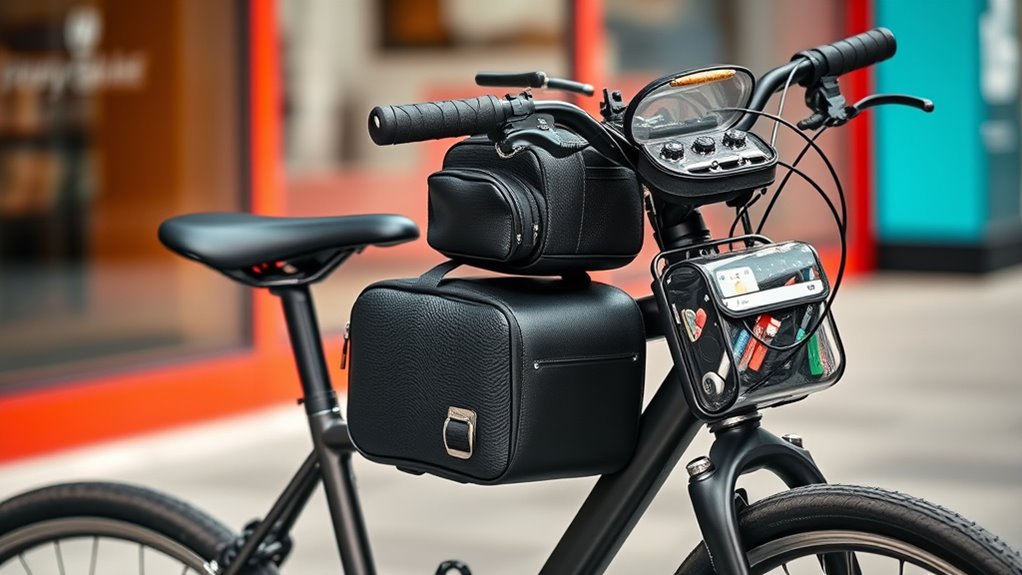
Choosing the right bag can make a significant difference in both style and functionality. Whether you’re planning a quick day ride or a multi-day adventure, selecting the proper bikepacking essentials guarantees you stay organized, comfortable, and prepared. Saddle, frame, and handlebar bags each serve a unique purpose, so understanding their benefits helps you optimize your setup. When it comes to bikepacking essentials, waterproof storage becomes a top priority. You want your gear to stay dry regardless of weather conditions, and the right bags can provide that protection without adding unnecessary weight or bulk.
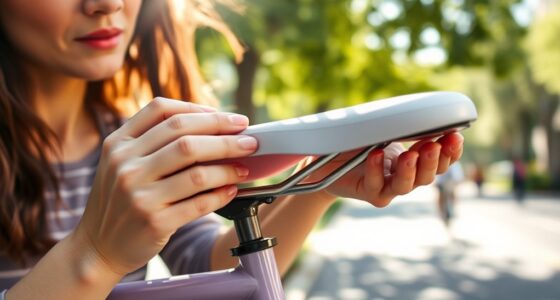
Saddle bags are a classic choice for carrying essentials like tools, spare tubes, and snacks. They attach underneath your seat, freeing up space elsewhere on your bike and keeping weight low for better balance. Modern saddle bags are designed with waterproof storage in mind, often featuring water-resistant zippers and sealed seams that keep moisture out. This is especially important if you’re riding in unpredictable weather or crossing streams. A waterproof saddle bag helps guarantee your bikepacking essentials stay dry and accessible, even during rainstorms or muddy conditions. Their compact size makes them perfect for lightweight setups, but they still offer enough space for the basics.
Modern waterproof saddle bags keep your essentials dry and accessible in all weather conditions.
Frame bags are versatile and expand your carrying capacity without interfering with your ride. They fit within the triangle of your bike frame, making them highly accessible and balanced. Frame bags are ideal for storing heavier or bulkier items like a spare jacket, camera gear, or extra food. Since they are positioned centrally, they help distribute weight evenly, improving handling on rugged terrains. Many frame bags now feature waterproof storage options, which is vital for keeping delicate electronics or clothing dry. Look for bags with sealed seams and waterproof zippers to maximize protection from the elements. With a good frame bag, you can carry your bikepacking essentials confidently, knowing your gear is shielded from rain, mud, or splashes.
Handlebar bags are perfect for quick access to frequently used items such as maps, cameras, or snacks. They attach directly to your handlebars, making them easy to reach without stopping. If you’re into longer rides or bikepacking trips, a handlebar bag with waterproof storage can be a game-changer. It allows you to keep your electronics and valuables dry and accessible, even in sudden downpours. Many handlebar bags are designed with roll-top closures or waterproof zippers, which seal out water effectively. Since they sit at the front of your bike, they also help balance weight distribution when paired with other bags. Choosing a handlebar bag with waterproof features guarantees your essentials stay safe and dry, no matter what the weather throws at you.
waterproof bike saddle bag
As an affiliate, we earn on qualifying purchases.
As an affiliate, we earn on qualifying purchases.
Frequently Asked Questions
How Do I Secure a Bag to Prevent Theft During Stops?
To prevent theft during stops, you should use locking mechanisms on your bags whenever possible. Secure zippers and straps, and consider locking your bag to your bike frame with a cable lock or chain. Employ theft deterrent strategies like hiding valuables and choosing discreet bag placements. Always stay alert and keep an eye on your bike, especially in busy or high-crime areas, to minimize theft risks effectively.
Which Bag Type Is Best for Long-Distance Touring?
Think of your bike as a vessel of adventure; for long-distance touring, a frame bag is your steady anchor. It offers ample gear capacity, balancing weight distribution for bike packing comfort. This bag type keeps your essentials close and stable, allowing you to focus on the journey ahead. By choosing a durable, spacious frame bag, you make sure your gear stays secure and accessible throughout your ride’s epic miles.
Can I Use a Saddle Bag With a Carbon Fiber Frame?
Yes, you can use a saddle bag with a carbon fiber frame, but you need to verify carbon fiber compatibility first. Make sure the saddle bag installation system is compatible with your bike’s seat rails and frame. Some saddle bags may require additional straps or adapters for secure attachment. Always verify the weight limits to prevent damage to your carbon fiber frame and ensure safe, stable riding.
Are Handlebar Bags Suitable for All Bike Types?
Handlebar bags are versatile and suitable for most bike types, including mountain biking and city commuting. They offer quick access to essentials and stay secure during rides. However, for rough mountain trails, guarantee the bag is firmly attached and durable. In city commuting, they provide convenience without adding much weight. Just check the bag’s compatibility with your handlebars and riding style to ensure ideal fit and performance.
How Weather-Resistant Are Different Bag Materials?
Ever wondered if your bag can handle a sudden rainstorm? Different materials offer varying water resistance, with waterproof fabrics providing the best protection. Water resistance ratings help you compare durability against moisture; higher ratings mean better resistance. While some fabrics can withstand light drizzle, others are fully waterproof. To keep your gear dry, choose bags made from high-rated waterproof fabrics—especially if you ride in unpredictable weather regularly.
bike frame bag with waterproof zipper
As an affiliate, we earn on qualifying purchases.
As an affiliate, we earn on qualifying purchases.
Conclusion
As you weigh your options, remember that each bag type offers unique advantages—and secrets. Will the saddle bag’s snug fit hold everything you need, or will the frame bag’s accessibility surprise you? And what about the handlebar bag’s quick access—could it be your game-changer? The choice isn’t just about capacity; it’s about what’s waiting to be discovered on your next ride. Are you ready to open the perfect bag for your journey ahead?
handlebar bag for quick access
As an affiliate, we earn on qualifying purchases.
As an affiliate, we earn on qualifying purchases.