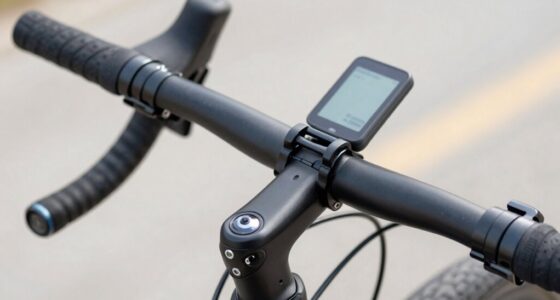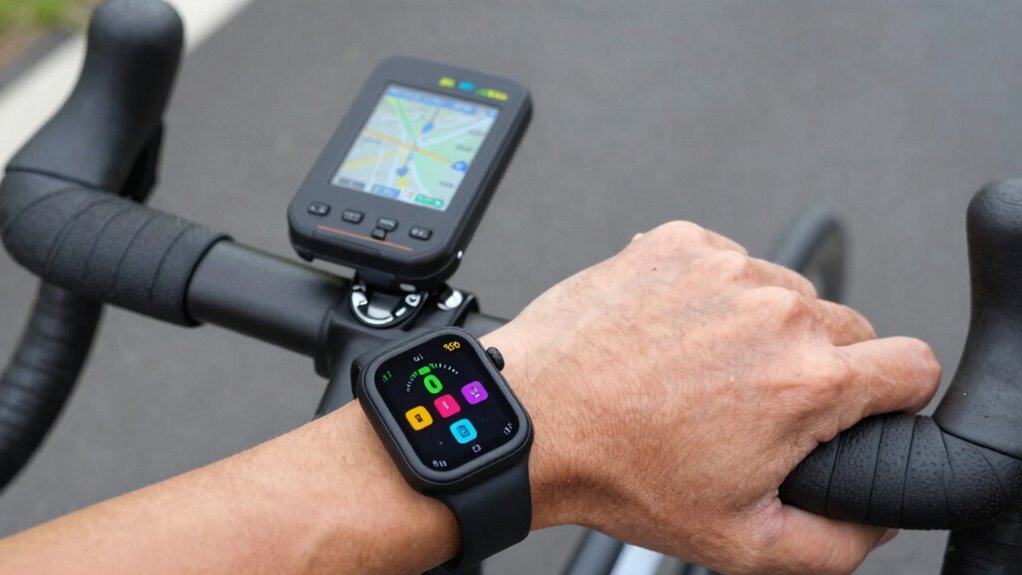

If you want an all-day fitness tracker that’s lightweight and easy to use, a smartwatch with cycling features may suit you best. It’s great for quick glances, multitasking, and tracking more than just bike data. On the other hand, if you prefer detailed ride metrics, GPS accuracy, and reliable navigation for extended rides, a bike computer is the way to go. Want to find out which option matches your cycling style? Keep exploring for more insights.

Get your wardrobe favorites delivered free — and shop member deals
- Fast, free delivery on millions of items
- Access to Prime Big Deal Days deals on October 6–7
- Prime Video, Amazon Music and more included
Key Takeaways
- Choose a smartwatch for versatile, lightweight use and quick data access during various activities, including casual cycling.
- Opt for a bike computer for precise GPS, detailed ride metrics, and longer battery life on extended or challenging rides.
- Smartwatches offer easier usability and integration with daily wear, while bike computers provide comprehensive analytics for serious cyclists.
- Consider environmental factors: bike computers excel in accuracy under challenging conditions, unlike smartwatches with limited GPS precision.
- Select based on your riding style—casual riding benefits from smartwatches, while competitive or long-distance cycling favors dedicated bike computers.
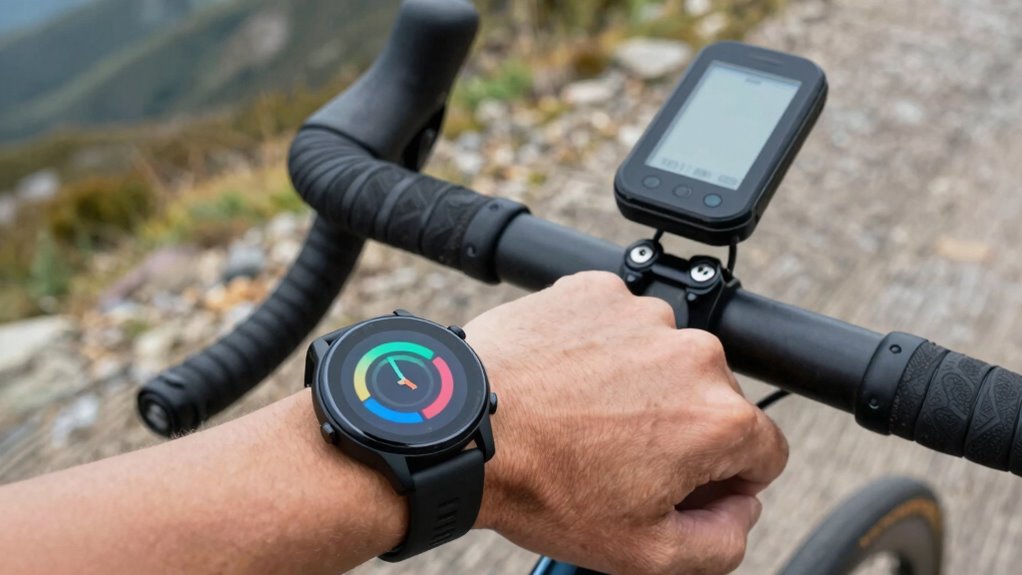
When choosing between cycling smartwatches and bike computers, understanding their differences can help you make the best decision for your riding needs. Both devices offer valuable features, but they serve different purposes and suit different riding styles. For example, cycling smartwatches often excel in heart rate monitoring, providing you with real-time data on your exertion levels. They typically include wrist-based sensors that track your heart rate continuously, which is helpful for maintaining specific training zones. Bike computers, on the other hand, generally focus on GPS accuracy, offering precise route navigation, speed tracking, and distance measurement. If you’re someone who values detailed ride metrics and navigation, a bike computer might be more fitting.
Smartwatches tend to be more adaptable since they double as everyday wearables. They’re lightweight, easy to carry, and often include fitness tracking features beyond cycling, like step counting and sleep monitoring. However, their GPS accuracy can sometimes be less precise than dedicated bike computers, especially in dense urban areas or heavily wooded regions where signal interference is common. This can affect route tracking and elevation data, which are critical if you’re training for specific goals or exploring unfamiliar trails. Moreover, many smartwatches are designed with multi-sport tracking in mind, making them versatile for various athletic activities. Additionally, some smartwatches incorporate Biodiversity awareness features that encourage outdoor exploration and environmental consciousness, aligning with sustainable living practices. Meanwhile, bike computers are designed specifically for cycling. They usually feature high-sensitivity GPS modules optimized for accuracy, providing reliable data regardless of environmental conditions.
Another key difference lies in usability. Cycling smartwatches are generally more user-friendly, with touchscreens and simple interfaces suitable for quick glances during a ride. They’re more compact and less intrusive, allowing you to keep your focus on the road or trail. Bike computers may have larger screens with more detailed displays, but they can sometimes be bulkier and require more setup. If you prefer a device that integrates seamlessly into your ride without distraction, a smartwatch might be better. Conversely, if you want a dedicated device with extensive data options, a bike computer offers more customization and detailed analytics.
Battery life is also worth considering. Smartwatches often need to be charged more frequently, especially if they’re tracking heart rate and GPS continuously. Bike computers typically have longer-lasting batteries designed to withstand longer rides without needing a recharge. This makes them ideal for extended adventures or multi-day events. Additionally, some bike computers are equipped with advanced navigation features that enhance your riding experience in unfamiliar areas. To sum up, your choice hinges on what you prioritize: if heart rate monitoring and multi-sport versatility matter most, a smartwatch makes sense. If GPS accuracy and detailed ride metrics are your focus, then a bike computer will serve you better. Ultimately, understanding these differences helps you select a device that complements your riding style and enhances your cycling experience.
cycling smartwatch with heart rate monitor
As an affiliate, we earn on qualifying purchases.
As an affiliate, we earn on qualifying purchases.
Frequently Asked Questions
Can Cycling Smartwatches Track Outdoor and Indoor Cycling Activities Accurately?
Cycling smartwatches can track outdoor and indoor cycling activities reasonably well, especially with features like heart rate monitoring and activity synchronization. They use built-in sensors and GPS for outdoor rides, ensuring accurate data. For indoor cycling, they rely on accelerometers and sensors to monitor your effort. While they offer good overall tracking, you might find bike computers more precise for detailed metrics, especially in challenging terrains or rigorous training.
Do Bike Computers Have Better GPS Accuracy Than Smartwatches?
Bike computers generally offer better GPS accuracy than smartwatches, especially for urban commuting and mountain biking. You’ll find they provide more precise route tracking, vital on tricky terrains or crowded city streets. Smartwatches are convenient but may struggle with signal loss in dense environments or rugged trails. If pinpoint GPS detail matters most to you, especially for mountain biking or steering through urban areas, a dedicated bike computer’s accuracy will serve you better.
Are Cycling Smartwatches Compatible With Third-Party Fitness Apps?
Imagine riding through a vibrant landscape, your smartwatch seamlessly syncing with your favorite fitness apps. Yes, cycling smartwatches generally support third-party fitness app integration, making it easier to track your progress. They’re designed for wearable device compatibility, so you can connect with various platforms like Strava or TrainingPeaks. This guarantees your data flows smoothly, giving you a complete picture of your ride without missing a beat.
How Long Do Bike Computer Batteries Typically Last During Long Rides?
During long rides, bike computer batteries typically last between 10 to 20 hours, depending on the model and usage. You can prolong battery life by using power management features, like dimming the screen or turning off unnecessary sensors. Regularly check your device’s battery status before heading out, and consider carrying a portable charger if your ride exceeds the normal battery duration. Proper power management ensures your bike computer stays functional throughout your adventure.
Can Both Devices Be Used for Multi-Sport Tracking Beyond Cycling?
Sure, both devices can handle multi-sport tracking, but don’t expect them to be Olympic multi-athletes overnight. Cycling smartwatches shine with cross-training capabilities, tracking running, swimming, and more. Bike computers, while mainly for cycling, increasingly incorporate multi-sport features, but their primary focus remains on bike data. If versatility and cross training are your goals, a smartwatch offers better multi-sport versatility, making it your go-to for diverse workouts.
GPS bike computer for long rides
As an affiliate, we earn on qualifying purchases.
As an affiliate, we earn on qualifying purchases.
Conclusion
Ultimately, whether you choose a cycling smartwatch or a bike computer depends on your riding style and needs. It’s almost poetic how the right device can seamlessly enhance your ride, turning technology into a natural extension of your journey. Sometimes, it’s the small details—like tracking your heart rate or logging your route—that make all the difference. In the end, it’s about finding the perfect fit that feels like it was meant to be, inspiring your next adventure.
multi-sport fitness tracker for cycling
As an affiliate, we earn on qualifying purchases.
As an affiliate, we earn on qualifying purchases.
best bike computer with navigation
As an affiliate, we earn on qualifying purchases.
As an affiliate, we earn on qualifying purchases.
Fall Picks
fall essentials
As an affiliate, we earn on qualifying purchases.