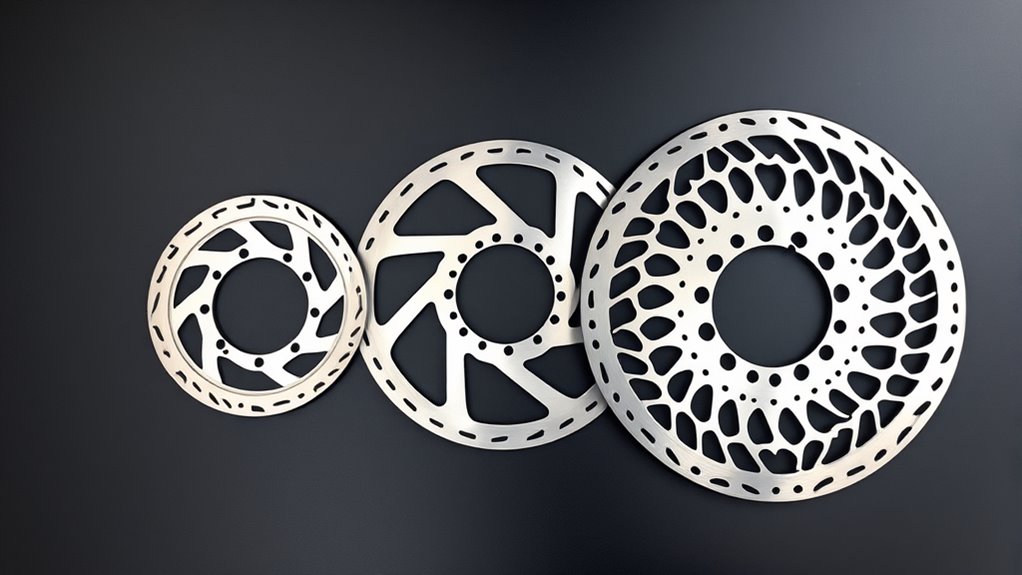

Choosing between 140mm, 160mm, and 180mm rotors affects your bike’s stopping power, heat dissipation, and handling. Smaller rotors like 140mm are lighter and suit lighter riding or daily errands. Larger rotors such as 180mm provide more stopping force and better heat management for downhill or heavy loads. The 160mm size offers a balance between performance and weight. Understanding these differences helps you pick the best option for your riding style; keep going to explore more.
Key Takeaways
- Larger rotors (160mm, 180mm) provide greater stopping power and heat dissipation compared to smaller ones like 140mm.
- Increasing rotor size may require different calipers or adapters for compatibility.
- Bigger rotors add weight, which can affect acceleration and handling.
- Smaller rotors are lighter and suitable for lighter, everyday riding, but may heat up faster.
- Choosing rotor size depends on riding conditions, load, and desired braking performance.
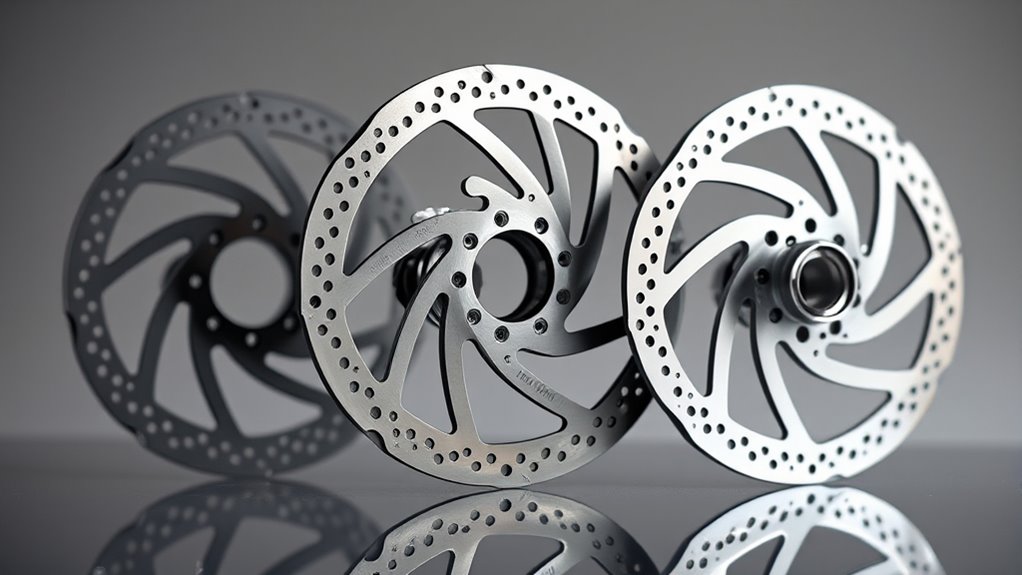
Have you ever wondered how rotor size impacts the performance of your vehicle or machinery? The size of the rotor plays an important role in how your braking system responds, affecting everything from stopping power to heat dissipation. When you choose between 140mm, 160mm, or 180mm rotors, you’re fundamentally making decisions that influence brake performance and installation considerations. Larger rotors tend to offer better braking because they provide a bigger surface area for brake pads to grip, which helps in generating more stopping force. This means that if you’re tackling hilly terrain, carrying heavy loads, or engaging in high-performance riding, opting for a bigger rotor can considerably improve your braking experience. However, it’s vital to understand that bigger isn’t always better without considering other factors.
Installation considerations become more prominent as rotor size increases. A 180mm rotor, for instance, may require different calipers or adapters compared to a 140mm model. You need to make sure that your wheel hubs and brake mounts are compatible with the larger size before making a switch. Improper installation can lead to uneven brake pad wear, reduced brake efficiency, or even damage to your bike or machinery. Additionally, larger rotors add weight, which might affect acceleration and handling, especially if your setup isn’t designed to accommodate the extra mass. It’s wise to check whether your existing calipers can handle bigger rotors or if you’ll need upgrade components. Sometimes, choosing a rotor size involves balancing improved brake performance with the practicality of installation and weight considerations.
Furthermore, rotor size influences heat dissipation, which directly impacts brake fade during extended use. Larger rotors dissipate heat more effectively, helping prevent brake fade on long descents or during prolonged braking sessions. This means you can brake harder and more confidently without losing stopping power. Conversely, smaller rotors may heat up quickly, leading to decreased performance and increased wear on brake pads. So, when selecting a rotor size, think about your typical riding or operational conditions. If you’re riding aggressively or doing heavy-duty work, bigger rotors can offer more consistent braking, but only if your setup supports their installation. In addition, proper maintenance of brake components is essential to ensure optimal performance with any rotor size you choose.
Frequently Asked Questions
Do Larger Rotors Improve Braking Performance?
Yes, larger rotors improve braking performance by increasing braking power and heat dissipation. With a bigger surface area, they generate more friction, which helps you stop faster and more efficiently. Additionally, they disperse heat better, reducing the risk of brake fade during extended or intense rides. So, if you want reliable, consistent braking, opting for larger rotors can make a noticeable difference in your ride’s safety and performance.
How Do Rotor Sizes Affect Bike Weight?
Larger rotors add weight to your bike because they use more disc material, which varies with disc rotor materials like aluminum or steel. This weight increase can affect handling and acceleration. Also, check rim compatibility, as bigger rotors require compatible hubs and calipers. Choosing the right rotor size balances braking power with overall bike weight, ensuring smooth performance without unnecessary weight, especially if you prioritize agility or climbing.
Are Bigger Rotors Suitable for All Riding Styles?
Bigger rotors aren’t suitable for all riding styles. They provide more stopping power, but you need to check caliper compatibility to guarantee proper fit. If you ride aggressively or downhill, larger rotors can enhance your control. However, if you prefer casual riding or have a lightweight setup, smaller rotors might be better. Always consider riding style adaptation and your bike’s components before choosing a larger rotor size.
Do Increased Rotor Sizes Require Different Calipers?
Yes, increased rotor sizes may require different calipers for ideal performance. You should check caliper compatibility before upgrading, as larger rotors often need calipers with more piston capacity or specific mounting options. During installation, consider clearance and mounting hardware to guarantee proper fit. Using compatible calipers prevents braking issues and maintains safety. Always verify manufacturer recommendations to avoid compatibility problems and attain the best braking performance with larger rotors.
How Does Rotor Size Influence Maintenance Frequency?
Is size the silent conductor of maintenance needs? Larger rotors tend to increase brake pad wear, prompting more frequent checks. They also demand meticulous caliper alignment to guarantee even wear and ideal performance. You’ll find that bigger rotors often require more diligent maintenance routines, as their increased surface area can accelerate wear and complicate caliper adjustments, making regular inspections essential to keep your braking system functioning smoothly.
Conclusion
Think of rotor sizes like the wheels on a bike—you feel every bump more with smaller wheels, but bigger wheels smooth out the ride and carry more weight effortlessly. Choosing between 140, 160, or 180mm is like selecting the right gear for your adventure. Bigger isn’t always better; it’s about finding what fits your ride. So, pick the size that matches your style, and enjoy gliding smoothly down every trail, just like a well-tuned bike.