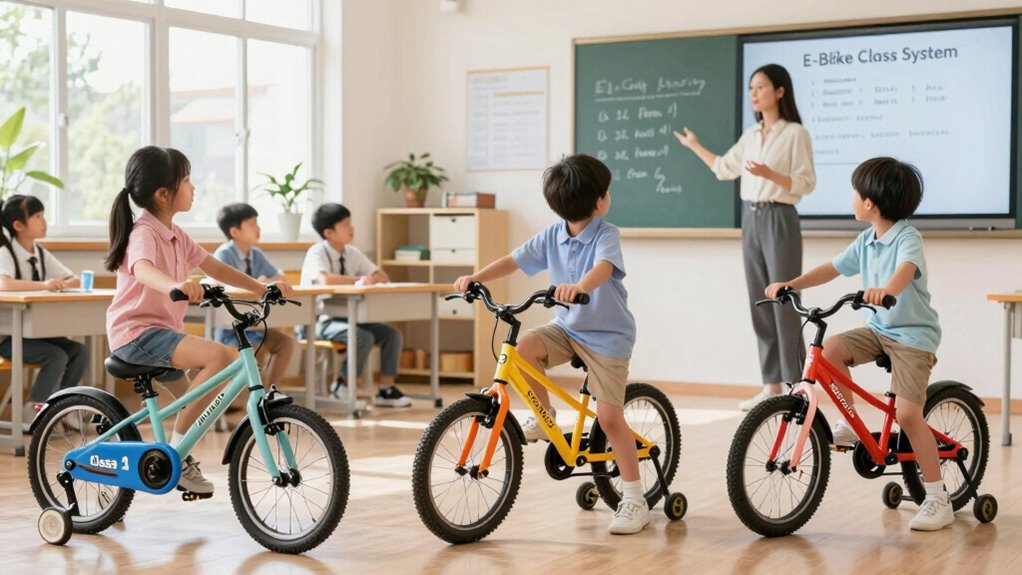

E-bike classes—1, 2, and 3—help you understand their power, speed, and where you can ride safely. Class 1 bikes assist only up to 20 mph and are great for beginner or safe riding zones. Class 2 bikes also go up to 20 mph but include a throttle for easy control. Class 3 bikes boost top speeds to 28 mph, perfect for faster commutes but with more restrictions. Keep these differences in mind to ride legally and safely as you explore more details.
Key Takeaways
- Class 1 e-bikes assist only up to 20 mph and have motor power up to 750W, mainly used for safety and legal compliance.
- Class 2 e-bikes also assist up to 20 mph but include throttle control, suitable for versatile riding styles.
- Class 3 e-bikes can reach speeds up to 28 mph, often used for longer commutes and varied terrains.
- Proper class selection depends on terrain, riding style, and local regulations to ensure safety and legality.
- Understanding these classes helps avoid fines, navigate laws, and choose the right e-bike for your needs.
What Are E-Bike Classes and Why Do They Matter?

What exactly are e-bike classes, and why should you care? E-bike classes categorize electric bikes based on their motor power, speed, and how you operate them. Comprehending these classes is essential for e bike safety and staying within legal regulations. For instance, some regions restrict certain classes from riding on specific trails or paths. Knowing the class helps you avoid fines or accidents. Class 1 e-bikes, which assist only up to 20 mph, are often the safest and most widely accepted. Meanwhile, Class 2 and 3 bikes have different power limits and speed capabilities, affecting where you can ride. Staying informed about e-bike classes ensures you ride responsibly and legally, making your experience safer and more enjoyable. Additionally, understanding the regulatory classifications can help you navigate local laws and enjoy your ride without issues. Being aware of Free Floating options can also influence the type of e-bike that best suits your terrain and riding style.
How Do E-Bike Classes Differ in Power and Speed?
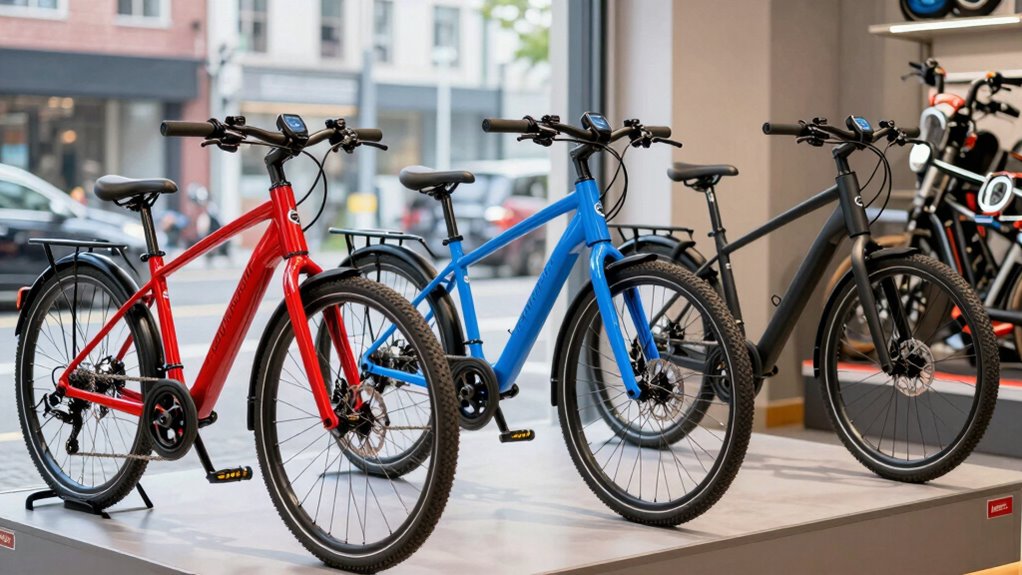
E-bike classes differ markedly in both motor power and speed limits, directly impacting how you ride and where you’re allowed to go. Class 1 bikes have a maximum motor power of 750W and a top speed of 20 mph. Class 2 bikes also max out at 750W but can reach 20 mph with throttle assist. Class 3 bikes feature motor power up to 750W but are limited to 28 mph. Here’s a quick comparison:
| Class | Motor Power | Top Speed | Allowed Locations |
|---|---|---|---|
| Class 1 | Up to 750W | 20 mph | Bike paths, roads |
| Class 2 | Up to 750W | 20 mph | Bike paths, roads |
| Class 3 | Up to 750W | 28 mph | Roads, some bike lanes |
Your choice depends on your riding style and local regulations, which can vary based on government policies.
Which E-Bike Class Is Right for Your Riding Style and Location?

Choosing the right e-bike class depends on how and where you plan to ride. If you often tackle hilly terrain or rough trails, a Class 1 e-bike with a smaller battery capacity might suffice, offering enough power without excess weight. For urban commuting on flat surfaces, a Class 2 e-bike provides a good balance of speed and battery life, ideal for shorter trips. If your rides involve longer distances or varied terrain, a Class 3 e-bike with a larger battery capacity ensures you can go further and handle diverse conditions smoothly. Understanding the different e-bike classes can help you make an informed decision aligned with your riding style and location. Always consider terrain suitability and battery capacity to match your riding style, whether you prefer leisurely rides or more adventurous excursions. Proper bike maintenance can extend your e-bike’s lifespan and performance, making your rides safer and more enjoyable. Picking the right class enhances your experience while keeping safety and efficiency in check.
Frequently Asked Questions
Can I Switch Between E-Bike Classes on the Same Bike?
Yes, you can switch between e-bike classes on the same bike, but it depends on your bike’s setup and local regulations. With bike customization and class upgrade options, you might need to modify your bike’s software or hardware to change classes. Always verify your local laws first, and consult your bike’s manufacturer or a professional mechanic to ensure safe and legal class switching.
Are E-Bike Classes Regulated Differently Across States or Countries?
Imagine riding your e-bike through different regions, and suddenly, you notice signage changing. Yes, e-bike classes are regulated differently across states or countries due to regional variations in laws and legal enforcement. Some places may require registration or helmets, while others don’t. You need to stay informed about local regulations to avoid fines or confusion, as standards can vary markedly depending on where you ride.
Do E-Bike Classes Affect Insurance or Liability Coverage?
Your e-bike class can impact your insurance implications and liability coverage. Insurance providers often consider the class when determining coverage, as higher classes with more power may be seen as riskier. This could mean higher premiums or limited coverage options. Be sure to check with your insurer to understand how your specific e-bike class affects liability coverage, so you’re fully protected in case of accidents or damages.
How Do Class Restrictions Impact E-Bike Availability on Trails?
You might find trail access limited by class restrictions, which aim to enhance user safety and protect natural landscapes. These restrictions can prevent certain e-bike classes from entering specific trails, reducing available routes for riders. While they help ensure safety and preserve environments, they can also restrict your options for exploring, so always check local regulations before heading out. Staying informed helps you enjoy riding responsibly and safely.
Are There Specific Safety Features Required for Each E-Bike Class?
Yes, safety features differ by e-bike class. You’ll find helmet requirements often mandatory, especially for higher classes, to protect your head. Speed limit enforcement is vital, ensuring bikes don’t exceed safe limits for each class. These safety measures reduce accidents and improve riding safety. Always check local regulations, wear your helmet, and stay within speed limits to keep yourself safe on the trail.
Conclusion
Understanding the different e-bike classes helps you choose the right ride for your needs. Did you know that class 1 e-bikes, limited to 20 mph, make up over 70% of e-bike sales? This shows their popularity among casual riders and city commuters. By knowing the distinctions, you can confidently select an e-bike that fits your style and local regulations, making your rides safer and more enjoyable. So, pick the right class and hit the road with confidence!