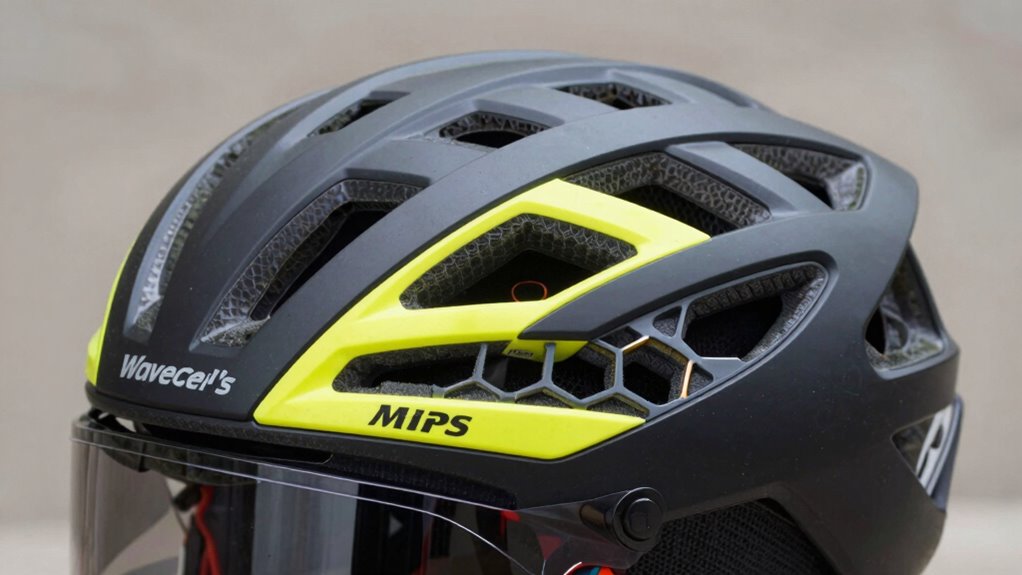

MIPS, Koroyd, and WaveCel are innovative helmet technologies that genuinely boost your safety without the hype. MIPS reduces rotational forces during impacts, Koroyd absorbs energy through its honeycomb structure, and WaveCel dissipates shock with its cellular design. These features work together to protect your head better, especially in falls and collisions. If you want to understand how these advancements can secure your ride, keep exploring what makes each tech unique.
Key Takeaways
- MIPS reduces rotational brain injuries using a low-friction layer that allows the helmet to slide relative to the head.
- Koroyd absorbs impact energy through crushable honeycomb tubes, dissipating force to protect the skull.
- WaveCel’s cellular structure flexes and crumples on impact, minimizing head injury risk while maintaining ventilation.
- These technologies focus on proven impact mitigation rather than hype, enhancing safety based on scientific research.
- Choosing a helmet with these features depends on riding style, impact risks, and comfort preferences.
How Do MIPS, Koroyd, and WaveCel Protect Your Head?

Have you ever wondered how helmet technologies like MIPS, Koroyd, and WaveCel actually safeguard your head? They work by enhancing helmet fit and incorporating smart ventilation features. MIPS, for example, allows a low-friction layer that reduces rotational forces during impacts, while Koroyd’s honeycomb structure absorbs energy and disperses impact forces. WaveCel uses a collapsible cellular structure that crumples on impact, absorbing shock. Good helmet fit guarantees the helmet stays securely in place, maximizing protection and comfort. Proper helmet fit is essential because even the most advanced technology cannot compensate for a poorly fitting helmet. Additionally, understanding helmet safety materials helps you make informed choices about protective gear. Advanced materials like impact-absorbing foam contribute significantly to a helmet’s ability to protect in a collision. Ventilation features keep you cool by promoting airflow, preventing overheating during activity. These technologies don’t replace proper fit and ventilation but work alongside them to provide extensive safety. When your helmet fits well and stays cool, you’re better protected during any impact. Furthermore, the impact-absorbing properties of helmet materials play a crucial role in reducing injury risk during accidents.
What Are the Benefits and Drawbacks of MIPS Helmets?
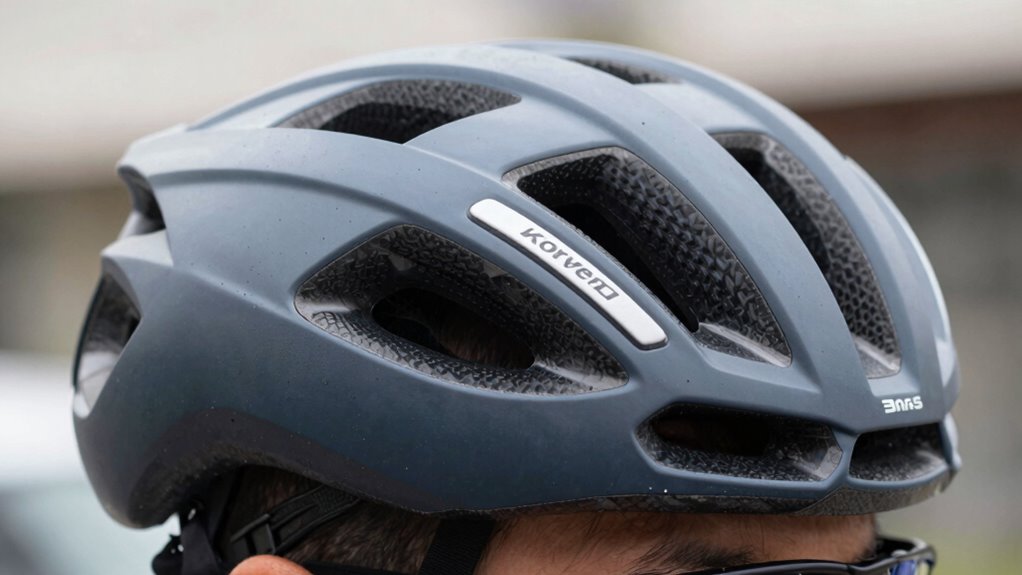
MIPS helmets offer notable benefits by reducing rotational forces during impacts, which can lower the risk of brain injury. This technology helps manage the brain’s movement inside the skull, providing an added layer of safety. However, some drawbacks include slightly increased weight and bulk, which may affect helmet ventilation and comfort. You might notice that MIPS helmets sometimes have less airflow, impacting cooling during intense activity. Style considerations come into play, as some designs prioritize the MIPS system over sleek aesthetics or a lightweight profile. While they enhance safety, you should balance these benefits against potential compromises in ventilation and style. Additionally, understanding helmet safety standards can help you make more informed decisions about protective gear. When choosing a helmet, consider how ventilation features can influence comfort during prolonged use. Proper fit and helmet fit are also crucial to ensure maximum protection and comfort. Recognizing technological advancements in helmet safety can further aid in selecting the best gear for your needs. Staying informed about innovative safety features can help you choose helmets that best suit your activity level and safety priorities.
How Does Koroyd Improve Helmet Impact Absorption?
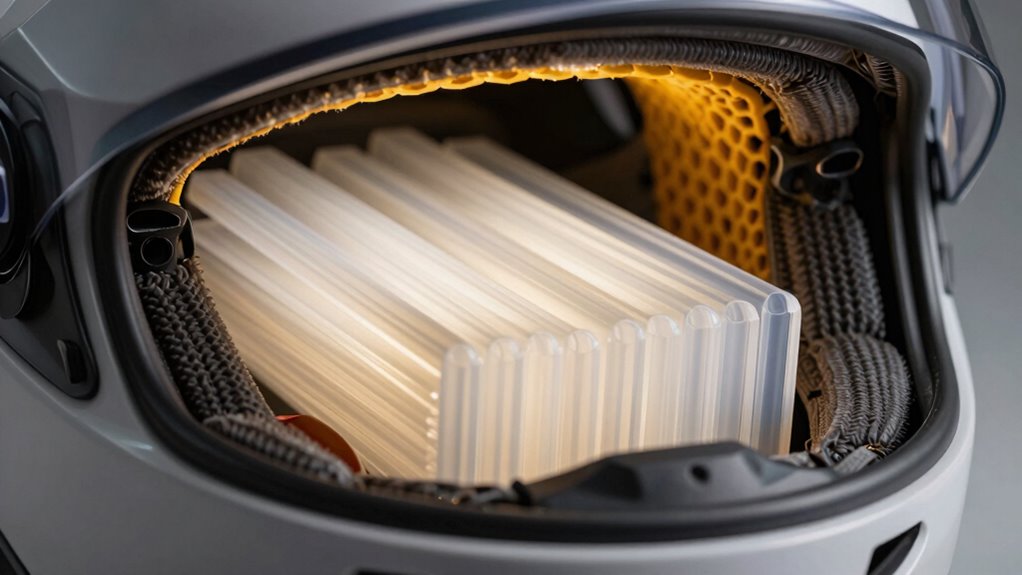
Koroyd enhances helmet impact absorption by using a unique structure of tightly wound, hollow tubes that crush and deform upon impact. This design effectively dissipates impact energy, reducing the force transferred to your head. Its material flexibility allows the tubes to deform consistently, providing reliable protection across various impacts. The structure ensures impact energy dissipation by absorbing shock through controlled crushing, maintaining helmet integrity. This impact absorption mechanism plays a crucial role in minimizing injury risk during collisions, especially when combined with impact energy dissipation technologies that enhance overall safety performance. Additionally, the material properties of Koroyd contribute to its ability to perform reliably over the lifespan of the helmet. Moreover, research indicates that the technology’s effectiveness continues to improve as innovation in safety materials advances, supported by ongoing research and development.
How WaveCel Helmets Reduce the Risk of Head Injuries?
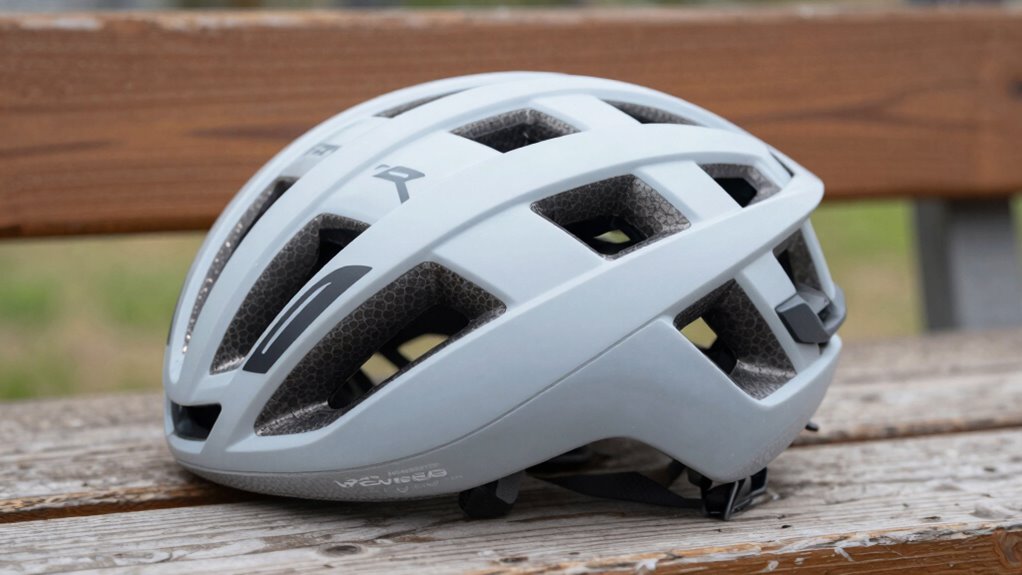
WaveCel helmets considerably reduce the risk of head injuries by redirecting and absorbing impact forces more effectively than traditional helmet designs. They feature a cellular structure that allows the helmet to flex and crush upon impact, dissipating energy before it reaches your head. This design minimizes rotational forces, which are often responsible for severe injuries. Additionally, WaveCel helmets maintain good helmet ventilation, helping keep you cool during active rides. They are also lightweight, reducing fatigue and discomfort without sacrificing protection. This advanced impact management technology is rooted in innovative impact absorption, which enhances safety during accidents. By combining advanced impact management with practical features like ventilation and lightness, WaveCel helmets offer a smarter, less bulky alternative that enhances your safety without compromising comfort. Moreover, the user comfort provided by these helmets encourages consistent use, further improving safety. The impact absorption capabilities are tested extensively to ensure reliable performance in real-world situations, making them a trusted choice among athletes and safety-conscious users alike. Additionally, the integration of smart safety features can provide real-time alerts and data for better post-accident analysis.
How to Choose the Best Helmet Tech for Your Riding Style?

Choosing the right helmet tech depends largely on your riding style and the types of impacts you’re most likely to encounter. To start, prioritize a helmet fit that feels secure and comfortable, as a proper fit guarantees maximum protection and reduces distractions. Consider ventilation features if you ride in hot conditions or during intense sessions—good airflow keeps you cool and focused. Different helmet technologies offer varying benefits: some excel at absorbing impact, while others prioritize lightweight design or airflow. Think about your typical riding environment and the risks involved. For example, downhill mountain biking may demand more advanced impact absorption, while commuting might benefit from better ventilation. Matching helmet tech to your riding style ensures safety without sacrificing comfort. Additionally, understanding the specific impact absorption capabilities of each technology can help you make a more informed choice. Furthermore, researching helmet safety standards can provide insight into the level of protection offered by different options. Being aware of advanced impact mitigation features can also help in selecting helmets that better address your safety needs.
Frequently Asked Questions
Are There Any Long-Term Health Effects From Using These Advanced Helmet Technologies?
There are no known long-term health effects from using helmets with advanced safety tech. These technologies are designed to reduce the risk of neurological impact during impacts, and studies haven’t shown any adverse neurological effects from their use. You can wear these helmets confidently, knowing they enhance protection without introducing new risks. Continued research will monitor long-term safety, but current evidence supports their safe, effective use over time.
How Do These Technologies Compare in Cost to Traditional Helmet Designs?
You’ll find that these advanced helmet technologies generally cost more upfront due to higher material costs and increased manufacturing complexity. While traditional helmets are simpler and cheaper to produce, the innovative safety features add to the expense. However, many believe the extra investment is worth it for enhanced protection and potentially lower injury risk. Over time, the initial cost may be offset by the increased safety benefits these tech-enabled helmets provide.
Can These Helmet Technologies Be Integrated Into Existing Helmet Models?
You can often upgrade your helmet with advanced safety tech, as many brands offer retrofit options for existing models. Remarkably, over 60% of helmets manufactured today are compatible with these technologies, making upgrades accessible. Check helmet compatibility before purchasing, and consult with manufacturers about retrofit options to enhance your helmet’s safety without buying a whole new one. This approach helps you stay protected while saving money.
Do Different Sports Require Specific Helmet Technology Considerations?
Yes, different sports demand sport-specific safety and material durability considerations in helmets. You should choose a helmet that’s tailored to your activity, ensuring it provides ideal impact protection and withstands the unique stresses of your sport. For example, high-impact sports like football or cycling require advanced safety tech and durable materials, whereas lighter activities like skating or casual riding prioritize comfort and flexibility. Always select gear designed for your sport to maximize safety.
How Do Helmet Technologies Perform in Extreme Temperature Conditions?
In extreme temperatures, helmet performance depends on helmet durability and material resilience. You’ll find that high-quality helmets maintain their protective properties and structural integrity, even in very hot or cold conditions. Look for helmets made with materials designed to withstand temperature fluctuations without cracking or losing shock absorption. By choosing gear built for durability and resilience, you guarantee safety and comfort, regardless of the weather extremes you face during your activities.
Conclusion
Choosing the right helmet technology depends on your riding style and safety priorities. MIPS, Koroyd, and WaveCel all offer innovative protection without the hype, so weigh their benefits and drawbacks carefully. Remember, a helmet is only as good as its fit and your awareness on the trail. As they say, “An ounce of prevention is worth a pound of cure”—invest in quality gear, and ride confidently knowing you’re well protected.