
Rim brakes are simpler, lighter, and easier to maintain, making them great for dry, paved roads and racers. Disc brakes perform better in wet or muddy conditions, providing stronger, more consistent stopping power, especially on mountain bikes or challenging terrains. While rim brakes are cheaper and easier to repair in the field, disc brakes involve more components and maintenance. If you want to understand which suits your riding style best, exploring these differences further will help you decide.
Key Takeaways
- Rim brakes are simpler, lighter, and easier to maintain than disc brakes, which have complex hydraulic or mechanical systems.
- Disc brakes perform better in wet, muddy conditions due to their contact with rotors, providing more consistent stopping power.
- Rim brakes are typically less expensive and easier to repair in the field, making them suitable for dry, paved road riding.
- Disc brakes add weight with rotors and calipers, benefiting riders in mountain biking and challenging terrains.
- Maintenance for rim brakes is straightforward, while disc brakes may require specialized tools for pad replacement and system bleeding.
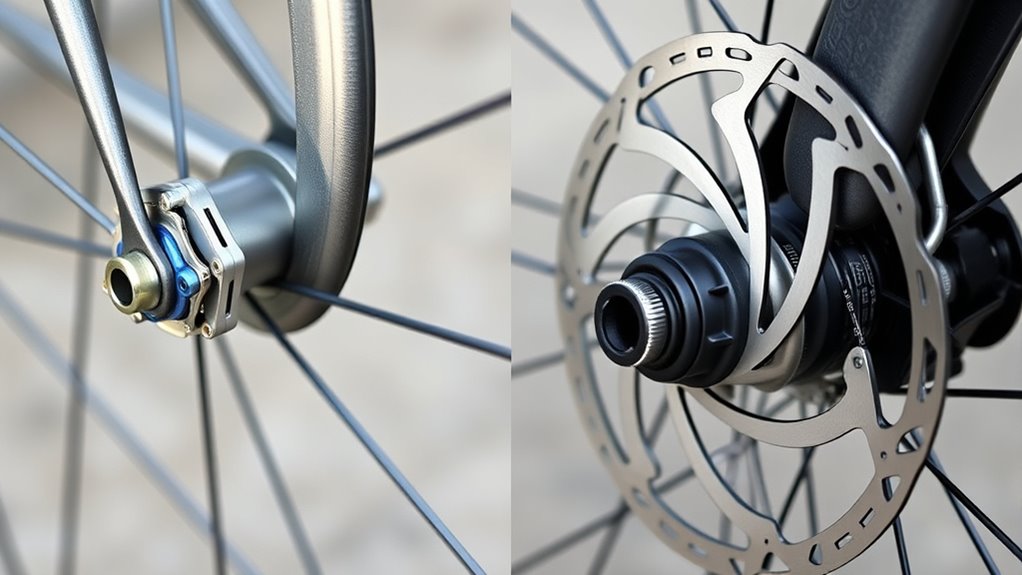
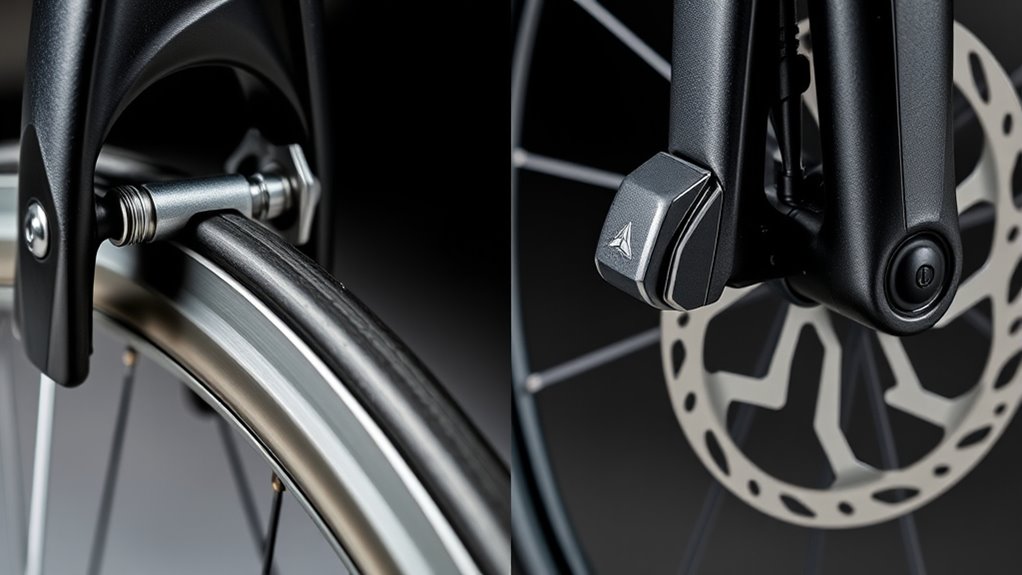
When choosing between rim brakes and disc brakes, understanding their key differences can help you make an informed decision. One of the first factors to weigh is brake maintenance. Rim brakes are simpler in design, with fewer moving parts, making them easier and quicker to service. You can typically adjust the brake pads yourself, and replacing worn pads doesn’t require special tools. Disc brakes, on the other hand, often demand more attentive maintenance. They involve calipers, rotors, and hydraulic systems in many cases, which can be more complex to troubleshoot and repair. Hydraulic disc brakes provide smooth stopping power but may require bleeding and fluid replacement over time. Mechanical disc brakes, while simpler than hydraulic, still need regular alignment and pad replacements. If you prefer a low-maintenance setup, rim brakes might appeal more, especially if you’re comfortable with basic bike repairs. Additionally, the presence of brake pad materials affects performance and longevity, influencing your maintenance needs and riding experience.
Another critical aspect is weight differences. Rim brakes are generally lighter than disc brakes because their components are less bulky and don’t include heavy rotors or hydraulic lines. This weight saving can be significant, especially if you’re racing or need a lighter bike for climbing. Disc brake systems tend to add weight due to the rotors, calipers, and sometimes heavier hubs designed to accommodate them. While the difference might seem small on paper, it can impact your ride, especially over long distances or steep terrain. If weight is a top priority, rim brakes might give you an edge without sacrificing much in stopping power under typical conditions.
Stopping power and performance are also essential considerations. Disc brakes usually outperform rim brakes in wet and muddy conditions because the brake pads contact a rotor, which stays cleaner and less affected by weather. Rim brakes rely on the rim surface, which can become slippery when wet, reducing their effectiveness. This means, in adverse weather, disc brakes can offer more consistent and reliable braking. However, rim brakes can still be effective for everyday riding, especially on paved, dry roads, and they tend to be less expensive and easier to repair in the field.
Finally, think about compatibility and your riding style. Rim brakes work best on lightweight road bikes and are preferred in racing scenarios. Disc brakes are more versatile, suitable for mountain biking, cyclocross, and touring, where terrain and weather variability demand superior stopping power and durability. Choosing between them ultimately depends on your riding needs, maintenance willingness, and weight preferences—each has its strengths, and understanding these differences helps you select the best braking system for your bike.
Frequently Asked Questions
How Do Rim and Disc Brakes Perform in Extreme Weather Conditions?
In extreme weather, disc brakes outperform rim brakes, especially in wet conditions. You’ll notice better mud performance and consistent stopping power, even in heavy rain or muddy trails. Rim brakes tend to lose effectiveness when wet, reducing braking response. With disc brakes, you get reliable, strong braking in all weather, making your ride safer and more predictable during challenging conditions.
What Are the Maintenance Requirements for Each Brake Type?
Did you know rim brakes require brake pad replacement about every 1,000 to 2,000 miles? You’ll need to regularly check and adjust cables to maintain proper tension. Disc brakes demand less frequent maintenance but need occasional rotor checks for warping and caliper adjustments. Both types benefit from keeping components clean and inspecting pads or rotors for wear, ensuring your braking stays reliable in every ride.
Are There Any Compatibility Issues With Different Bike Frames?
Yes, there can be frame compatibility issues depending on your bike’s design. Rim brake frames are built for calipers that fit around the rim, while disc brake frames require mounts for disc calipers and thicker dropouts. You might need adapter requirements to switch between brake types, or even a different frame if your current one isn’t compatible. Always check your frame’s specifications to confirm proper compatibility before making changes.
How Do Brake Weights Compare Between Rim and Disc Systems?
You might find that rim brake systems are lighter overall, making them a gentle choice for those seeking a more nimble ride. Disc brake systems tend to have a slightly higher system weight, but they offer enhanced stopping power and control. While the brake weight difference isn’t huge, it can influence your bike’s feel and handling. Ultimately, choose based on your riding style and preference for performance versus weight savings.
Which Braking System Offers Better Longevity and Durability?
Disc brakes generally offer better longevity and durability because they resist corrosion and have longer-lasting brake pad wear. You’ll find that disc systems handle harsh conditions better, making them ideal for rough terrains and wet environments. Rim brakes may wear out faster and are more susceptible to corrosion, especially if you ride in bad weather. Overall, disc brakes give you more reliable performance over time, requiring less maintenance.
Conclusion
Choosing between rim and disc brakes depends on your riding needs. Rim brakes are lightweight and simple, making them ideal for casual riders, while disc brakes offer better stopping power in all conditions, especially in wet weather. Did you know that disc brakes can reduce stopping distance by up to 30% compared to rim brakes? Consider your riding style and terrain to make the best choice. Whichever you pick, prioritize safety and performance on every ride.