To start a bike bus at your school, begin by planning safe, accessible routes and walking them beforehand to identify hazards. Recruit parent volunteers and set a regular schedule, emphasizing safety gear like helmets and lights. Establish roles such as lead and sweep riders, and hold safety briefings before each ride. Use clear communication tools to inform participants and prepare for emergencies. To learn more about creating a successful bike bus, keep exploring these essential steps.

Get your wardrobe favorites delivered free with Prime
- Fast, free delivery on millions of items
- Prime Video, Amazon Music and more included
- Member-only deals all year
Key Takeaways
- Plan a safe, accessible route by walking it beforehand and incorporating bike lanes or paths where possible.
- Recruit adult volunteers and assign roles like lead rider, sweep rider, and route guides for organized supervision.
- Promote safety gear use, conduct safety briefings, and review traffic rules to ensure all participants understand safe riding practices.
- Communicate the schedule, route details, and safety tips via group chats, flyers, or newsletters to keep everyone informed.
- Set a regular ride schedule, perform bike safety checks, and establish emergency procedures to maintain safety and consistency.
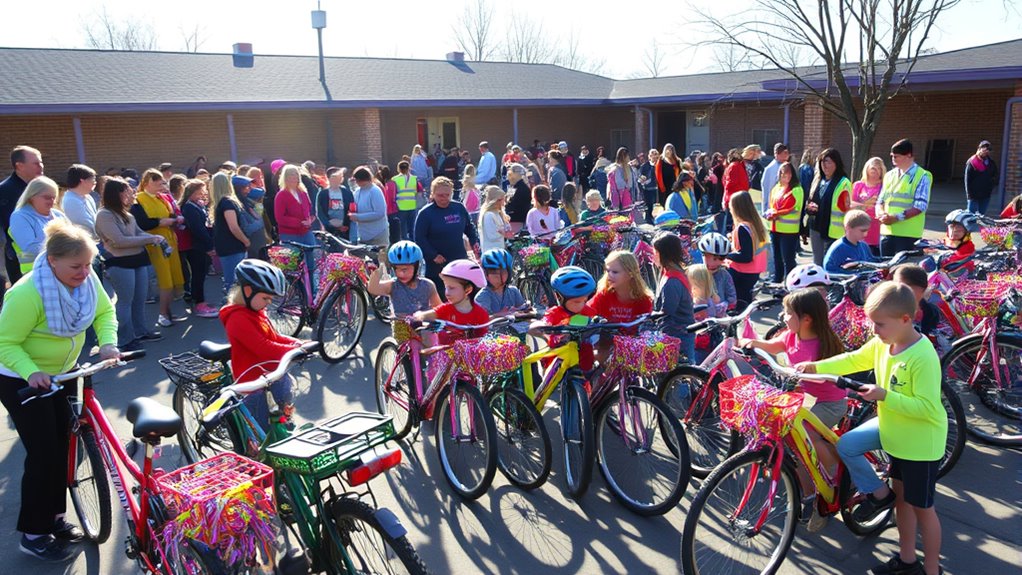
Starting a bike bus at your school is a fantastic way to promote safe, eco-friendly transportation while building a stronger community. It encourages students to ride together, fostering friendships and making the daily commute more enjoyable. To guarantee everyone stays safe, you’ll need to emphasize safety gear, such as helmets, reflective vests, and lights. Proper safety gear not only protects students but also sets a good example for safe riding habits. When organizing your bike bus, route planning becomes essential. You want to choose a route that’s safe, direct, and accessible for all participants. Walk the route beforehand, checking for busy intersections, uneven pavement, or other hazards. Consider using bike lanes and paths whenever possible to minimize the risk of accidents. It’s also helpful to map out the route clearly and share it with parents and students so everyone knows where to meet and what to expect. Additionally, reviewing local traffic regulations can help ensure your route complies with safety standards.
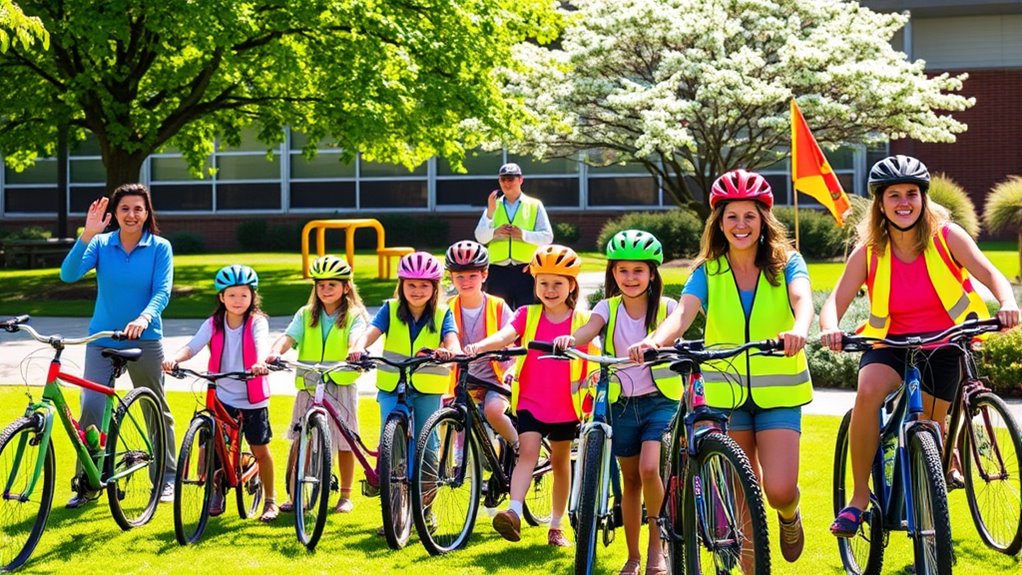
Once you’ve mapped out your route and gathered safety gear, the next step is organizing your group. Recruit a few adult supervisors or parent volunteers to help manage the bike bus. Their presence is vital for maintaining order and providing assistance if needed. Make sure all riders understand basic bike safety rules, such as signaling turns, riding in a single file, and obeying traffic signals. Holding a quick safety briefing before the first ride can be very effective. During this session, reinforce the importance of wearing safety gear at all times and sticking to the planned route. It’s also a good idea to assign roles, such as a lead rider, a sweep rider at the back, and route guides if necessary. This structure helps keep the group organized and ensures no one gets lost or left behind.
Communication is key to a successful bike bus. Use group chats, flyers, or school newsletters to inform parents and students about the schedule, meeting points, and safety tips. Establish a regular schedule, whether it’s daily or a few times a week, so everyone can plan accordingly. Encourage students to check their bikes beforehand for proper functioning—brakes, tires, and lights—so everyone is prepared. Remind participants to wear helmets and safety gear every time they ride. As your bike bus grows, consider creating simple procedures for handling emergencies or route changes. By carefully planning your route, emphasizing safety gear, and maintaining clear communication, you’ll create a fun, safe, and sustainable transportation option that benefits everyone involved.
As an affiliate, we earn on qualifying purchases.
Frequently Asked Questions
How Do I Recruit Enough Students for the Bike Bus?
To recruit enough students for the bike bus, focus on community engagement and effective promotional strategies. Talk to parents, teachers, and students directly to generate interest, and host informational events highlighting safety and fun. Use flyers, social media, and school newsletters to spread the word. Creating a sense of community and emphasizing the benefits of biking together will encourage more students to join your bike bus.
What Safety Gear Is Essential for Participants?
You should guarantee participants wear protective helmets to safeguard against head injuries and reflective clothing to increase visibility, especially in low-light conditions. Emphasize the importance of proper fit and comfort for helmets, and choose bright, reflective materials for clothing and accessories. These safety gear items are essential for reducing risks and keeping everyone safe during the bike bus rides. Always remind students to double-check their gear before heading out.
How Do I Coordinate With Parents and School Officials?
You should actively involve parents by holding community outreach events to explain your plan and gather feedback. Coordinate with school officials by scheduling meetings, sharing safety plans, and obtaining necessary approvals. Encourage parent involvement by assigning roles like route supervision or chaperoning. Clear communication guarantees everyone stays informed and engaged, making the Bike Bus safe and successful. Building strong relationships with parents and school staff is key to your coordination efforts.
What Route Planning Considerations Are Most Important?
Ironically, the most important route planning considerations are overlooked—yet they’re simple. Focus on thorough route mapping to guarantee all streets are safe and accessible. Conduct hazard assessments to identify potential dangers, like busy intersections or uneven pavement. Choose a route that minimizes risks and maximizes safety for kids. Remember, well-planned routes keep everyone secure and make the Bike Bus a fun, worry-free experience for students and parents alike.
How Can I Sustain the Bike Bus Long-Term?
To sustain your bike bus long-term, focus on building strong community partnerships and exploring diverse funding strategies. Engage local businesses, parent groups, and schools to support and promote the initiative. Seek grants or organize fundraising events to secure consistent funding. Keep communication open with stakeholders, celebrate milestones, and demonstrate the program’s benefits, ensuring ongoing enthusiasm and support that help your bike bus thrive over time.
As an affiliate, we earn on qualifying purchases.
Conclusion
Starting a bike bus isn’t just about bikes; it’s about building a community that moves together, side by side, like a steady, rhythmic heartbeat. Each pedal push symbolizes unity, safety, and environmental care. As you lead this adventure, remember you’re guiding more than bikes—you’re steering a shared journey toward healthier mornings, stronger bonds, and a greener future. Embrace the rhythm, keep the momentum, and watch your school’s spirit ride on, unstoppable and vibrant.
reflective vests for kids riding bikes
As an affiliate, we earn on qualifying purchases.
As an affiliate, we earn on qualifying purchases.
As an affiliate, we earn on qualifying purchases.
Columbus Day / Indigenous Peoples' Day Picks
long weekend sales
As an affiliate, we earn on qualifying purchases.