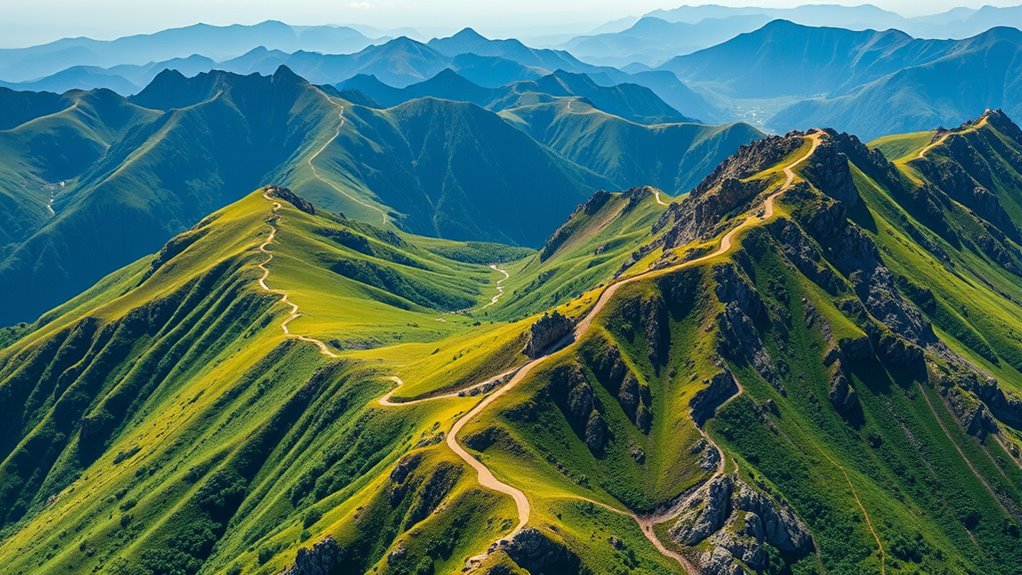

When choosing routes with elevation profiles, you should analyze the terrain’s ups and downs to match your fitness level and experience. Look for routes that match your skill, and consider the difficulty of steep climbs or rapid descents. Properly understanding the elevation helps you pace yourself, plan for safety, and enjoy your outdoor activity more. Keep exploring to discover how understanding elevation profiles can make your adventures safer and more rewarding.
Key Takeaways
- Analyze elevation profiles to assess route difficulty and terrain variation for better planning.
- Match route elevation challenges with your fitness level to prevent overexertion.
- Use elevation data to adjust pacing, ensuring safety and energy management throughout the hike.
- Identify steep climbs and descents to prepare gear and pacing strategies accordingly.
- Select routes with suitable elevation profiles that align with your outdoor experience and goals.

When selecting a route for your outdoor adventure, understanding the elevation profile is vital. The elevation profile reveals the ups and downs you’ll encounter along the way, giving you a clear picture of the terrain difficulty. This information helps you gauge how demanding the route will be and allows you to plan accordingly. If the profile shows steep climbs and rapid descents, you’ll need to adjust your pacing strategies to conserve energy and avoid burnout. Conversely, a mostly gradual incline might allow for a steady, sustained effort that keeps you moving comfortably. Recognizing these variations helps you prepare mentally and physically for what’s ahead, guaranteeing a safer and more enjoyable experience.
Knowing the terrain difficulty based on the elevation profile also influences your choice of gear and hydration strategies. Steep sections may require trekking poles for stability, while lengthy ascents can demand more frequent breaks or a slower pace. If you’re tackling a route with significant elevation changes, you might want to carry extra snacks or electrolytes to maintain energy levels. Pacing strategies become especially vital on challenging routes; setting a sustainable rhythm prevents fatigue and keeps your stamina intact. For example, on steep climbs, it’s best to take short, frequent breaks rather than pushing yourself to the limit in one go. During descents, controlled, deliberate steps help conserve energy and reduce the risk of injury.
Steep sections need trekking poles; longer ascents call for more breaks and slower pacing.
Furthermore, understanding the elevation profile allows you to plan your timing more effectively. If the route includes a lengthy section of elevation gain, starting early in the day ensures you have ample daylight and energy to complete the climb. For routes with mixed terrain, you might adjust your pace to match the difficulty of each segment, speeding up on flatter terrain and slowing down during steep sections. This tailored approach minimizes unnecessary fatigue and keeps you feeling strong throughout the adventure.
Additionally, awareness of the elevation profile can inform your fitness level assessment, helping you choose routes that match your current physical condition and avoid overexertion.
Lastly, appreciating the elevation profile helps you set realistic goals for your outing. Whether you’re aiming for a challenging summit or just exploring scenic trails, knowing the terrain difficulty enables you to match your ambitions with your capabilities. It encourages smarter decision-making, like avoiding overly strenuous routes that could lead to injury or exhaustion. By paying close attention to the elevation profile, you enhance your overall experience, guaranteeing it’s both safe and fulfilling. So, take the time to review the elevation data beforehand—your body and your adventure will thank you.
Frequently Asked Questions
How Do Elevation Profiles Impact Overall Travel Time?
Elevation profiles directly impact your overall travel time because altitude effects can slow you down, especially on steep inclines. When you plan your route, considering elevation helps you anticipate tough climbs that may take longer and affect your pace. By understanding these factors, you can optimize your travel planning, choosing routes that balance elevation challenges with your endurance levels, ultimately saving time and reducing fatigue during your journey.
What Tools Are Best for Reading Elevation Charts?
If you’re enthusiastic to decipher elevation charts effortlessly, start with reliable mapping tools like Gaia GPS, AllTrails, or ViewRanger. These tools make reading elevation charts a breeze, offering detailed profiles that highlight climbs and descents. They’re perfect for planning routes, ensuring you stay ahead of the terrain’s surprises. With user-friendly interfaces and accurate data, these mapping tools help you navigate elevation profiles confidently and enjoy your adventure to the fullest.
How Does Terrain Type Affect Route Difficulty?
Terrain types directly influence route difficulty levels. For example, rocky or rugged terrain makes a trail more challenging, requiring better footing and stamina. Soft or flat terrain is easier and less demanding. When selecting your route, consider how different terrain types can impact your effort and safety. By understanding these differences, you can choose routes that match your skill level and prepare you for the specific challenges ahead.
Can Elevation Profiles Predict Safety Issues?
Yes, elevation profiles can help you predict safety issues by highlighting terrain challenges like steep climbs or drops. When you analyze these profiles, you can identify sections that may pose risks, such as unstable slopes or narrow paths. This allows you to plan accordingly, ensuring you’re prepared for safety considerations. By understanding elevation changes, you’ll better navigate tricky terrain and avoid potential hazards during your route.
How Do Weather Conditions Influence Route Selection?
Weather conditions greatly influence your route choices. You should consider weather patterns and seasonal variations, as storms or heavy rain can make trails dangerous or impassable. Cold temperatures or snow may require different gear or routes, while high temperatures can cause heat exhaustion. Always check current forecasts, and plan for seasonal changes to guarantee safety, adjusting your route to avoid hazards like flooding, ice, or extreme heat.
Conclusion
As you chart your course through the mountains, remember that elevation profiles are like the heartbeat of your journey. They whisper secrets of challenge and triumph, guiding you like a steady compass. Embrace each rise and fall as chapters in your adventure, shaping your resilience and joy. Ultimately, your chosen route becomes more than just terrain—it’s a story of growth, where every peak symbolizes your strength, and every valley, your perseverance.