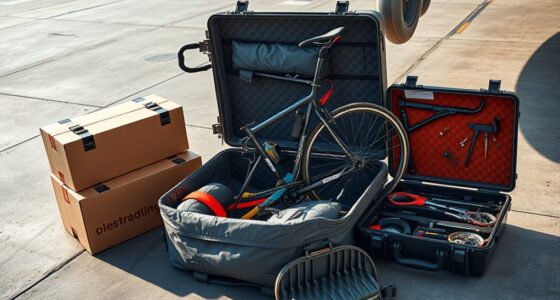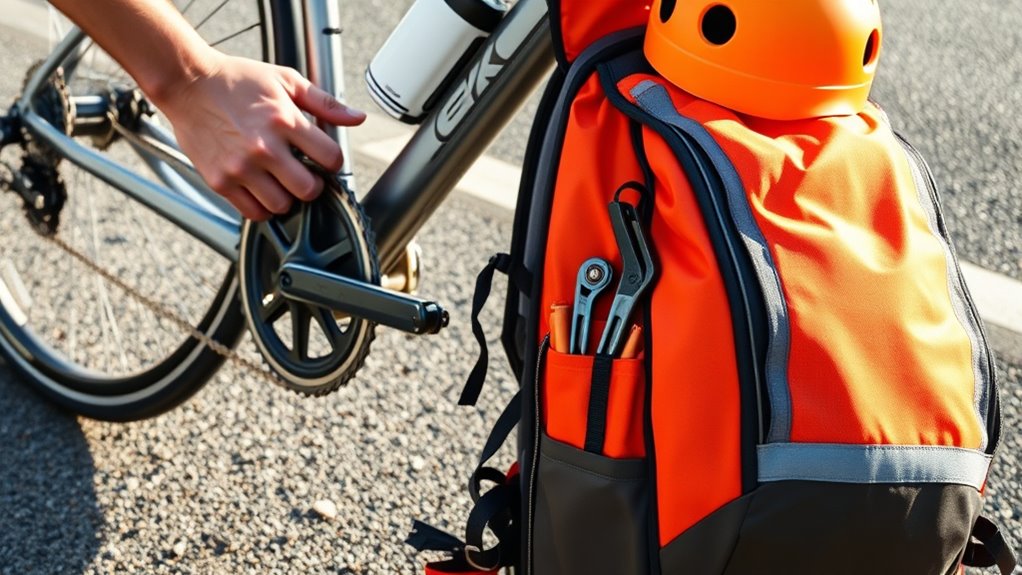

Before every tour, do a quick safety check by inspecting your tires for proper pressure and wear, guaranteeing brakes respond smoothly, and lubricating the chain for gear changes. Verify your lights work and batteries are charged, and confirm your helmet, gloves, and reflective gear are in good condition. Tighten bolts and fasteners on the wheels and saddle, and look over your bike for loose or damaged parts. For detailed tips, keep exploring to make certain you’re fully prepared for your ride.
Key Takeaways
- Inspect tires for proper inflation, wear, and debris to prevent flats during long rides.
- Check brake function by squeezing levers; ensure smooth engagement and sufficient stopping power.
- Verify all bolts, nuts, and quick-release levers are tight and secure on wheels and seat post.
- Ensure front and rear lights are operational, batteries are charged, and visibility gear is worn.
- Conduct a visual inspection for loose, damaged, or missing parts; lubricate moving components as needed.

Before hitting the road, performing a daily pre-ride safety check is essential to guarantee your tour goes smoothly. This step ensures your bike is in top condition and your safety gear offers maximum protection, reducing the risk of accidents or mechanical failures during your ride. Starting with bike maintenance, you want to give your bike a quick once-over. Check the tire pressure and look for any signs of wear or embedded debris that could cause flats. Properly inflated tires improve ride efficiency and reduce the chance of unexpected punctures. Next, examine the brakes. Squeeze the brake levers firmly and ensure they engage smoothly without excessive travel. If you notice any squeaking or reduced responsiveness, it’s time to adjust or replace brake pads. A well-maintained braking system is essential for quick stops and overall safety. Also, inspect the chain and gears. Lubricate the chain regularly to prevent rust and ensure smooth shifting. Test the gears to confirm they shift cleanly through all speeds, and make adjustments if needed. Don’t forget to check the bolts, nuts, and quick-release levers on wheels and seat post—loose components can cause dangerous accidents and should be tightened securely. Additionally, understanding the importance of bike maintenance helps prevent unexpected breakdowns during your ride.
Safety gear is just as important as bike maintenance. Before you start, verify that your helmet is in good condition—no cracks, and the straps fit snugly around your chin. Wearing a properly fitting helmet can considerably reduce head injuries if an accident occurs. If you’re using gloves, ensure they’re intact and provide a good grip. Reflective gear or bright clothing enhances visibility, especially if you’re riding in low-light conditions. Check that your lights are working—both front and rear—and replace batteries or charge them if needed. Wearing high-visibility gear makes you more noticeable to drivers, which is essential for your safety. Consider additional protective equipment like knee and elbow pads if you’re riding in challenging terrain or doing a longer, more adventurous tour.
Frequently Asked Questions
How Long Should a Daily Pre-Ride Safety Check Take?
A daily pre-ride safety check should take about 10 to 15 minutes. You need to focus on bike maintenance and rider preparedness by inspecting brakes, tires, gears, and lights, and making sure your gear is secure. This quick routine helps prevent breakdowns and accidents, making your ride safer and smoother. Don’t rush—taking this time guarantees you’re fully prepared for your tour and can enjoy your ride with confidence.
What Tools Are Recommended for a Pre-Ride Safety Inspection?
You’ll want a good multi-tool, tire pressure gauge, and a pump to keep your bike in top shape. Don’t forget safety gear like lights, reflectors, and a helmet—because even the best bike maintenance can’t fix careless safety. These tools help you spot issues early, ensuring a smooth ride and avoiding the dreaded breakdown or accident. Remember, proper tools and gear are your best friends on every adventure!
How Often Should Safety Checks Be Performed During Long Tours?
During long tours, you should perform safety checks regularly, ideally every few hours or whenever you stop for breaks. This helps you maintain your maintenance routines and makes certain your bike remains reliable. Stay alert for any signs of wear or damage, and check your emergency preparedness by inspecting your tools and supplies. Frequent checks prevent breakdowns and keep you safe, giving you peace of mind throughout your ride.
What Are Common Signs of Bike Component Wear?
A stitch in time saves nine, so keep an eye out for signs of wear. You’ll notice brake pad deterioration, which makes stopping less effective, and chain stretch, causing shifting issues. Look for uneven brake pad wear or a loose chain. Regularly inspecting these components guarantees your bike stays safe and performs well, helping you avoid breakdowns. Catching these signs early keeps your ride smooth and trouble-free.
Can Pre-Ride Checks Prevent All Bike-Related Accidents?
Pre-ride checks critically reduce bike-related accidents, but they can’t prevent all of them. Regular bike maintenance and staying aware of your bike’s condition are essential. By inspecting brakes, tires, and gears before every ride, you catch issues early. Your rider awareness also helps you react quickly to unexpected hazards. Combining thorough pre-ride checks with attentive riding keeps you safer, but always remain alert and prepared for surprises on the road.
Conclusion
By doing your daily pre-ride safety check, you protect yourself, preserve your gear, and enjoy your journey. You stay alert, stay prepared, and stay confident. You prevent surprises, prevent breakdowns, and prevent accidents. Remember, a quick check today keeps trouble at bay tomorrow. Keep safety simple, stay vigilant, and ride with peace of mind. Your adventure begins with a thorough check—because safe riding isn’t just a routine, it’s a mindset.