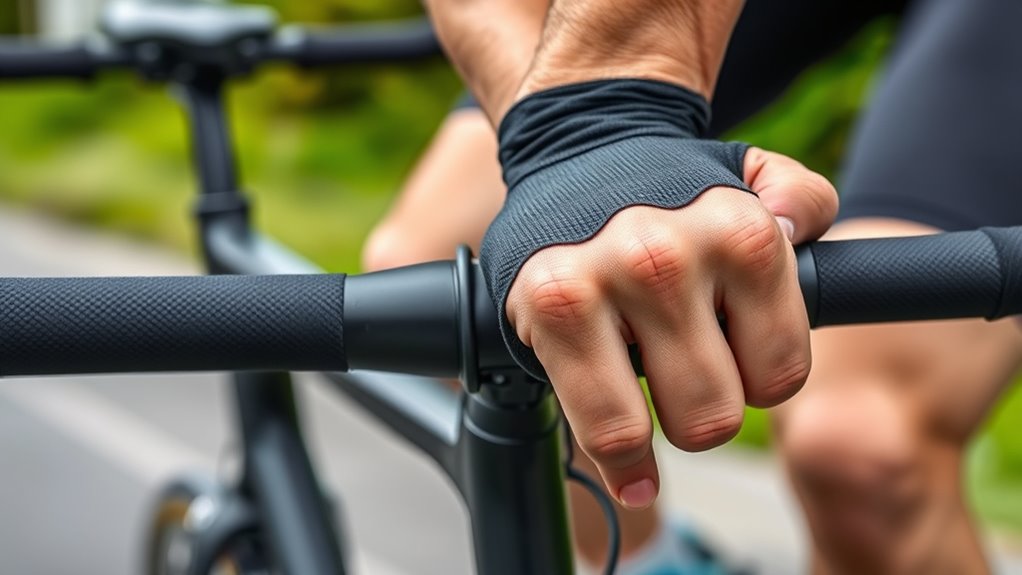

To fix numb hands, start by adjusting your handlebar height and reach to prevent nerve pressure and promote a natural grip. Switch to ergonomic grips or add padding like gel pads or foam sleeves to absorb vibrations. Choose handlebar shapes and widths that suit your riding style, and regularly shift hand positions to avoid prolonged pressure. Improving your posture and taking short breaks also help boost circulation. Keep these tips in mind, and you’ll discover more ways to stay comfortable on your bike.
Key Takeaways
- Adjust handlebar height and reach to maintain natural wrist and hand positions, reducing nerve pressure.
- Install ergonomic grips and padding to distribute pressure evenly and absorb shocks, preventing numbness.
- Choose handlebar shapes and widths that suit your riding style, avoiding tight grips and awkward angles.
- Shift hand positions regularly during rides and take short breaks to improve circulation and reduce nerve compression.
- Incorporate proper riding habits, such as body awareness and posture adjustments, to prevent long-term nerve issues.
If you’ve been experiencing numb hands, it’s important to identify the underlying cause to find the right solution. One common culprit is poor handlebar setup. When your hands go numb, it’s often because of excessive pressure on certain nerve points or improper alignment of your wrists and arms. To combat this, start by examining your grips and handlebar accessories. Ergonomic grips can make a significant difference; they’re designed to fit the natural shape of your hands and reduce strain during long rides. These grips often feature contours or padding that distribute pressure more evenly, alleviating the compression on nerves that causes numbness. Switching to ergonomic grips can help you maintain a more natural hand position, decreasing the chances of numbness developing over time.
In addition, handlebar padding plays an essential role. Many riders overlook how much impact vibration and shock can transfer through the handlebars to your hands. Handlebar padding absorbs some of this shock, reducing the overall stress on your nerves and joints. If your current setup feels hard or lacks padding, adding some can improve comfort immediately. There are various types of handlebar padding, from foam sleeves to gel pads, each providing different levels of cushioning. Proper padding not only makes your grip more comfortable but also helps maintain better wrist positioning, preventing awkward angles that can contribute to numbness. Remember, a well-padded handlebar encourages you to keep your hands in a relaxed position, which is vital for avoiding nerve compression.
Beyond grips and padding, it’s also worth considering your handlebar shape and size. Wider or flatter bars often provide more room to find a comfortable hand position, while narrower or drop bars may cause you to grip too tightly or hold awkward angles. Adjusting the handlebar width or trying different shapes can help you find a setup that minimizes pressure points. Additionally, regularly shifting your hand positions during rides prevents prolonged pressure on the same nerve areas, reducing numbness. Take short breaks during longer rides to stretch your hands and wrists, ensuring good circulation. Incorporating body awareness techniques can help you recognize when your position is causing strain and make adjustments proactively.
Ultimately, fixing numb hands involves a combination of equipment tweaks and riding habits. Upgrading to ergonomic grips and adding handlebar padding are straightforward yet effective steps. These small changes can drastically improve comfort, prevent nerve compression, and make your rides more enjoyable without discomfort or numbness. Remember, comfortable hands mean better control, less fatigue, and a more enjoyable cycling experience overall.
Frequently Asked Questions
Can Specific Handlebar Shapes Reduce Numbness Effectively?
Yes, specific handlebar shapes can reduce numbness by improving handlebar ergonomics and your cycling posture. Ergonomic handlebars, like riser or bullhorn styles, distribute pressure more evenly across your hands and wrists, alleviating nerve compression. Adjusting handlebar height and width also helps. By choosing the right handlebar shape for your riding style and ensuring proper fit, you’ll experience less numbness and ride more comfortably.
How Does Grip Material Influence Hand Numbness?
Think of grip material as the foundation of your cycling comfort. Soft, rubbery grips absorb vibrations, acting like a cushion that keeps hand numbness at bay. Leather or gel handlebar padding molds gently to your hands, reducing pressure points. When you choose the right grip material, you’re building a barrier against numbness, ensuring your hands stay lively and responsive during every ride. Comfort begins with the right grip; choose wisely.
Are There Recommended Padding or Cushioning Options for Handlebars?
You should try gel pads or foam cushioning on your handlebars to reduce numbness. Gel pads conform to your hands, providing extra comfort and shock absorption, while foam cushioning offers a softer feel and better pressure distribution. Both options are easy to install and can considerably improve your grip comfort. Experiment with different padding types and thicknesses to find what works best for your riding position and hand sensitivity.
Does Hand Position During Cycling Impact Numbness?
Yes, your hand position during cycling impacts numbness. Keep your wrists in a neutral, ergonomic grip to reduce pressure on nerves. Regular hand stretching can improve flexibility and circulation, helping prevent numbness. Adjust your handlebar height and width for a natural, comfortable position. Using ergonomic grips provides extra cushioning and support, which can markedly decrease numbness and discomfort during long rides.
What Exercises Can Help Prevent Numbness During Rides?
To prevent numbness during rides, incorporate wrist flexibility exercises like wrist circles and stretches into your routine. Wearing cycling gloves benefits your grip and reduces pressure, easing nerve compression. Regularly shifting hand positions and taking short breaks also help. Stay mindful of your posture and avoid gripping too tightly. These adjustments, combined with wrist exercises and proper glove use, can markedly decrease numbness and enhance your comfort on the bike.
Conclusion
So, when your hands start going numb, remember—you’re the captain of your fitness journey. By tweaking your fit and choosing the right bars, you can steer clear of discomfort and keep moving forward. Don’t let numbness be the storm that sinks your progress; instead, see it as a lighthouse guiding you to smarter, more comfortable workouts. Take control, make those adjustments, and let your hands be a demonstration of your resilience and dedication.