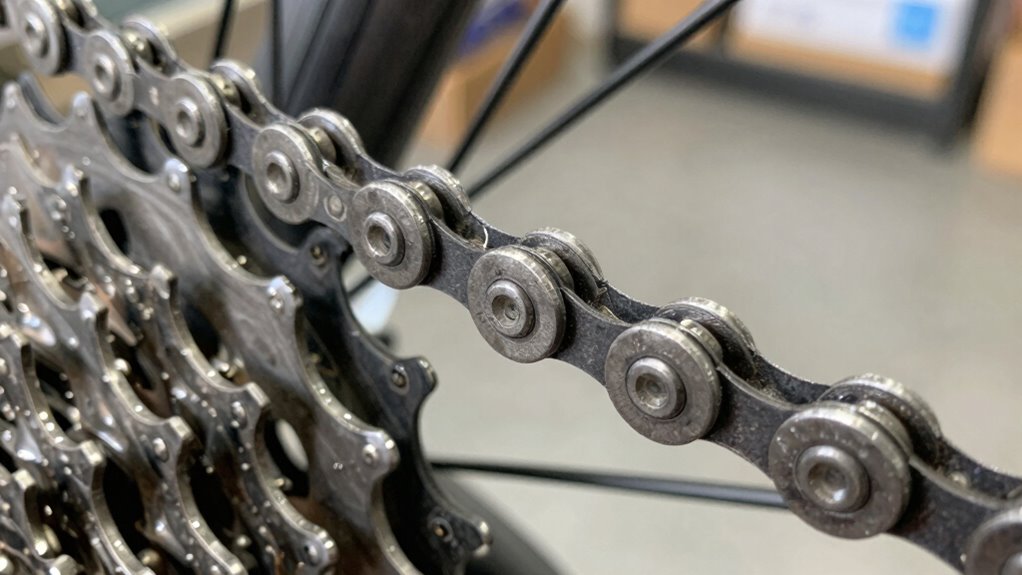

To measure wear on your 12-speed chain accurately, you’ll need a specialized chain wear checker or a precise caliper. Confirm your chain is clean and lubricated before measuring, as dirt and grime can distort results. Check often, especially if riding in tough conditions, to prevent early wear and shifting issues. Proper measurement helps you catch wear early, and if you’re curious about the best tools and techniques, there’s more to learn below.
Key Takeaways
- Use a dedicated 12-speed chain wear checker or a precise caliper for accurate measurement.
- Clean and lubricate the chain thoroughly before measuring to ensure reliable results.
- Measure the chain at multiple points to detect uneven wear or elongation.
- Follow manufacturer guidelines for acceptable elongation limits, typically around 0.5% to 0.75%.
- Replace the chain promptly when wear exceeds recommended limits to prevent damage to cassette and chainrings.
Why 12-Speed Chains Are More Sensitive Than Older Models
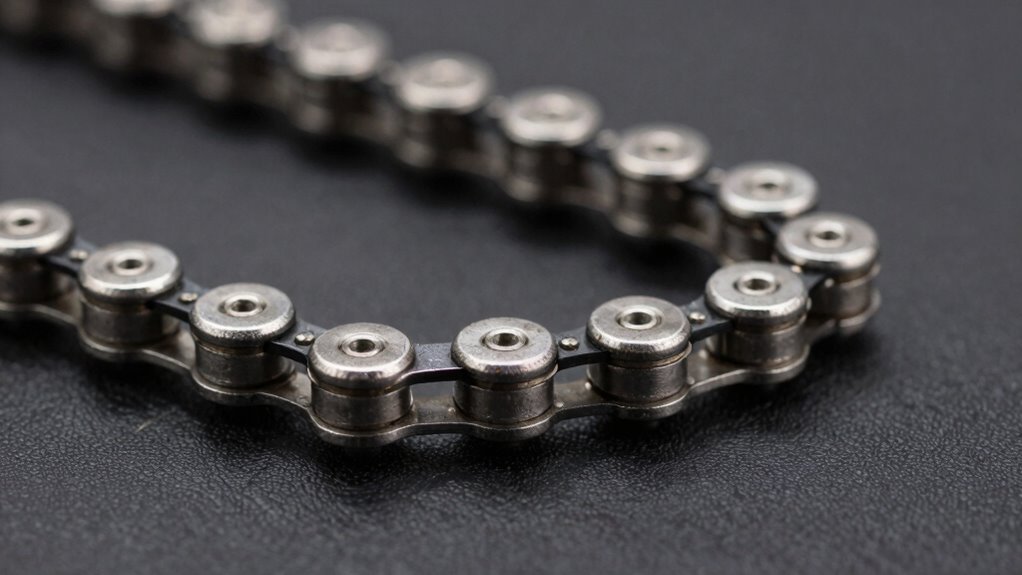
Because 12-speed chains have tighter spacing and narrower links, they are inherently more sensitive to wear than older models. The chain material, often lighter and more delicate, can wear faster if not properly maintained. Proper chain lubrication is essential; without it, friction increases, accelerating wear and stretching the chain more quickly. High-quality materials and precise manufacturing are critical for these chains to function correctly, as even small imperfections can cause uneven wear. The thinner links and tighter pitch demand greater manufacturing precision, making them less forgiving of dirt, grime, or poor lubrication. This sensitivity means you’ll notice wear sooner, and neglecting maintenance can lead to faster chain degradation. Staying vigilant about chain lubrication and choosing high-quality materials helps extend your chain’s lifespan and keeps your 12-speed drivetrain running smoothly. Additionally, understanding the projector technology behind your equipment can ensure you maintain optimal performance and longevity. Regular inspections and proper cleaning can further prevent premature wear and ensure consistent shifting performance. Paying close attention to chain tension is also crucial, as improper tension can accelerate wear and negatively impact shifting.
How Chain Wear Happens Over Time
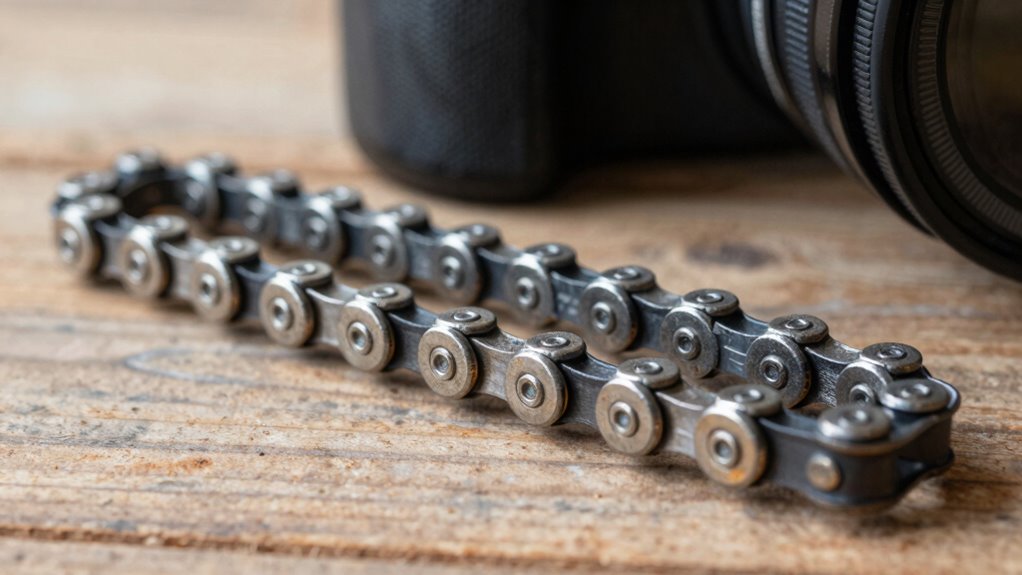
Over time, your chain experiences wear from constant engagement with the gears and the stretching that results. The pin and plate begin to degrade, reducing smooth shifting and efficiency. Riding conditions like dirt, mud, or rain can accelerate this wear, making it essential to understand how these factors influence your chain’s lifespan. Additionally, exposure to essential oils for maintenance can help protect and prolong the life of your chain by reducing corrosion and buildup. Regular inspections and adjustments are key to catching early signs of chain wear and maintaining optimal performance. Incorporating creative storytelling for branding into your maintenance routine can also help you stay engaged and motivated to keep your bike in top condition. Understanding filtration helps in selecting the right cleaning products that prevent debris buildup and extend your chain’s longevity, especially when cleaning with manufacturer-recommended methods.
Chain Engagement and Stretch
As you ride, the chain’s engagement with the sprockets gradually weakens due to constant tension and pressure. Over time, this loss of engagement causes the chain to stretch, affecting smooth shifting and power transfer. You might notice it slipping or skipping under load, which indicates increased wear measurement. Chain stretch occurs because the pins and plates wear down, but it also impacts how well the chain meshes with the gears. To stay ahead of problems, regularly check for chain elongation using a ruler or a dedicated gauge. Ignoring chain engagement decline can lead to faster component wear and costly repairs. Monitoring wear measurement helps you determine when to replace the chain before it causes damage to sprockets or other drivetrain parts.
Wear of Pin and Plate
When you ride, the pins and plates inside your chain experience constant friction and pressure, which gradually wears them down over time. Pin wear occurs as the pins slowly become thinner and lose their diameter, reducing their ability to securely hold the rollers and plates. Plate elongation happens when the holes in the plates stretch or enlarge due to repeated stress, leading to a longer chain. Both forms of wear contribute to decreased chain performance and increased risk of skipping or failure. As pins wear and plates elongate, the chain’s overall length increases, affecting shifting precision and drivetrain efficiency. Regularly checking for pin wear and plate elongation helps you determine when it’s time to replace your chain before more severe damage occurs. Understanding chain wear can help you better maintain your drivetrain and extend the lifespan of your components, especially since consistent maintenance practices are key to longevity.
Impact of Riding Conditions
Riding conditions play a significant role in how quickly your chain wears out. Rough riding terrain, like muddy trails or rocky paths, causes more stress on the chain, accelerating wear. Similarly, weather conditions such as rain, humidity, or snow introduce moisture that can lead to corrosion and faster degradation. If you frequently ride in wet or muddy environments, dirt and debris can get between the chain links, increasing friction and wear. Conversely, smooth, dry roads put less strain on your chain, helping it last longer. Understanding these factors helps you anticipate maintenance needs and adjust your riding habits accordingly. Regular cleaning and lubrication are especially important when riding in challenging conditions to minimize wear and extend your chain’s lifespan. Additionally, being aware of material properties can inform you about how different chains respond to various environmental stresses. To better protect your chain, consider using protective coatings designed to resist corrosion in harsh conditions.
Essential Tools for Measuring 12-Speed Chain Wear
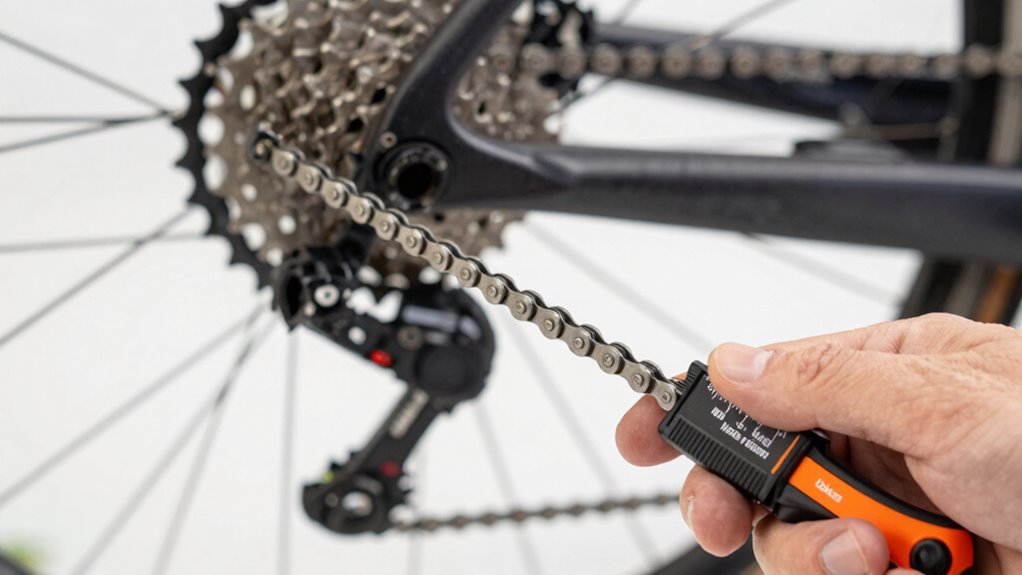
To accurately measure 12-speed chain wear, you’ll need the right tools. A chain wear checker is vital; it gauges elongation precisely and helps you determine if your chain needs replacing. Use a caliper for detailed measurements, especially when checking link pin movement. Keep in mind that proper chain lubrication guarantees smooth operation and extends gear compatibility, making measurements more dependable. A good quality chain checker designed specifically for 12-speed systems is essential, as these chains are often narrower and more sensitive to wear. Avoid using generic tools that might not fit or provide accurate readings. Being aware of free floating mechanisms in modern bike components can also influence how you interpret wear and perform maintenance. Having these tools on hand allows you to assess chain health correctly, prevent premature drivetrain wear, and maintain ideal shifting performance.
How to Measure Chain Wear the Right Way

Accurately measuring chain wear involves more than just checking for visible elongation; it requires proper technique and the right tools. Before measuring, start with chain cleaning to remove dirt and grime, ensuring accurate results. Proper lubrication maintenance also helps prevent premature wear, but it’s essential to evaluate wear when the chain is clean and dry. Use a chain wear tool or ruler designed for bike chains to get precise readings. Place the tool on the chain links, following the manufacturer’s instructions, and check for elongation. This approach ensures you’re assessing the true condition of your chain, not just surface grime. Regular measurements help you catch wear early, optimizing chain lifespan and overall bike performance. Incorporating proper maintenance practices can significantly extend the life of your chain and improve riding quality, especially when combined with regular inspections and timely replacements. Additionally, understanding how to interpret the measurements can help you decide whether a chain needs replacing or if adjustments are sufficient. Being aware of chain wear indicators can further aid in making informed maintenance decisions. Recognizing early signs of wear can prevent unexpected chain failure and costly repairs.
When to Replace Your Worn-Out Chain
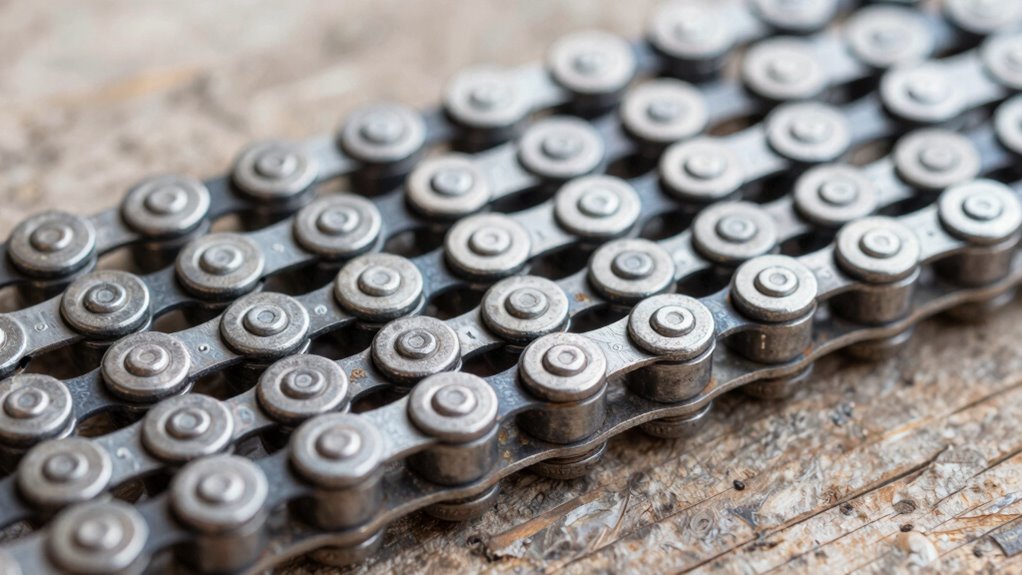
If your chain shows signs of excessive wear, it can cause poor shifting and chain slippage. Ignoring these issues shortens your chain’s lifespan and affects your bike’s performance. Knowing when to replace your chain helps maintain smooth rides and prolongs your drivetrain’s life. Regularly inspecting modern drivetrain components can help you stay ahead of potential issues and ensure optimal performance. Additionally, understanding how to measure chain wear can provide a clear indication of when a replacement is necessary.
Signs of Excessive Wear
Excessive wear on your chain can silently compromise your bike’s performance and safety. One clear sign is if your chain looks stretched or elongated, making it difficult to shift smoothly. Poor chain lubrication and inadequate chain cleaning can accelerate wear, leading to rust or stiff links. If you notice skipping gears or slipping under load, it’s a sign your chain has worn past its prime. Also, a visibly dirty or gritty chain indicates neglect, which worsens wear over time. Regularly inspecting for elongation and cleaning your chain can help catch these signs early. When the chain is excessively worn, even meticulous maintenance won’t prevent damage to other drivetrain components, signaling it’s time for a replacement. Staying vigilant ensures maximum performance and safety on every ride.
Impact on Shifting Performance
When your chain becomes worn, shifting can feel less smooth and more stubborn, often resulting in missed gear changes or slipping under load. Worn chains disrupt gear compatibility, causing gears to skip or hesitate. Proper chain lubrication helps maintain smooth shifting, but once wear exceeds a certain point, performance declines regardless. You might notice:
- Increased effort needed to shift gears
- Gears slipping or skipping under pressure
- Hesitation during gear changes
- Inconsistent shifting across different gears
- Reduced responsiveness of the drivetrain
These issues highlight the importance of replacing a worn chain promptly. Continuing to ride with a fatigued chain compromises shifting performance and can damage other drivetrain components. Regularly checking wear and maintaining proper chain lubrication ensures ideal shifting and gear compatibility. Measuring chain wear is essential to prevent these issues and maintain optimal drivetrain performance. Additionally, using a chain wear indicator tool can simplify the process and improve measurement accuracy. Keep in mind that chain stretch is a common form of wear that can be measured to determine if replacement is necessary.
Chain Longevity Expectations
Worn chains don’t just cause shifting issues; they also have a limited lifespan. Over time, the chain’s pins and plates wear down, reducing its ability to engage properly with the cassette and chainrings. Regular chain cleaning and proper chain lubrication help extend its life, but eventually, wear becomes unavoidable. Most experts recommend replacing your chain every 2,000 to 3,000 miles, depending on riding conditions and maintenance. If you notice skipped gears, sluggish shifts, or if your chain shows signs of elongation, it’s time to swap it out. Continuing to ride on a worn chain can accelerate wear on your cassette and chainrings, leading to more expensive replacements. Monitoring chain wear and replacing it timely ensures peak performance and prolongs the lifespan of your drivetrain.
Common Mistakes When Measuring Chain Wear
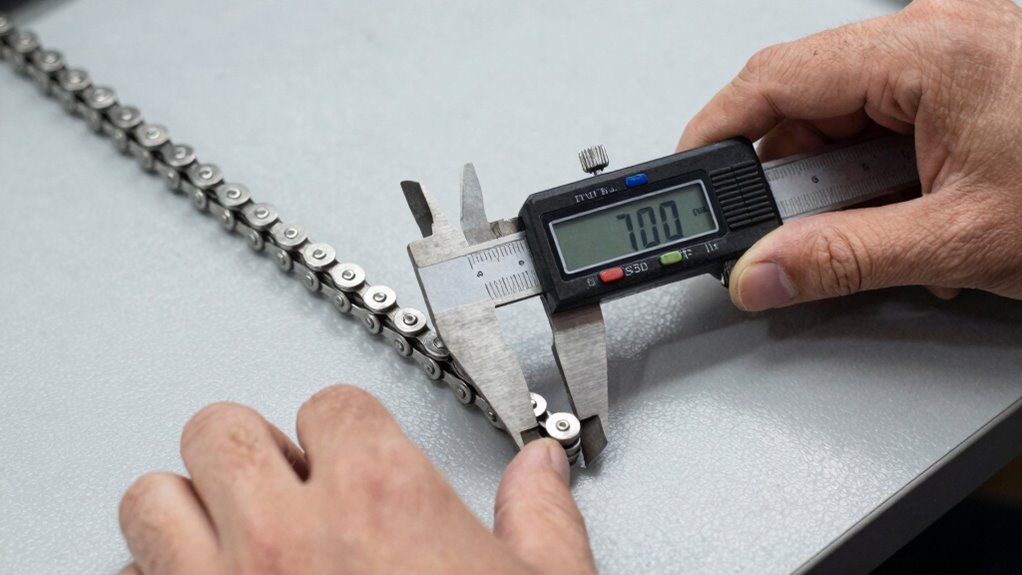
Measuring chain wear might seem straightforward, but common mistakes can lead to inaccurate results. Rushing through the process or skipping proper chain cleaning can cause debris to skew measurements. Failing to check gear alignment might also distort your assessment, as misaligned gears can appear to have more wear than they actually do. Additionally, using worn-out tools or measuring at inconsistent points on the chain can give false readings. Always guarantee your chain is thoroughly cleaned before measuring, and verify that your gears are properly aligned. Accurate results depend on attention to detail and avoiding these pitfalls. Being precise helps prevent premature replacement and ensures your 12-speed chain performs at its best. Proper technique saves time and extends the life of your drivetrain.
How Chain Wear Affects Shifting and Durability

As your chain wears, you’ll notice shifting becomes less smooth and more prone to slipping. This not only affects your ride quality but also puts extra stress on other drivetrain components. If you ignore chain wear, it can shorten your chain’s lifespan and lead to costly repairs down the line.
Shifting Performance Declines
When a chain becomes worn, it often begins to struggle with smooth shifting, causing gears to hesitate or slip unexpectedly. This decline happens because the chain’s links no longer mesh precisely with the cassette and chainrings. Poor chain lubrication can accelerate wear, worsening shifting issues faster. As the chain elongates, it loses cassette compatibility, leading to skipped gears and inconsistent performance. You might notice increased effort when shifting or a noisy drivetrain. To maintain ideal shifting, regularly check chain wear and replace it before performance drops considerably. Keep your chain well-lubricated to reduce friction and prevent premature wear. Additionally, ensure your cassette is compatible with your chain’s current condition. Proper maintenance and timely replacements are key to preserving smooth shifting and extending your drivetrain’s lifespan.
Chain Longevity Risks
Worn chains don’t just cause shifting hiccups—they also threaten your drivetrain’s durability. As a chain wears, its increased length and slack put extra stress on the chain material, acceleratin’ wear on sprockets and derailleur components. Chain design plays a role too; some designs are more resistant to elongation, but no chain is immune if it’s neglected. When your chain wears out, it can lead to poor shifting, reduced efficiency, and even chain breakage. Over time, the compromised chain material becomes more prone to fatigue, risking sudden failure. Regularly check for wear and replace your chain before it reaches the point where wear compounds on other drivetrain parts. Doing so preserves your bike’s performance and extends the lifespan of the entire system.
Tips to Extend Your 12-Speed Chain’s Life
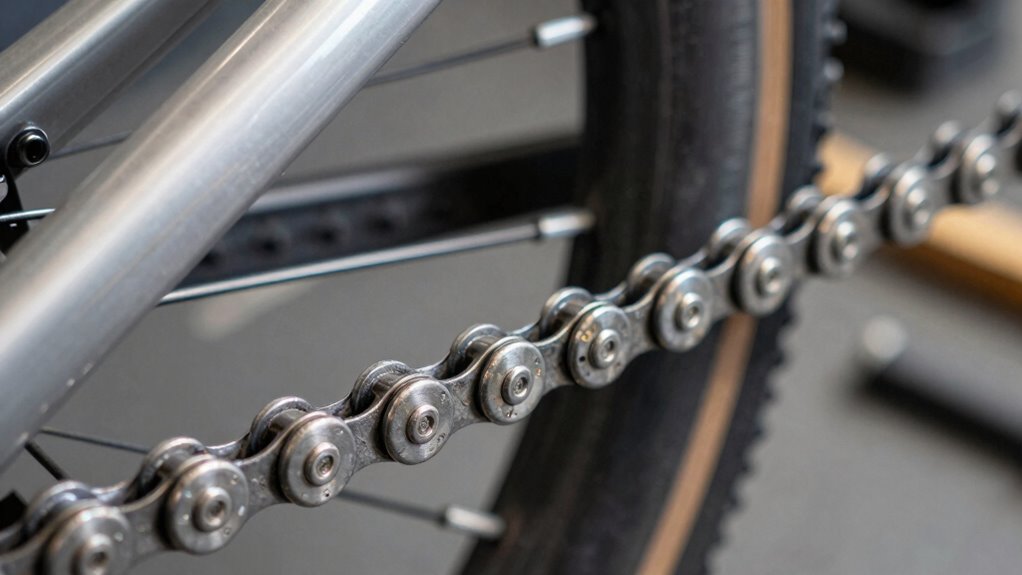
To get the most out of your 12-speed chain, regular maintenance is essential. Proper lubrication techniques and chain cleaning methods can considerably extend its lifespan. Keep your chain well-lubricated to reduce friction and prevent rust, applying lubricant after rides or when you notice dryness. Clean your chain regularly with a degreaser and a brush to remove grime and debris that cause wear. Here are some tips to help you maximize chain life:
- Use the right lubricant for your riding conditions
- Clean your chain after muddy or wet rides
- Avoid over-lubricating, which attracts dirt
- Check for wear and replace the chain when needed
- Keep your drivetrain aligned and shifting smoothly
Consistent maintenance ensures your chain stays in top shape longer, saving you money and improving ride quality.
Best Tools for Measuring 12-Speed Chain Wear

Regularly checking your chain’s wear guarantees it performs smoothly and lasts longer. To do this accurately, you need the right tools. A chain wear indicator tool is the most dependable option; it slides into the chain links and measures elongation. Some popular models include Park Tool’s CC-3.2 and Shimano’s SM-CN900. These tools are easy to use after chain cleaning and lubrication—dirt and grime can skew measurements. Before measuring, wipe down your chain thoroughly to remove debris, then lubricate it for smooth operation. Digital calipers can also help if you prefer a precise measurement, but a dedicated chain wear tool simplifies the process. Regularly using these tools ensures you catch wear early, preventing costly damage and maintaining ideal shifting.
Troubleshooting: What to Do When Your Chain Is Worn Out
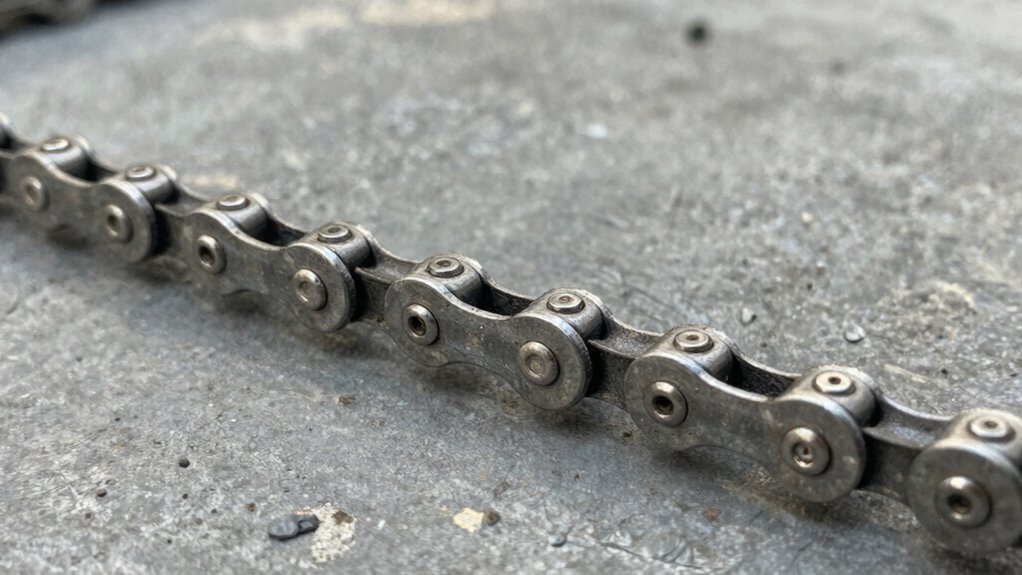
When your chain shows signs of excessive wear, it’s crucial to address the issue promptly to prevent further damage to your drivetrain. A worn-out chain can cause poor shifting, chain slip, and even damage your cassette or chainrings. First, check if your chain is properly lubricated—lack of chain lubrication accelerates wear. Replace the chain if it’s beyond the recommended wear limit. Ensure your new chain is compatible with your brake system and drivetrain to maintain ideal brake performance and shifting. Regularly inspect your chain for elongation and dirt buildup. Remember, a worn chain affects brake compatibility, reducing stopping power. Keep your chain clean and lubricated, and replace it timely to extend your drivetrain’s lifespan and maintain smooth, safe riding.
Frequently Asked Questions
Can Chain Wear Vary Between Different 12-Speed Brands?
Yes, chain wear can vary between different 12-speed brands due to brand compatibility and manufacturing inconsistencies. Some brands design their chains with tighter tolerances, which may lead to quicker wear, while others focus on durability. You should regularly check for wear and guarantee you’re using compatible components, as mismatched parts can accelerate chain elongation and reduce drivetrain efficiency. Always follow manufacturer recommendations for ideal performance.
How Often Should I Check My 12-Speed Chain for Wear?
Think of your chain as the heartbeat of your ride—check it regularly to keep it pounding smoothly. You should inspect your 12-speed chain every 200-300 miles, or sooner if you ride often or rough terrain. Use wear indicators to spot signs of chain elongation early, so you can plan chain replacement before it causes drivetrain damage. Staying vigilant guarantees your bike runs seamlessly and prolongs your component’s life.
Does Chain Lubrication Affect Wear Measurement Accuracy?
Lubrication effects can influence wear measurement accuracy because excess grease or oil can hide the true amount of chain stretch. If your chain is well-lubricated but dirty, it might look like it’s wearing less than it actually is. To get accurate measurements, clean your chain thoroughly before checking wear, and make certain you apply the right amount of lubrication. This way, you maintain measurement accuracy and prolong your chain’s lifespan.
Are There Signs of Chain Wear Besides Measurement Tools?
Did you know that nearly 80% of chain issues can be spotted through visual inspection? Besides measurement tools, you can look for signs like rust, stiff links, or elongated rollers. Listen for unusual noises during rides, which often indicate wear. These signs help you catch problems early, preventing costly repairs and ensuring smoother shifting. Regular visual checks and noise detection keep your chain in top shape longer.
Can a Worn Chain Damage My Cassette or Chainrings?
Yes, a worn chain can damage your cassette or chainrings. When your chain stretches over time, it doesn’t mesh properly with the gear teeth, causing uneven wear. This can lead to costly cassette damage, as the teeth become misshapen or worn down faster. To avoid this, regularly check for chain stretch and replace your chain before it causes damage, ensuring your drivetrain stays smooth and extends its lifespan.
Conclusion
Keeping your 12-speed chain in top shape is essential since it can wear up to 3-4 times faster than older models, affecting shifting and durability. Regularly measuring wear with the right tools can save you money and frustration. Did you know that riding in harsh conditions can accelerate chain wear by up to 50%? Stay proactive, check your chain often, and replace it before it causes more costly damage. Your rides will be smoother and more reliable.