
When swapping brake pads, choose resin those that are softer, quieter, and produce less brake dust, ideal for everyday driving and gentle stops. Metallic pads offer higher durability and stronger stopping power, great for heavy-duty use or performance driving but tend to be noisier and create more dust. Consider your driving style and needs, as each type impacts braking performance and rotor wear. If you want to make an informed decision, there’s more to discover about the differences.
Key Takeaways
- Resin brake pads are easier to install due to their softer, more flexible material compared to the harder metallic pads.
- Metallic brake pads require more force during installation and proper handling with safety gear.
- Choosing between resin and metallic pads depends on driving needs: resin for quiet, less dust; metallic for durability and high-performance.
- Metallic pads may cause more rotor wear and noise, while resin pads generate less dust but wear faster under stress.
- Follow manufacturer instructions and consider professional help for correct installation and optimal performance.
Are your brake pads starting to wear out or squeal louder than usual? If so, it’s time to contemplate swapping them out. The choice between resin and metallic brake pads isn’t just about performance; it also involves understanding the differences in brake pad material and guaranteeing proper installation safety. Both types have their pros and cons, but knowing which suits your driving style and vehicle can make a big difference in your braking experience.
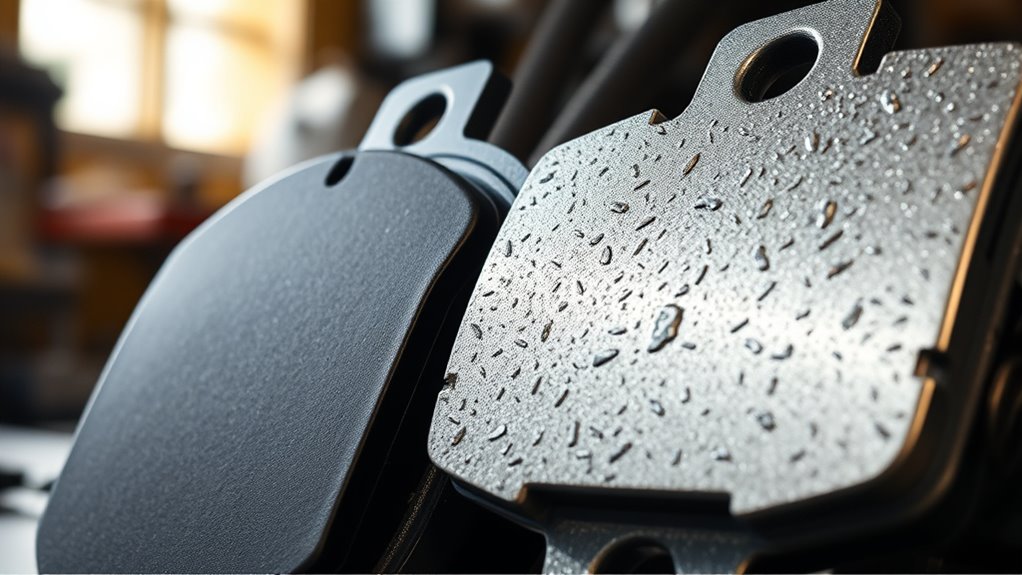
Resin brake pads, also known as organic pads, are made from a mixture of rubber, glass, and resins. They tend to be softer and quieter, producing less brake dust, which keeps your wheels cleaner. Because of their softer brake pad material, resin pads generate less heat and tend to be gentler on your brake rotors, which can extend their lifespan. They’re also easier to install, especially for DIY enthusiasts, because they require less force during installation and tend to conform more easily to the rotor surface. However, resin pads can wear out faster, especially under high-stress conditions like mountain driving or aggressive braking, and they may not provide the same stopping power as metallic pads in extreme situations.
Resin brake pads are softer, quieter, and easier to install but wear out faster under high-stress conditions.
Metallic brake pads are composed of various metals, such as copper, iron, or steel, embedded in a resin or ceramic matrix. These pads are more durable and excel in high-temperature environments. They offer superior stopping power and are better suited for heavy-duty use, such as towing or performance driving. However, because of their harder brake pad material, metallic pads tend to produce more noise — often a squealing or squeaking sound — and generate more brake dust, which can accelerate brake rotor wear over time. When installing metallic pads, safety becomes even more critical. Their increased hardness means greater force is needed during installation, and improper handling can cause damage to the brake system or injury. Always wear gloves and eye protection, and double-check that the pads are correctly aligned with the rotor to prevent uneven wear or damage. Additionally, choosing merchant services that facilitate quick and secure transactions can help you manage your vehicle maintenance expenses more efficiently.
Choosing between resin and metallic brake pads depends on your driving habits and priorities. If you prefer quiet, smooth braking and shorter brake pad lifespan doesn’t bother you, resin might be the way to go. But if you need maximum durability and stopping power, especially in demanding conditions, metallic pads are likely better. Regardless of your choice, proper installation safety is essential—follow manufacturer instructions carefully, use the right tools, and think about professional help if you’re unsure. Making an informed decision and installing your new brake pads correctly will ensure safe, reliable stopping power and prolong the life of your braking system.
Frequently Asked Questions
How Long Do Resin Brake Pads Typically Last?
Resin brake pads usually last around 30,000 to 70,000 miles, depending on your driving habits and conditions. They offer good wear resistance but tend to wear out faster than metallic pads. To maximize brake pad longevity, avoid aggressive braking and regular inspections. Keep in mind that factors like terrain and brake system maintenance also influence how long resin pads maintain ideal performance, so stay attentive to signs of wear.
Are Metallic Brake Pads More Environmentally Friendly Than Resin?
Like a double-edged sword, metallic brake pads cut deeper into performance but aren’t necessarily greener. They’re less environmentally friendly than resin pads because they contain more non-recyclable materials and produce more brake dust, impacting sustainability. In a sustainability comparison, resin pads often trump metallic ones due to better material recyclability and lower environmental impact. If eco-friendliness matters, resin might be your better choice for a cleaner ride.
Can I Mix Resin and Metallic Brake Pads?
You shouldn’t mix resin and metallic brake pads because of compatibility concerns. Combining different types can lead to uneven wear, reduced braking performance, or damage to your braking system. Always choose the same type for both front and rear brakes to guarantee safety and peak function. If you’re considering switching, it’s best to replace your brake pads entirely rather than attempting brake pad mixing, to maintain reliable and consistent braking.
Do Resin Brake Pads Perform Better in Cold Weather?
Yes, resin brake pads perform better in cold weather because they provide improved brake pad adhesion and consistent cold weather performance. You’ll notice that resin pads generate less noise and have quicker response in low temperatures. While metallic pads excel in high heat, resin pads excel in cold conditions, ensuring safer and more reliable braking. So, if cold weather performance matters most, resin brake pads are the better choice for you.
What Is the Cost Difference Between Resin and Metallic Brake Pads?
You’ll find that resin brake pads are generally more affordable, with lower initial costs due to simpler manufacturing. Metallic brake pads tend to be pricier because of their durability and material complexity. The cost comparison depends on your vehicle’s needs, driving style, and brand choices. Pricing factors include material quality, brand reputation, and where you shop. Overall, resin pads save money upfront, but metallic pads might last longer and offer better performance.
Conclusion
Choosing between resin and metallic brake pads is like selecting the right key for a lock; each open your vehicle’s potential differently. Resin pads offer smooth, quiet stops, symbolizing gentle rain softly cleansing your path. Metallic pads, with their fierce grip, resemble a roaring fire fueling your drive. Whichever you choose, remember it’s about harmony—finding the balance between control and power. Like a well-tuned orchestra, your brake pads keep your journey safe and in perfect rhythm.