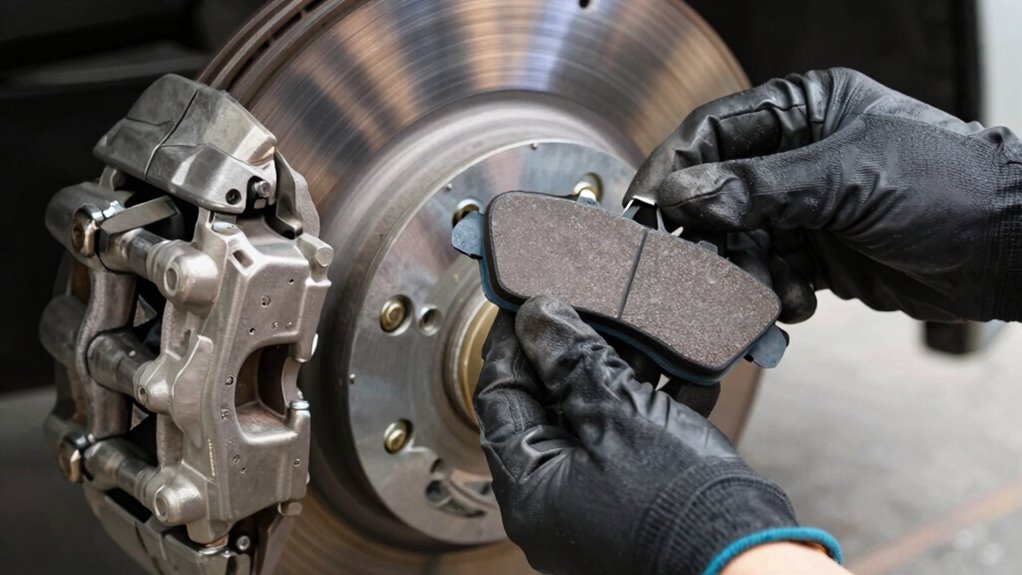

To swap disc brake pads without contamination, carefully handle new pads with clean gloves or tools, avoiding oils or dirt. Before installation, spray the pads and other parts with brake cleaner and wipe thoroughly to remove oil, grease, or dust. Keep work areas tidy, store parts properly, and avoid touching the friction surface. Ensuring proper installation and bedding in the pads will optimize performance and safety; explore further tips for a clean, effective brake change.

Get your wardrobe favorites delivered free with Prime
- Fast, free delivery on millions of items
- Prime Video, Amazon Music and more included
- Member-only deals all year
Key Takeaways
- Handle new brake pads with clean gloves or tools to prevent oil and grease transfer.
- Use brake cleaner to thoroughly clean pads and rotors before installation.
- Store and transport brake pads in sealed, contamination-free containers until ready to install.
- Avoid touching the friction surface during removal and installation; handle with care.
- Inspect and clean all related components for contamination sources before final assembly.
As an affiliate, we earn on qualifying purchases.
Why Keeping Brake Pads Clean Is Crucial for Performance
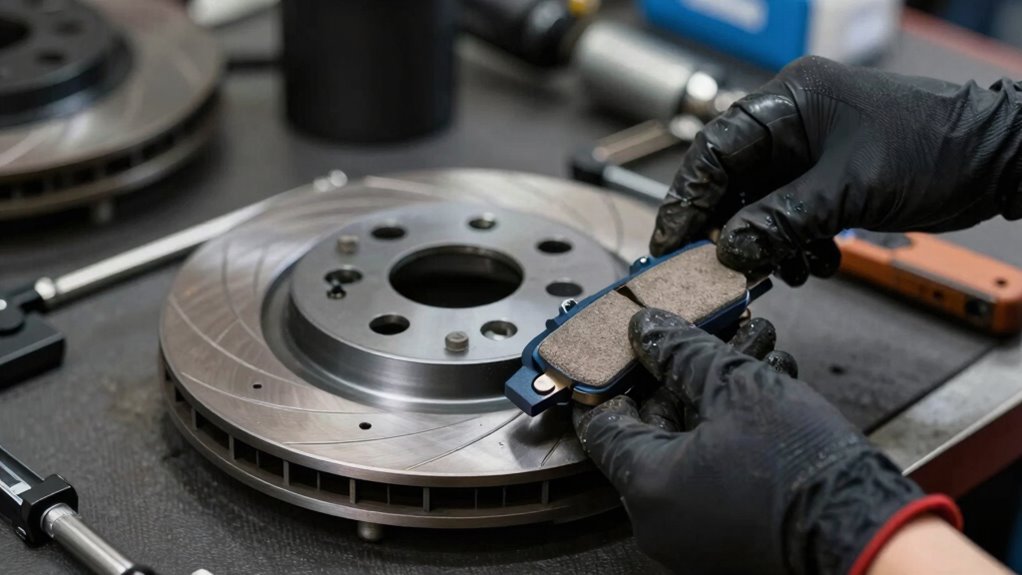
Keeping your brake pads clean is essential because dirt, dust, and oil can markedly reduce their ability to grip the rotors. The brake pad material plays a crucial role in how well your brakes perform, and contamination can compromise this performance. When brake pads become contaminated, they can cause uneven wear, squealing, or reduced stopping power. To guarantee maximum safety and efficiency, contamination prevention is key. Always handle brake pads carefully during maintenance to avoid transferring oils or grease from your hands. Proper handling techniques can significantly minimize the risk of contamination during swaps. Keeping the pads free from debris and contaminants helps maintain ideal contact with the rotors, ensuring smooth braking and extending the lifespan of your brake system. Proper cleanliness directly impacts braking performance, making it indispensable to protect your brake pads from contamination. Additionally, using proper handling techniques can further reduce the risk of introducing contaminants during swap procedures. Regular inspection and cleaning of brake components with appropriate brake cleaner can also help maintain optimal performance and safety. Implementing cleaning procedures designed for brake parts can further enhance their longevity and reliability.
As an affiliate, we earn on qualifying purchases.
Gather Tools and Supplies to Keep Brake Pads Clean During Replacement
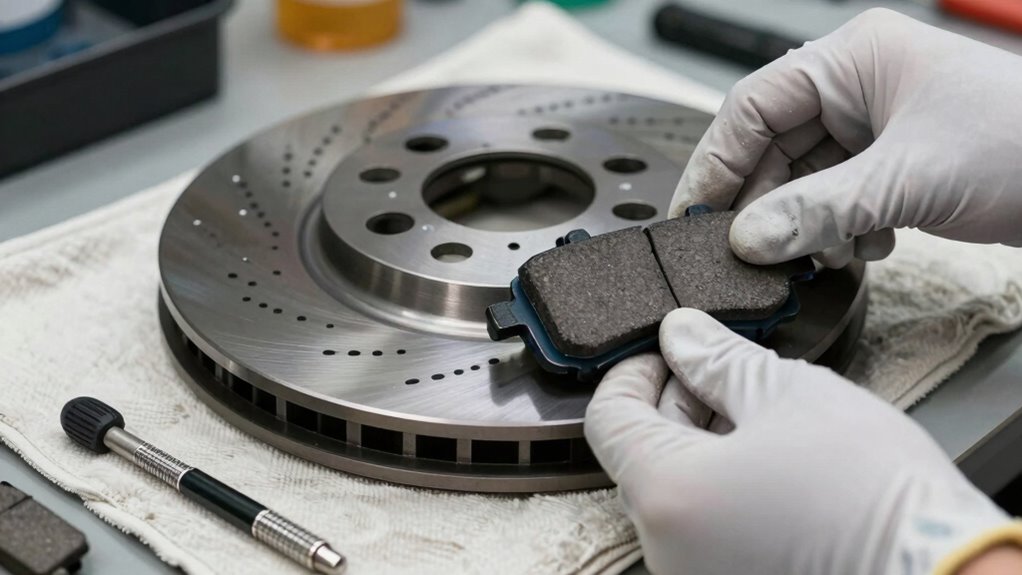
Before you begin replacing your brake pads, gather all the necessary tools and supplies to prevent contamination. You’ll need calibrating tools to verify your new pads are correctly aligned and functioning ideally. These tools help maintain precision during installation, reducing the risk of uneven wear or squeal. Additionally, use clean storage containers to keep your brake pads, calipers, and related parts free from dirt and oil. Choose containers that seal tightly to prevent dust or grease from contaminating the pads. Having everything organized and protected minimizes handling and reduces the chance of introducing contaminants. Proper cleanliness practices are essential to ensure the longevity and optimal performance of your brake components. Maintaining a contamination-free environment during the process is crucial to prevent issues like brake squeal or uneven wear. Incorporating proper handling techniques can further help prevent accidental contamination during installation. Being mindful of contamination sources can help you maintain the integrity of your brake parts throughout the process. Preparing your workspace with these supplies nearby ensures you can work efficiently and keep your brake pads clean throughout the process.
As an affiliate, we earn on qualifying purchases.
Prepare Your Bike and Work Area to Prevent Brake Contamination
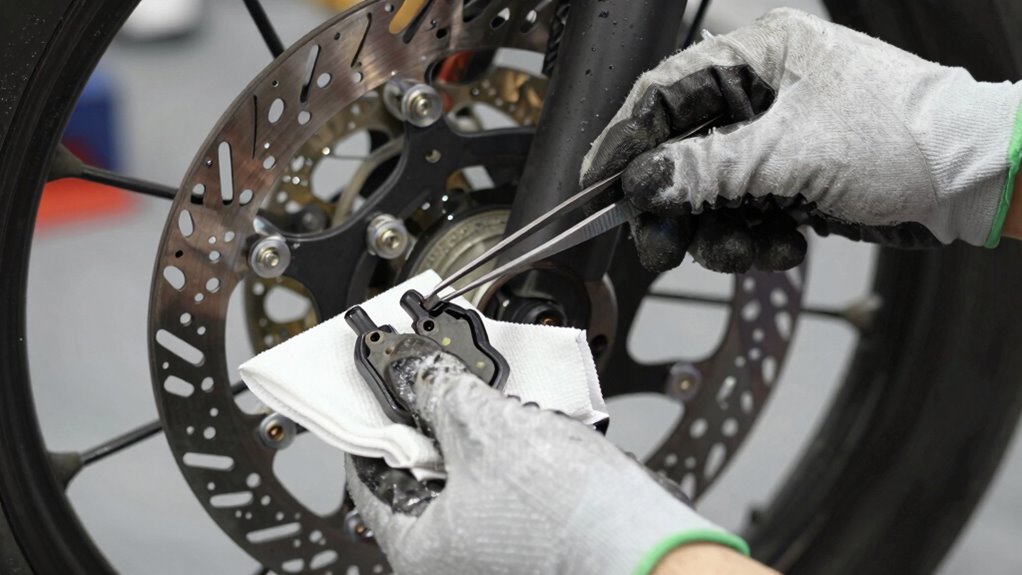
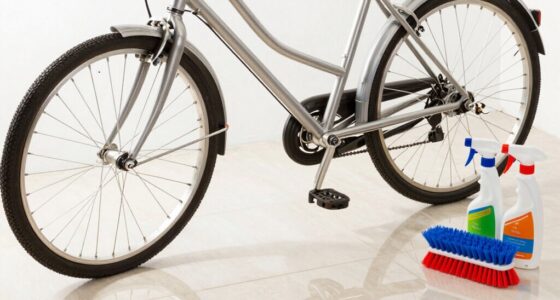
Start by thoroughly cleaning your work area to remove dust, dirt, and grease that could contaminate your brake components. A clean workspace helps prevent cross-contamination and keeps brake parts spotless. Perform a thorough bike cleaning to guarantee no debris settles near the brake area. Set up your work area on a stable surface, ideally with a clean towel or mat to catch any small parts or debris. Keep your tools organized and away from contaminants. Use clean containers for storing removed parts, and avoid touching brake surfaces with bare hands. Proper work area setup minimizes the risk of introducing oils, dirt, or grease onto your brake pads, making sure they remain uncontaminated during the replacement process. This preparation is vital for peak brake performance and safety. Additionally, understanding cleaning appliances and clean-home systems can help maintain your workspace and tools, ensuring they stay free from contaminants, which is especially important for preventing brake contamination. Maintaining a contaminant-free environment is essential for optimal brake function and longevity. Implementing routine cleaning practices for your tools and workspace further reduces the chance of accidental contamination during maintenance.
sealed brake pad storage container
As an affiliate, we earn on qualifying purchases.
As an affiliate, we earn on qualifying purchases.
Remove Old Brake Pads Carefully to Avoid Spreading Contaminants
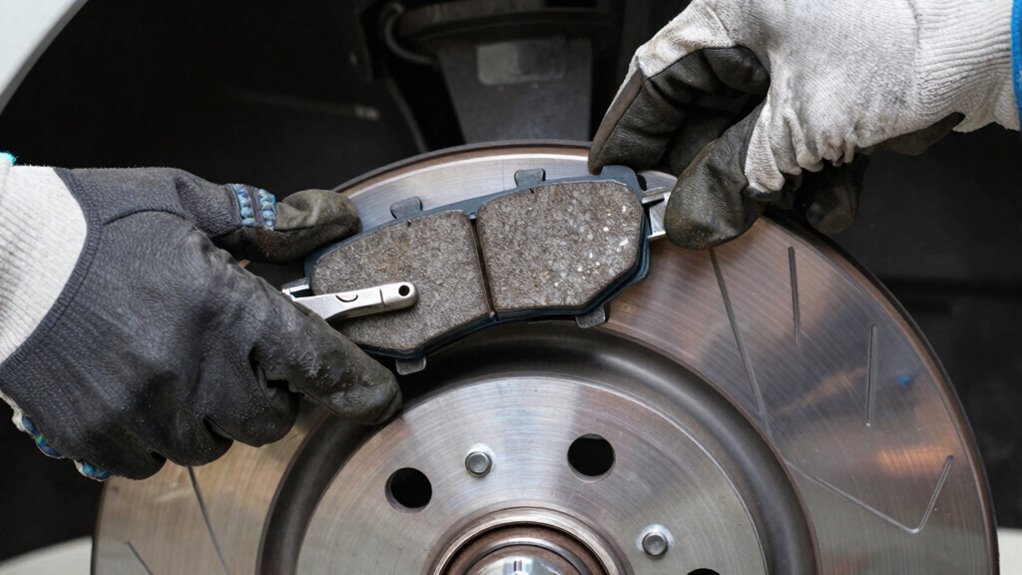
Carefully removing your old brake pads is essential to prevent spreading contaminants onto new pads. During brake pad handling, avoid touching the friction surface to limit contamination risk. Use gloves or a clean cloth to handle the pads, minimizing dirt and oil transfer. Gently pry the pads away from the rotor, taking care not to scrape or damage the surface, which could introduce debris. Keep the old pads separated from other components to prevent cross-contamination. Inspect the pads for signs of oil or grease, and discard any that show contamination. Proper brake pad handling reduces the risk of transferring contaminants to your new pads, ensuring ideal braking performance and longevity. Take your time with each step to maintain a clean workspace and prevent unwanted dirt from spreading. Additionally, inspecting for odors such as oil or grease can help identify potential contamination sources that may affect brake performance. Maintaining a clean workspace is crucial to avoid introducing dirt or debris during the process, and organizing your tools can further help prevent accidental contamination. Being mindful of contamination sources throughout the process can help ensure your new brake pads remain free of harmful substances.
Handle New Brake Pads Carefully to Keep Them Clean and Dry
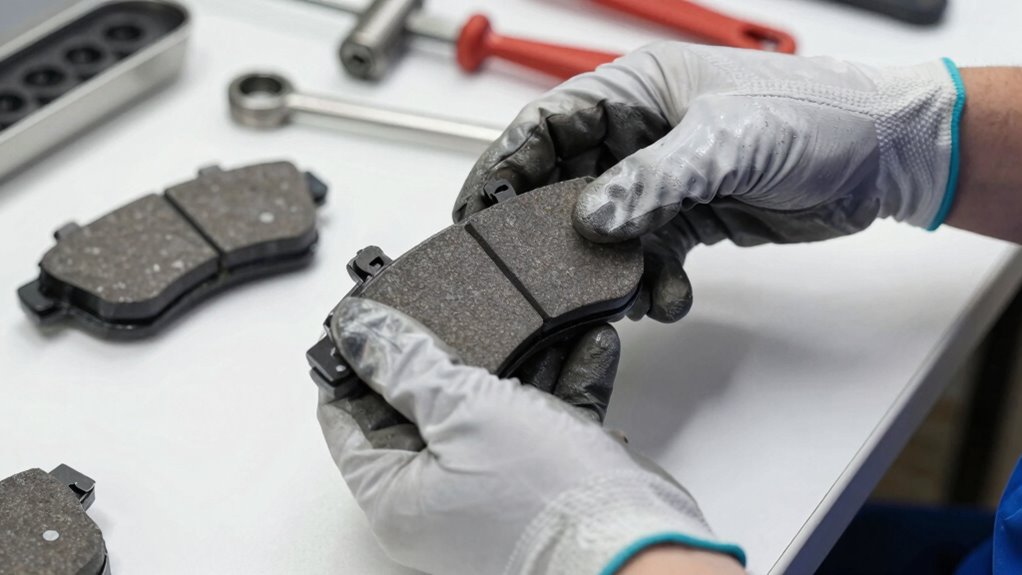
To keep your new brake pads performing their best, handle them with clean, dry hands or use gloves to avoid transferring oils or dirt. Handling new brake pads carefully prevents contamination that can compromise braking performance. Always keep the pads dry to avoid moisture that may cause rust or reduce friction. Proper storage practices are essential to maintain their quality before installation. Additionally, managing contamination risks through careful handling is crucial to ensure optimal brake function. Being mindful of storage conditions can further help preserve the integrity of your brake pads. Be sure to inspect the piercing care and hygiene guidelines to ensure proper handling and maintenance of your brake pads.
Use Brake Cleaner and Inspect New Pads for Contamination
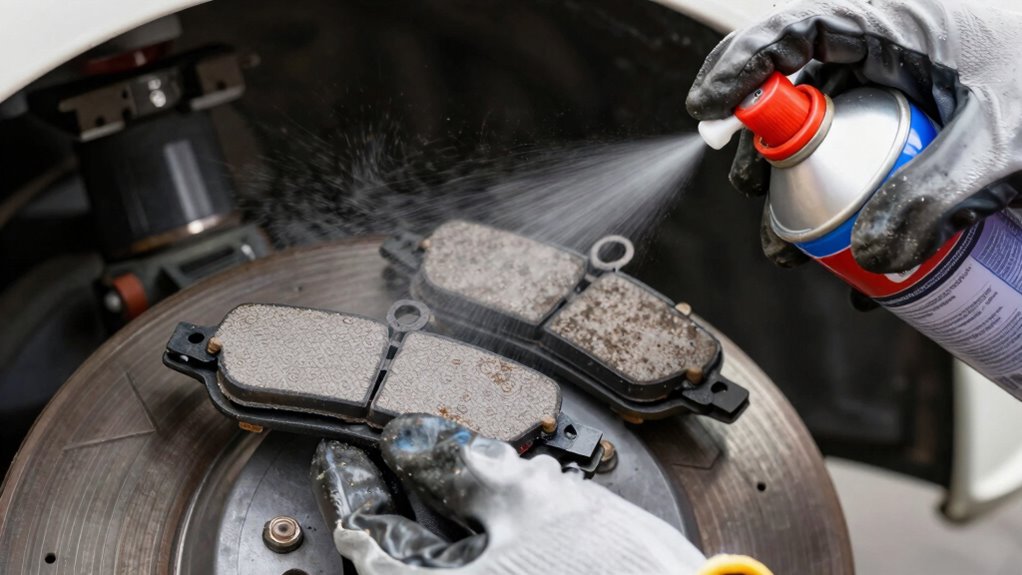
Before installing new brake pads, it’s important to use a brake cleaner to remove any dirt, oil, or contaminants that may have accumulated during storage or handling. Spray the brake cleaner evenly onto the pads, ensuring complete coverage of all surfaces. This helps prevent contamination that could compromise braking performance. After applying, wipe the pads with a clean, lint-free cloth to remove any residue. Next, perform a thorough contamination inspection by checking for any dirt, grease, or foreign material still present. If you notice any contamination, repeat the cleaning process until the pads are spotless. Proper cleaning and inspection ensure the pads are free of contaminants that could lead to uneven wear or reduced braking efficiency once installed. Additionally, understanding contamination issues can help you better identify potential problems before installation. Being aware of common contaminant types can improve your ability to maintain optimal brake performance. Regularly inspecting and maintaining your brake components also supports safety and reliability, especially by recognizing potential sources of contamination, which can help prevent future issues during driving. Incorporating proper handling techniques can further reduce the risk of introducing contaminants during the installation process.
Install New Brake Pads Properly for Maximum Contact
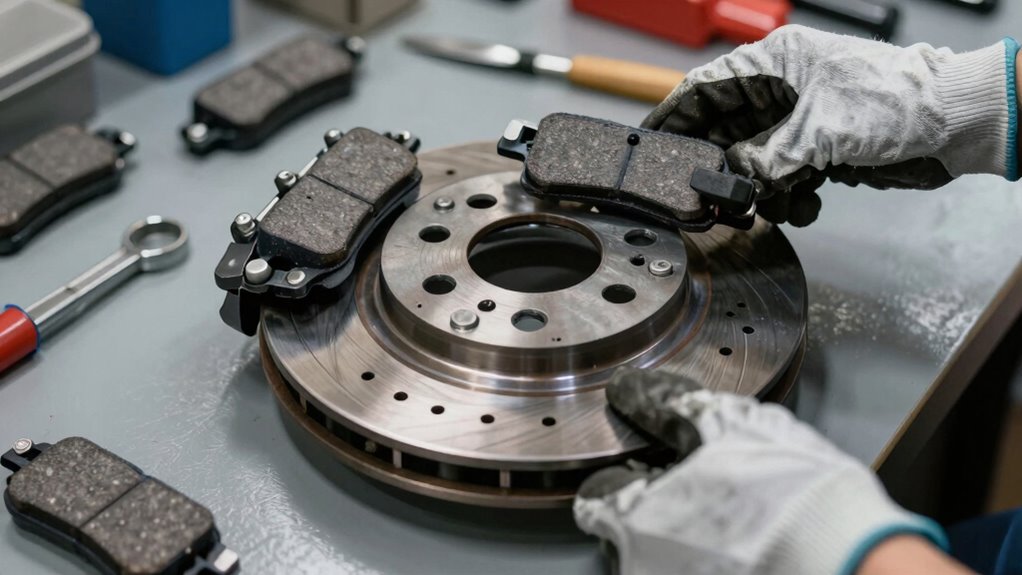
Ensuring maximum contact between the brake pads and rotor is essential for peak braking performance. To achieve this, carefully install the new pads, focusing on proper alignment and pad seating. Follow these steps:
- Confirm the pads are correctly oriented and aligned with the rotor’s surface.
- Press the brake caliper piston back to create enough space for the new pads.
- Install the pads securely, ensuring they sit flush against the rotor.
- Double-check that the pads are free of debris and properly seated for even contact.
- Consider using a caliper piston retraction tool to make the process cleaner and prevent contamination.
Proper alignment during installation prevents uneven wear and noise, while correct pad seating guarantees ideal contact. Take your time during this process to ensure your brakes perform reliably and efficiently.
Bedding in Brake Pads to Prevent Glazing and Improve Performance
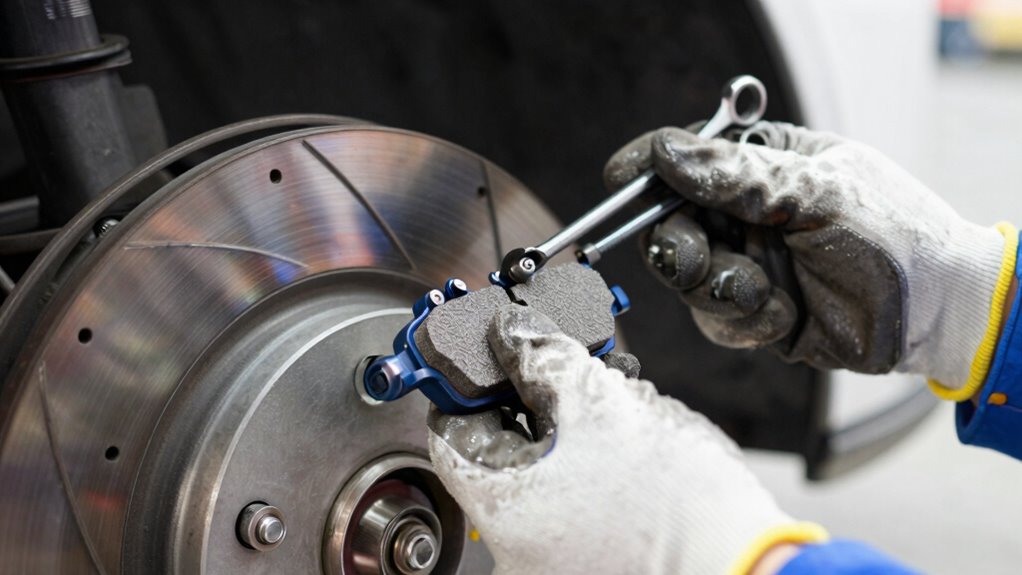
Bedding in brake pads is a crucial step to prevent glazing and maximize their performance. Proper brake pad bedding ensures the brake pad surface conforms to the rotor, creating an even contact patch. This process helps with glazing prevention by reducing the shiny, hardened layer that can develop from initial braking. To perform brake pad bedding, accelerate to a moderate speed and apply firm, consistent pressure on the brakes, then release without stopping completely. Repeat this several times to transfer brake pad material onto the rotor evenly. Avoid aggressive stops or prolonged holding of the brakes, as these can cause glazing instead of preventing it. Proper bedding improves brake response, reduces noise, and prolongs pad life, making your braking system more reliable.
Troubleshoot Common Contamination and Braking Issues After Replacing Pads

After replacing brake pads, contamination and braking issues can often arise if the pads or rotors aren’t properly prepared or handled. Contamination sources, such as oil, grease, or brake fluid, can cause uneven contact, leading to reduced braking performance. To troubleshoot common issues, consider these steps:
Contamination from oil, grease, or brake fluid can cause braking issues after pad replacement.
- Inspect for contamination on the pads and rotors, cleaning with appropriate brake cleaner if needed.
- Check for residual oil or grease on the hub or caliper components that might transfer onto the pads.
- Ensure proper bedding-in procedures to avoid glazing and improve pad-to-rotor contact.
- Verify that installation was correct, with no debris or contaminants trapped during assembly.
Addressing these factors helps eliminate contamination sources and resolves braking issues effectively.
Frequently Asked Questions
Can Contaminated Brake Pads Cause Long-Term Damage to Brake Rotors?
Contaminated brake pads can cause long-term brake issues, including brake rotor damage. When grease, oil, or other contaminants transfer to the rotors, they reduce friction and lead to uneven wear. Over time, this can cause warping or scoring, resulting in decreased braking performance and potential rotor replacement. To avoid long-term damage, always clean your brake components properly and replace contaminated pads promptly.
Are There Specific Types of Brake Cleaner Safe for All Brake Pad Materials?
Think of brake cleaner compatibility as your brake pads’ safety net—some cleaners are gentle enough for all brake pad materials, while others can cause damage. You need to choose a product labeled for brake pad material safety, ensuring it won’t eat away at your pads’ surface. Always read labels carefully, and select a cleaner specifically designed for your brake system to keep everything working smoothly without risking contamination.
How Do I Identify if My Brake Pads Are Contaminated After Installation?
You can identify if your brake pads are contaminated after installation through brake pad inspection for contamination signs like a greasy or shiny surface, unusual noises, or reduced braking performance. If you notice any of these signs, it indicates possible contamination. Regularly check your brake pads and verify they’re clean and dry, avoiding contact with oils or fluids. Proper inspection helps maintain braking efficiency and safety.
What Is the Recommended Storage Method for New Brake Pads Before Installation?
Did you know that improper storage can lead to contamination of up to 30% of brake pads? To prevent this, store your new brake pads in a clean, dry, and sealed container, away from grease, oil, or dirt. Keep them in a cool, ventilated area, and avoid touching the friction surfaces directly. Proper storage guarantees contamination prevention, so your brake pads stay in ideal condition until installation.
Can I Reuse Brake Pads That Have Been Contaminated During Handling?
You shouldn’t reuse brake pads that have been contaminated during handling because contamination can compromise their performance and safety. To prevent contamination, always handle brake pads with clean gloves and avoid touching the friction surface. If contamination occurs, it’s best to replace the pads rather than risk reduced braking efficiency. Proper brake pad handling and contamination prevention are key to ensuring safe, reliable braking performance.
Conclusion
By keeping your brake pads clean during installation, you naturally prevent contamination that could compromise your ride’s safety. It’s almost poetic how a careful approach—using the right tools and techniques—ensures peak performance. When you handle each step with attention, you might find that your brakes feel smoother and more reliable, almost as if the process itself preserves their integrity. In the end, it’s a simple coincidence: cleanliness and care lead to better braking, every time.
Halloween Picks
halloween
As an affiliate, we earn on qualifying purchases.