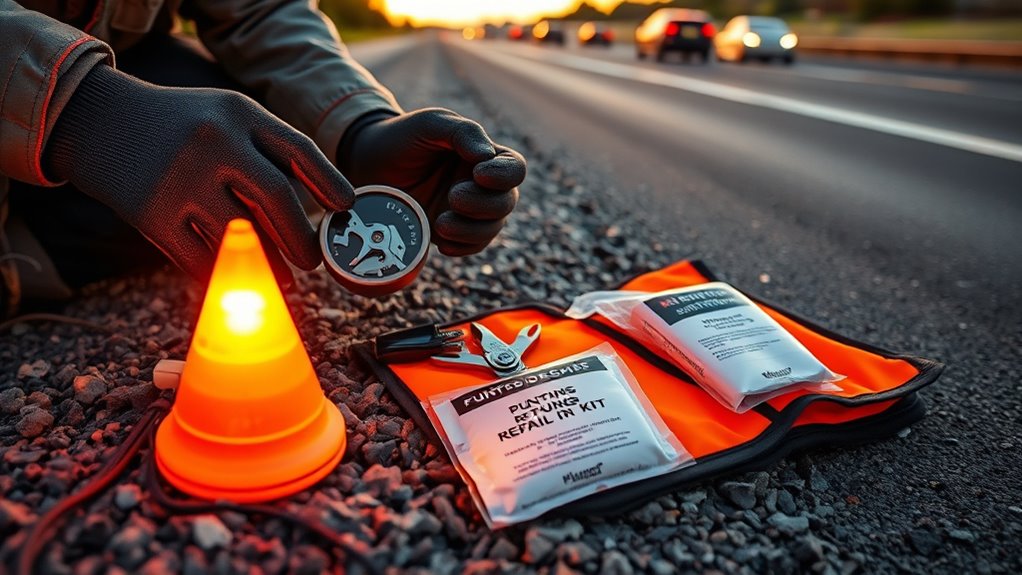

For roadside repairs, you should carry essential tools like a tire patching kit, hazard flares, and emergency supplies. Keep these items accessible in your trunk, and know how to use them properly—such as placing flares 10-15 feet behind your vehicle to warn others, and patching small tire holes efficiently. Staying prepared can save you time and safety. Continue exploring to discover expert tips on handling common roadside issues effectively.

Get your wardrobe favorites delivered free with Prime
- Fast, free delivery on millions of items
- Prime Video, Amazon Music and more included
- Member-only deals all year
Key Takeaways
- Carry a tire patching kit, emergency flares, hazard lights, and basic maintenance supplies in an accessible location like the trunk.
- Use the patching kit to repair small tire punctures by cleaning, roughening, and applying patches according to instructions.
- Deploy emergency flares after turning on hazard lights, placing them 10-15 feet behind the vehicle to alert other drivers.
- Arrange flares in a line or V-shape for maximum visibility, ensuring safety before placement.
- Regularly check and maintain safety supplies, and practice proper procedures for roadside repairs to prevent accidents and delays.

Roadside Repairs
Ever found yourself stranded on the side of the road with a sudden vehicle malfunction? It’s a stressful situation, but knowing what to carry and how to use it can make all the difference. When it comes to roadside repairs, having the right tools and supplies on hand can turn a potential disaster into a manageable fix. One essential item is a good tire patching kit. If your tire gets a puncture, trying to drive on a flat isn’t just unsafe—it can cause further damage. With a tire patching kit, you can quickly seal small holes and get back on the road without waiting for roadside assistance. Just make certain your kit includes patches, adhesive, and a tool to roughen the surface around the puncture. Follow the instructions carefully: locate the puncture, clean the area, roughen the surface, and apply the patch firmly. This simple process can save you time and money, especially if you’re far from help. Incorporating proper maintenance practices can also help prevent such issues from occurring unexpectedly.
Alongside tire patching, emergency flares are crucial for safety. When your vehicle is disabled, especially at night or in poor visibility conditions, placing flares behind your car alerts other drivers to your presence, reducing the risk of accidents. Always keep a few in your trunk, and make sure they’re fresh and ready to use. To deploy them, turn on your hazard lights first, then place the flares a safe distance behind your vehicle—typically about 10 to 15 feet. Spread them out in a line or a V-shape to maximize visibility. Once set, stay inside your vehicle if it’s safe, or stand in a secure location away from traffic, until help arrives or the situation is resolved.
As an affiliate, we earn on qualifying purchases.
Frequently Asked Questions
How Often Should I Perform Roadside Repair Checks?
You should perform roadside repair checks at least once a month to guarantee your vehicle remains in good condition. Regular vehicle maintenance helps identify potential issues early, reducing breakdown chances. Always keep your roadside emergency kits stocked and ready for use. By doing regular checks, you’re prepared for unexpected roadside repairs, making your journeys safer and smoother. Stay proactive with maintenance to avoid inconvenient breakdowns and emergencies.
Can I Fix All Car Issues Myself?
You can handle many DIY car fixes with the right tools and an emergency repair kit, but not all issues. Simple tasks like changing a flat tire or replacing a battery are manageable, yet complex problems require professional help. Always assess your skill level, and if in doubt, rely on your emergency repair kit for temporary fixes. Knowing your limits guarantees you stay safe and avoid causing further damage.
Are There Legal Restrictions on Roadside Repairs?
You should know that legal restrictions on roadside repairs vary by location. In many areas, you may need repair permits for certain types of work, especially if it involves significant modifications or hazardous materials. Always check local laws before attempting repairs on the roadside. Failing to adhere to these restrictions could result in fines or penalties. To stay safe and legal, familiarize yourself with your area’s specific regulations on roadside repairs.
What Safety Gear Should I Carry for Roadside Repairs?
Prepare for potential problems by carrying essential safety gear like a reflective vest and an emergency kit. These items help you stay seen and secure during roadside repairs. Always wear the vest when working near traffic, and keep the emergency kit handy with tools, flashlight, and first aid supplies. Staying safe isn’t just smart—it’s essential, so equip yourself with these simple but significant safety safeguards before you hit the road.
How Do I Prevent Roadside Breakdowns?
To prevent roadside breakdowns, prioritize regular vehicle maintenance like checking tires, fluids, and brakes. Keep up with scheduled services and address issues promptly. Practice emergency preparedness by carrying essential tools and safety gear. Driving attentively and avoiding harsh conditions also helps. Staying proactive with vehicle upkeep minimizes breakdown risks, ensuring you’re ready for unexpected situations and can handle minor issues before they become major problems on the road.
As an affiliate, we earn on qualifying purchases.
Conclusion
Being prepared with the right tools can make all the difference if you face a roadside emergency. Nearly 70% of drivers admit they’re unprepared for car breakdowns, leading to stress and delays. By packing essential items like a spare tire, jumper cables, and a flashlight, you’ll handle most issues confidently. Remember, a quick fix can save you time and money—so stay equipped and stay safe on the road.
As an affiliate, we earn on qualifying purchases.
As an affiliate, we earn on qualifying purchases.
Fall Picks
fall essentials
As an affiliate, we earn on qualifying purchases.