
To change a flat tire on your bike, start by removing the wheel and then deflate the tire. Use tire levers to pry the tire off and take out the tube. Find the puncture by checking both the tube and tire for leaks. Decide whether to repair or replace the tube, then either patch it up or install a new one. Finally, reinstall the wheel securely. Stick around to discover more tips and tricks for a smooth ride.

Get your wardrobe favorites delivered free with Prime
- Fast, free delivery on millions of items
- Prime Video, Amazon Music and more included
- Member-only deals all year
Key Takeaways
- Remove the wheel by loosening brakes, opening quick-release lever, or using a wrench for bolted wheels.
- Deflate the tire completely and use tire levers to remove the tube from the tire.
- Inspect the tube and tire for punctures and debris to identify the source of the leak.
- Decide whether to repair the tube with a patch or replace it with a new one if damaged.
- Reinstall the wheel, ensuring proper alignment and securing it before checking for smooth operation.
As an affiliate, we earn on qualifying purchases.
Remove the Wheel
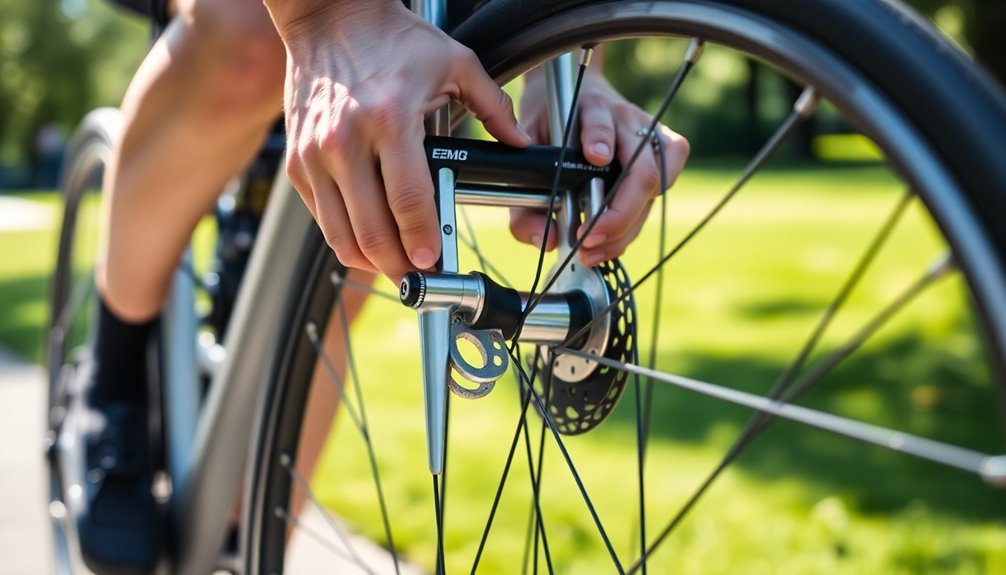
To remove the wheel, start by shifting your bike into the highest gear, which makes the process smoother, especially for the rear wheel.
Next, if your bike has rim brakes, loosen the brakes by squeezing the arms or opening the quick release.
If your bike features rim brakes, release them by either squeezing the arms or utilizing the quick release.
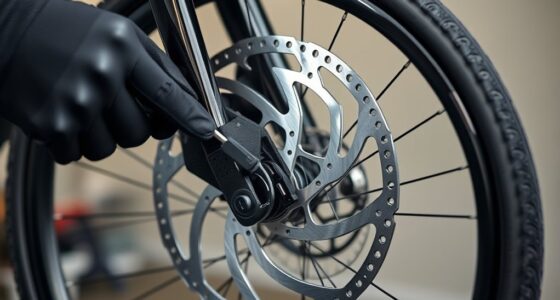
For wheels with a quick-release mechanism, simply open the lever and unscrew the skewer to detach the wheel, catching any springs or washers that may fall.
If your wheel's secured with bolts, grab the appropriate wrench to loosen and remove the axle nuts.
When taking off the rear wheel, carefully pull it down and forward while guiding the chain over the smallest cog to protect the derailleur.
Always guarantee the bike's stable, either on a bike stand or flipped upside down.
As an affiliate, we earn on qualifying purchases.
Remove the Tube
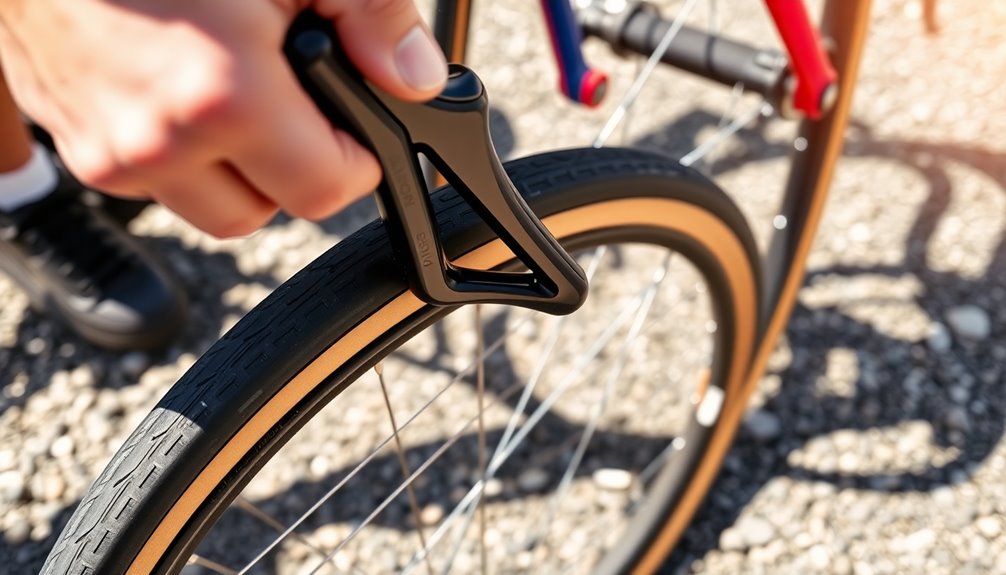
With the wheel removed, it's time to get the tube out. First, you need to fully deflate the tire by using either a Schrader or Presta valve to release all air.
Then, grab your tire levers to carefully unseat one side of the tire from the rim. Follow these steps:
- Use tire levers to pry the tire bead away from the rim.
- Once one side is unseated, gently pull the valve stem out through the rim.
- Remove the tube completely.
- Inspect the tube for punctures by inflating it slightly and listening for air leaks.
Don't forget to check the inner surface of the tire and rim for any sharp objects to prevent future issues with your flat tire.
Presta and Schrader valve bike tubes
As an affiliate, we earn on qualifying purchases.
As an affiliate, we earn on qualifying purchases.
Find the Puncture
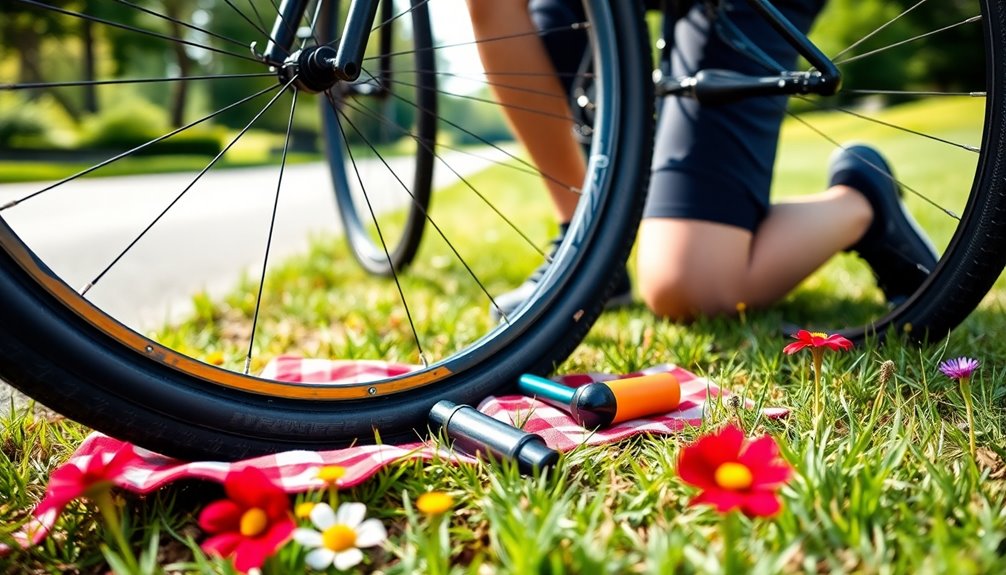
Locating the puncture in your bike tube can be straightforward if you follow a few simple steps.
Start by inflating the old tube slightly and listen for escaping air or feel for air with your hands to find the leak. As you inspect the tire, pay close attention to the tread and sidewall for sharp objects like thorns or glass that may have caused the puncture.
Inflate the tube slightly to detect air leaks, and check the tire for sharp objects that may have caused the puncture.
Run your fingers along the inside of the tire to catch any debris that could puncture a new tube. If you find multiple holes, a pinch flat is indicated by two holes, while a single hole suggests a sharp object.
Finally, align the tube with the tire, using the valve stem to help you mark the puncture.
As an affiliate, we earn on qualifying purchases.
Replace or Repair the Tube
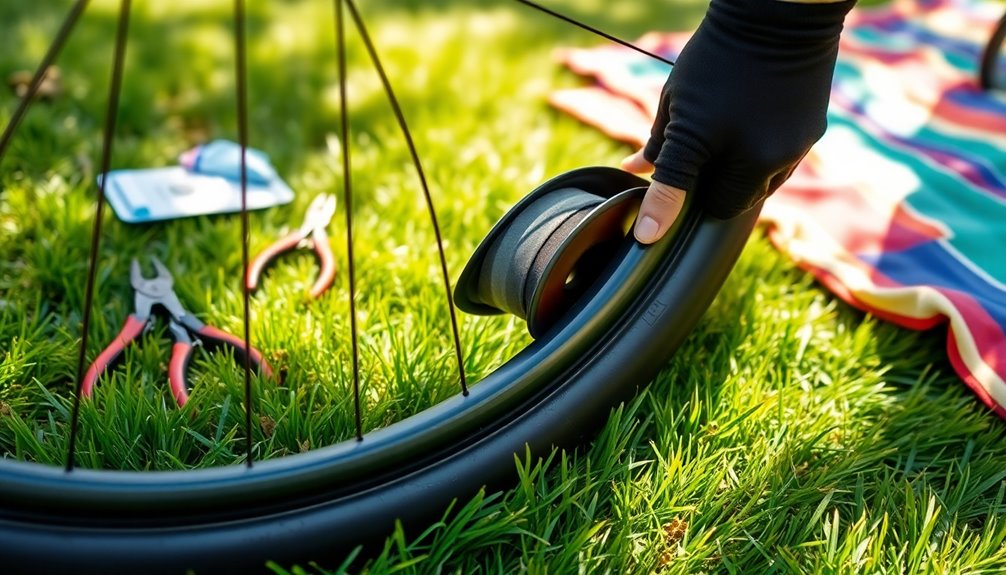
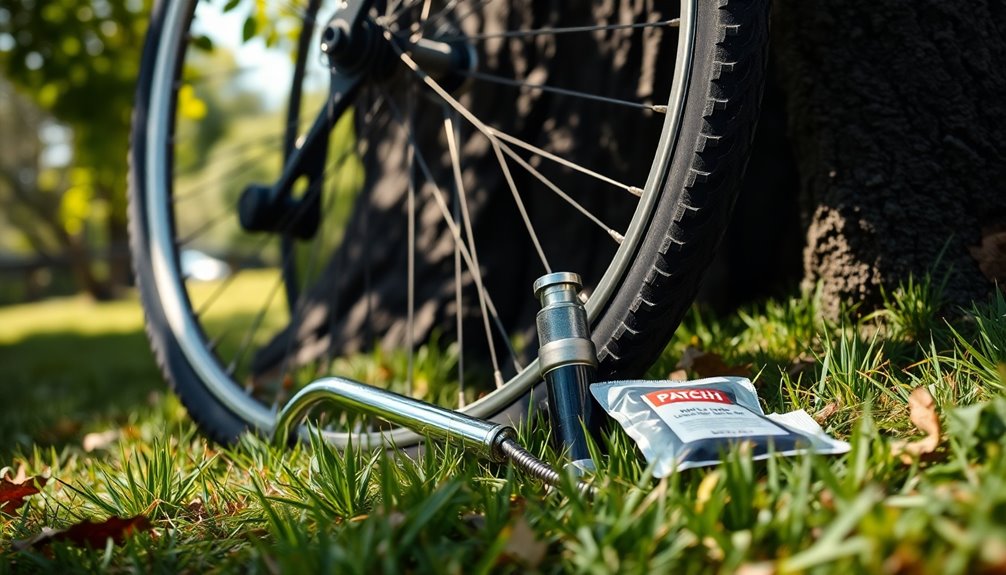
Decide whether to repair or replace your damaged bike tube based on the extent of the damage. If it's minor, grab your patch kit and follow these steps:
- Slightly inflate the tube and listen for air leaks, marking any punctures.
- Clean and roughen the damaged area before applying a patch firmly.
- If the damage is extensive, replace the tube with a correctly-sized spare tube, slightly inflating it for shape.
- When installing the tube, verify it's properly seated inside the tire, aligning the valve stem with the rim hole.
Finally, inflate the tube to the recommended pressure, checking for proper bead seating and verifying no twists or bulges. This'll help you effectively change your bike tire and get back on the road.
Reinstall the Wheel
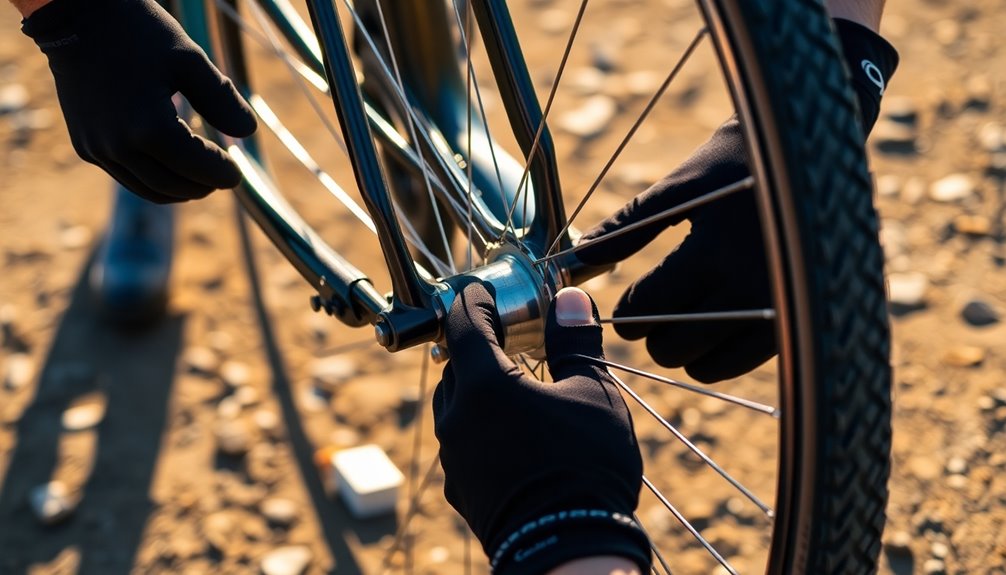
Reinstalling the wheel is a straightforward process that guarantees your bike is ready for the road again.
First, align the wheel with the bike frame, making sure the axle is properly seated in the dropouts or fork slots. For rear wheels, position the chain over the smallest cog to facilitate proper alignment.
Next, secure the wheel by tightening the quick-release lever or threading the thru-axle; make certain it's snug but not overly tight to avoid damaging components.
If you unhooked rim brakes during removal, reattach them to confirm they function correctly.
Finally, spin the wheel to check for any wobbling or misalignment, verifying everything's functioning smoothly before you head out for your ride.
Frequently Asked Questions
How Do I Change a Flat Tire on a Bike?
To change a flat tire on your bike, start by gathering your tools: a spare tube, tire levers, and a pump.
Remove the wheel, making sure to release the brakes. Deflate the tire, then use the levers to take it off the rim.
Inspect the tube for damage—patch it or swap it out if needed. Reseat the tire, inflate it to the right pressure, and reinstall the wheel securely before you ride again.
How Do You Change a Flat Tire in 5 Steps?
When it comes to changing a flat tire, you've got to roll with the punches.
First, loosen the brakes and detach the wheel. Next, deflate the tire completely, using tire levers to remove it and pull out the tube.
Inflate the old tube to spot the puncture. If it's beyond repair, grab a new tube, insert it, and finally, place the wheel back, inflate it, and you're good to go!
What Are the Steps to Change a Bike Tire?
To change a bike tire, you'll first remove the wheel by loosening the brakes and using a quick-release lever or wrench.
Next, deflate the tire completely and use tire levers to take the tire off the rim.
Pull out the damaged tube, inspect it for punctures, and either patch it or replace it.
Finally, insert the new or patched tube, reseat the tire, inflate it, and reinstall the wheel securely.
How to Change a Flat Tire by Yourself?
Imagine you're miles from home, and your tire suddenly goes flat. Don't panic; you can change it yourself!
First, gather your tools: a spare tube, tire levers, and a pump.
Remove the wheel, deflate the tire, and take out the old tube. Check for damage, then either patch it or swap in the new one.
Reseat the tire, inflate it, and reattach the wheel. You're ready to ride again!
Conclusion
Now that you know how to change a flat tire, you'll be ready for your next ride without a hitch. Imagine you're halfway through a scenic bike trail when you hear that dreaded hissing sound. Instead of panicking, you confidently pull out your repair kit and quickly fix the flat. You're back on the trail in no time, enjoying the fresh air and beautiful views. With this skill, you can tackle any ride with confidence!
Fall Picks
fall essentials
As an affiliate, we earn on qualifying purchases.