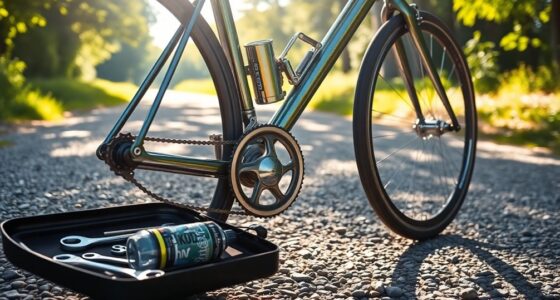
To store your bike for a quick ride tomorrow, start by cleaning and lubricating the chain, inflating the tires to the right pressure, and checking for any issues. Park it in a dry, secure spot away from direct sunlight, and use a weatherproof cover if outside. Lock the bike to a sturdy, immovable object for security. If you keep these steps in mind, you’ll have your bike ready to go—more helpful tips await to keep your bike in top shape.

Get your wardrobe favorites delivered free with Prime
- Fast, free delivery on millions of items
- Prime Video, Amazon Music and more included
- Member-only deals all year
Key Takeaways
- Clean and lubricate the chain, and inflate tires to recommended pressure before storing overnight.
- Store the bike in a secure, dry location protected from elements for quick access.
- Lock the bike securely to prevent theft or tampering.
- Use a weatherproof cover if stored outdoors to protect from dust and moisture.
- Ensure the bike is stable and upright to prevent damage and make it easy to ride the next day.

Storing your bike properly guarantees it’s ready to ride the next day without any hassle. When it comes to bike maintenance, a little effort now can save you time and trouble later. Proper storage not only keeps your bike in good condition but also ensures safety, preventing accidents caused by poorly stored equipment. First, consider where you store your bike. Ideally, choose a dry, cool spot away from direct sunlight and moisture, which can cause rust and degrade components. Whether it’s a garage, basement, or a dedicated bike rack outside, make sure it’s secure and protected from the elements. Storage safety is crucial; a bike left unsecured or in a high-traffic area could fall or be knocked over, risking damage or injury.
Proper bike storage ensures safety, maintains condition, and prepares you for a hassle-free ride.
Before putting your bike away, perform a quick bike maintenance check. Clean off dirt and debris, especially around the chain, gears, and brakes. Lubricate the chain if needed—this prevents rust and keeps it running smoothly for your next ride. Inflate tires to the recommended pressure; under-inflated tires can become misshapen or flat over time, making your ride less comfortable or dangerous. If your bike has a kickstand, use it to keep the bike upright, or hang it on a wall-mounted rack designed for bikes. This not only saves space but also reduces the risk of falling or damaging delicate parts.
If you’re storing your bike indoors, consider using a bike cover to shield it from dust and accidental contact. For outdoor storage, a weatherproof bike cover is even better, especially if you live in an area with frequent rain or snow. Always lock your bike securely, using a high-quality lock, to deter theft. Lock the frame and both wheels to a sturdy, immovable object or dedicated bike rack. This prevents theft and also discourages tampering that could compromise storage safety. Additionally, choosing a storage location with adequate security measures can further protect your bike from theft or vandalism. Incorporating proper storage techniques can extend the lifespan of your bike and keep it looking and functioning like new.
Finally, consider regular maintenance checks even during long-term storage to catch any issues early and ensure your bike remains in optimal condition. Lastly, check the bike’s position before finishing. Ensure that it’s stable and won’t fall over easily. If storing multiple bikes, space them adequately to avoid scratches or damage. By paying attention to bike maintenance and storage safety, you set yourself up for a quick, easy ride the next day. A well-stored bike is a reliable bike, ready to hit the road with minimal prep, saving you time and ensuring your safety with every ride.
As an affiliate, we earn on qualifying purchases.
Frequently Asked Questions
How Often Should I Service My Bike During Storage?
You should service your bike every 1-2 months during storage. Start with bike cleaning to remove dirt and grime, preventing rust and corrosion. Check tire inflation to guarantee they stay properly inflated and avoid flat spots. Also, inspect brakes and lubricate the chain if needed. Regular maintenance keeps your bike in good condition and ready to ride without surprises, making it easier when you’re ready to hit the road again.
Can I Store My Bike Outside Long-Term Without Damage?
Storing your bike outside long-term isn’t ideal, but if you must, make certain your storage environment is protected from harsh weather. Use bike accessories like a waterproof cover and secure it in a shaded, sheltered spot to prevent damage. Regularly check for rust, dirt, or corrosion, and clean or lubricate parts as needed. Proper outdoor storage prolongs your bike’s lifespan, but indoor storage remains the best option for long-term preservation.
What’s the Best Way to Prevent Rust on Stored Bikes?
Imagine your bike as a shining knight, ready for battle, but vulnerable to rust’s sneaky corrosion. To prevent that, start with thorough bike cleaning to remove dirt and moisture. Apply rust prevention spray to vulnerable spots, and consider storing your bike in a dry, covered area. Regularly check and wipe down your bike, ensuring it stays gleaming and ready for action, free from the menace of rust.
How Do I Store a Bike With a Flat Tire?
You should repair the flat tire before storing your bike. Start with a flat repair using a patch or replacement tube, then make sure the tire is properly inflated to prevent damage. Once fixed, store your bike in a cool, dry place, avoiding pressure on the tires. This way, your bike stays ready to ride, and the tire remains in good shape for your next adventure.
Is It Okay to Hang My Bike by the Wheel?
Yes, it’s okay to hang your bike by the wheel using bike wall mounts or wheel hanging methods. These options keep your bike off the ground and save space, and they don’t damage the wheel or frame if installed properly. Make sure you use sturdy hooks or mounts designed for bike storage, and avoid hanging by the brake or gear system to prevent any deformation or damage.
As an affiliate, we earn on qualifying purchases.
Conclusion
Storing your bike properly guarantees it’s always ready to hit the road, just like a well-tuned instrument waiting for its next performance. Think of your bike as a loyal friend—if you give it a little care and attention, it’ll be there for you when adventure calls. I once left my bike outside overnight, only to find it covered in dew and dust. Now, I always store it carefully, so it’s prepared for tomorrow’s ride—just like a friend ready for the next adventure.
As an affiliate, we earn on qualifying purchases.
As an affiliate, we earn on qualifying purchases.
Halloween Picks
halloween
As an affiliate, we earn on qualifying purchases.