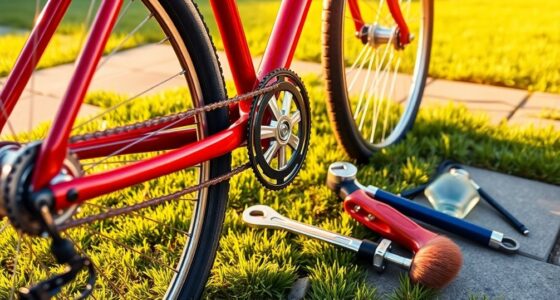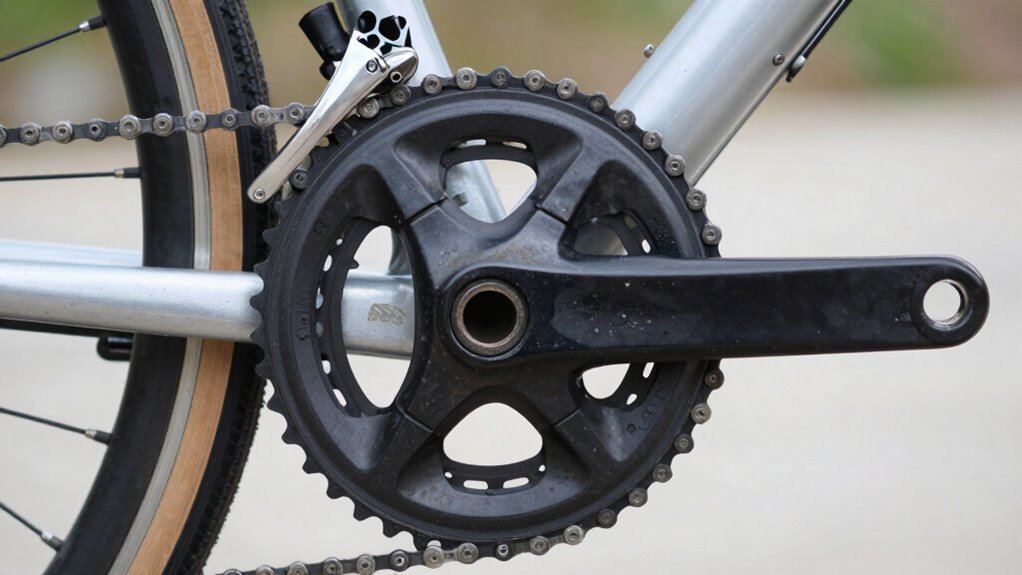

To understand basic bike noises without guessing, pay close attention to the sounds while riding. Learn to identify common issues, like grinding gears, which indicate drivetrain problems, or squealing brakes from worn pads. Regularly check for loose bolts, dirt buildup, and worn parts, as these often cause unusual sounds. Developing an ear for these noises helps you troubleshoot early and prevent bigger problems. Keep exploring, and you’ll discover more tips to keep your bike in top condition.

Get your wardrobe favorites delivered free with Prime
- Fast, free delivery on millions of items
- Prime Video, Amazon Music and more included
- Member-only deals all year
Key Takeaways
- Develop familiarity with common bike sounds and their typical causes through regular riding experience.
- Use a systematic approach to identify the source of the noise, such as checking specific components.
- Pay attention to when the noise occurs—during pedaling, braking, or shifting—to narrow down potential issues.
- Perform visual inspections to detect loose bolts, dirt buildup, or worn parts contributing to unusual sounds.
- Maintain a routine of cleaning, lubricating, and tightening to prevent and better understand emerging noises.
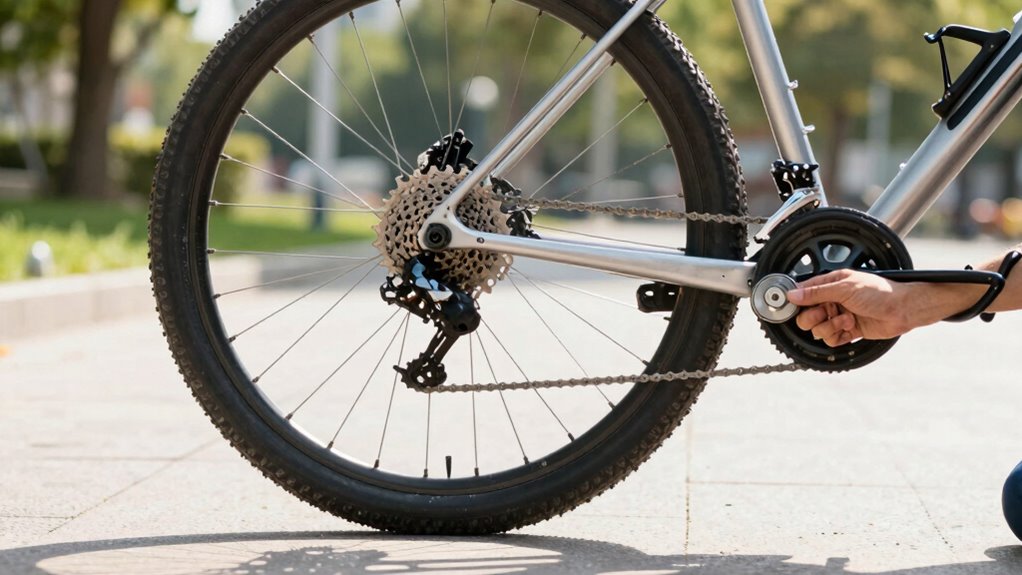
Ever wondered what your bike’s noises really mean? Understanding the sounds your bike makes can save you time, money, and frustration. The first step is to pay attention to common issues like gear maintenance and brake squeal. When your gears grind or slip, it’s often a sign that your drivetrain needs TLC. Gears that aren’t shifting smoothly or make a loud clunking noise indicate that your gear cables might be loose or stretched, or that your derailleur needs lubrication. Regular gear maintenance, including adjusting the derailleur and cleaning the chain, can prevent these issues and keep your bike shifting effortlessly. If you ignore these sounds, the problem can worsen, leading to more extensive repairs down the line. Listening closely to your bike’s noises helps you catch small problems before they become serious. For example, a faint clicking or popping sound when pedaling might indicate loose spokes or a loose bottom bracket. If you notice unusual sounds when riding, don’t ignore them—investigate their source. Many noises are caused by simple issues like loose bolts, worn parts, or dirt build-up. Regular maintenance, including tightening bolts, lubricating moving parts, and checking for wear, keeps your bike running smoothly and quietly. Over time, developing an ear for these sounds allows you to diagnose problems quickly, often saving you from expensive repairs or breakdowns during a ride. Additionally, understanding basic bike noises can help you identify issues early before they escalate into costly repairs. Developing a good sense of sound identification can further improve your ability to troubleshoot effectively. Recognizing these sounds and their causes can also enhance your overall riding safety. Recognizing common bike components and their typical sounds can also aid in quicker diagnosis. Recognizing correct maintenance procedures for specific issues can further enhance your ability to keep your bike in optimal condition. Being familiar with the different sounds your bike makes can lead to more confident and safe riding experiences.
As an affiliate, we earn on qualifying purchases.
Frequently Asked Questions
What Tools Are Best for Diagnosing Bike Noises?
You should use noise detection tools like a mechanic’s stethoscope or a mechanic’s screwdriver to pinpoint bike noises. These tools help you listen closely to bike sound patterns and identify the source of unusual sounds. By applying these tools, you can better understand if the noise comes from the chain, gears, or wheels. Proper diagnosis with noise detection tools saves time and helps you fix issues accurately.
How Often Should I Check My Bike for Unusual Sounds?
You should check your bike for unusual sounds every time you clean it, which is often enough to catch issues early. Noise frequency varies depending on riding intensity, but a quick check after each ride helps you catch squeaks or rattles before they become big problems. Think of it as a daily health check for your bike—keeping it quiet and smooth, so you enjoy every ride without surprises.
Can Noise Indicate a Safety Issue?
Yes, noise can indicate a safety issue. If your bike makes strange sounds, check your gear lubrication and tire pressure first. Squeaking or grinding might mean gears need lubrication, while a hissing or thumping could signal low tire pressure or a puncture. Ignoring these noises can lead to accidents or further damage, so always inspect these components promptly to guarantee your bike remains safe and reliable.
Do Different Terrains Affect Bike Noise?
Yes, different terrains impact bike noise, especially depending on your gear types. On rough terrains like gravel or dirt, you’ll hear more rattling and grinding due to increased vibrations and debris. Smooth surfaces like pavement produce quieter rides, with less strain on gears. Recognizing these sound changes helps you identify if your bike needs maintenance or if adjustments are needed for different terrains. Always listen closely to keep your ride safe and smooth.
When Should I See a Professional Mechanic?
Just like a knight would seek a wise sage, you should see a professional mechanic when your bike’s noise worsens despite regular bike lubrication or when you notice irregular chain tension. If strange sounds persist after lubricating, or the chain feels loose or tight, it’s time to get expert help. Ignoring these signs can lead to more damage. Trust your instincts and don’t delay — a mechanic’s insight keeps your ride smooth and safe.
As an affiliate, we earn on qualifying purchases.
Conclusion
So, now that you’re practically a bike noise linguist, you can confidently distinguish a squeal from a grind, all without breaking a sweat or resorting to amateur guessing. Remember, every squeak and creak has its story—much like a soap opera for your pedals. So next time your bike dares to make a fuss, you’ll know exactly how to interpret its melodramatic outbursts, proving that even mechanical mischief can be understood with a dash of knowledge and a pinch of wit.
As an affiliate, we earn on qualifying purchases.
As an affiliate, we earn on qualifying purchases.
Halloween Picks
halloween
As an affiliate, we earn on qualifying purchases.