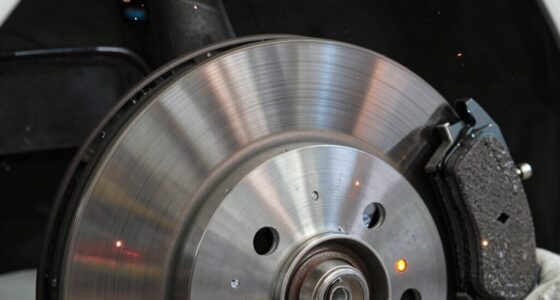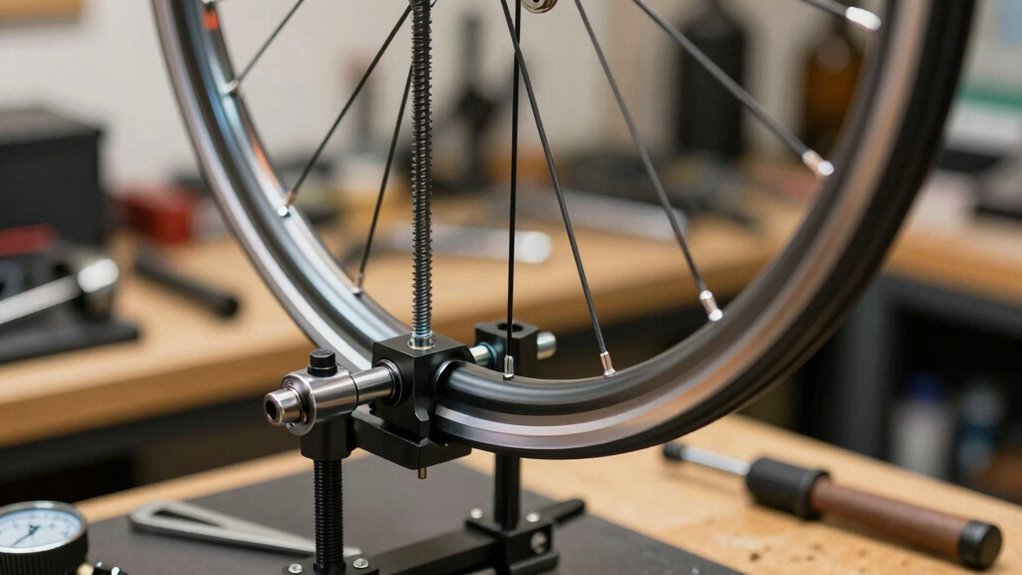

Using a wheel truing stand teaches you how your bike’s wheels, frame, and components work together for smooth riding. It shows you how minor wobbles or hops can reveal hidden issues like misalignment or damaged spokes. By mastering truing, you learn how tension and tire pressure affect performance and durability. This skill improves your overall bike care and safety. Keep exploring, and you’ll understand how to keep your bike in top shape for longer rides and better handling.
Key Takeaways
- They reveal wheel wobble, helping you understand rim true-ness and potential frame or fork issues.
- They teach the importance of proper tension and alignment for wheel durability and ride quality.
- They highlight the relationship between wheel maintenance and overall bike safety and performance.
- They develop patience, precision, and attention to detail in bike repairs and adjustments.
- They provide educational insights into how components interact, enhancing your overall bike knowledge.

Maintaining your bike’s wheels is essential for a smooth and safe ride, and using a wheel truing stand makes this task much easier. When you set your wheel in the stand, you gain a clear view of how true the rim is, revealing any wobbles or hops. This process teaches you a lot about your bike’s overall health, especially its frame alignment. If your wheel isn’t true, it can sometimes point to subtle issues with the frame or fork. A misaligned frame can cause uneven tire pressure distribution, leading to faster tire wear or handling problems. By regularly truing your wheels, you develop an eye for how the bike’s components work together, helping you identify problems before they turn into costly repairs.
Regular wheel truing reveals frame issues, preventing uneven wear and improving overall bike performance.
As you work on your wheel truing, you’ll see how small adjustments can make a big difference. When you tighten or loosen spokes, you’re not only fixing the wheel but also learning how tension affects the overall durability of your rim. This knowledge encourages you to pay more attention to tire pressure, which is critical for performance and safety. Proper tire pressure ensures your wheels roll smoothly and reduces stress on the rim, spokes, and frame. Overinflated or underinflated tires can cause uneven wear, making wheel truing more difficult over time. So, by mastering wheel truing, you’re indirectly learning how maintaining ideal tire pressure can prolong your bike’s lifespan.
Furthermore, working with a wheel truing stand highlights the importance of regular maintenance. You’ll notice that even a small wobble can impact your ride quality, making your bike feel sluggish or unstable. This awareness pushes you to keep up with routine checks of your wheel alignment and tire pressure, fostering a proactive maintenance mindset. Regularly inspecting your wheels also helps you understand the significance of proper equipment, which ensures your bike remains in optimal condition. Additionally, understanding how to use tools like wheel truing stands can help you develop a better appreciation for the precision required in bike maintenance. This attention to detail is a vital aspect of preventative care, which can save you time and money in the long run. Over time, you’ll see how these small, consistent efforts contribute to a smoother, safer ride. The process also teaches patience and precision, as perfect wheel alignment isn’t achieved in a rush. Instead, it’s a careful balancing act that improves your understanding of how each component affects the others.
In the end, using a wheel truing stand is more than just fixing a bent rim. It’s an educational experience that deepens your understanding of frame alignment, tire pressure, and overall bike health. With each adjustment, you become more confident in your ability to diagnose and fix issues, making you a better, more attentive cyclist. The skills you develop today will help ensure your bike stays in top shape, ready for your next adventure on the road or trail. Recognizing the importance of wheel truing stands can also help you appreciate how proper equipment simplifies maintenance and promotes safety.

DONNGYZ Bicycle Wheel Truing Stand for 16-29 Inch – Bike Rim Maintenance Tool with Spoke Wrench, Wheel Calibration Wheel Alignment Rim Truing Tool for MTB, Road
- Compatibility Note: Not compatible with thru-axles without adapter
- Removable Metal Structure: Made from high-strength corrosion-resistant aluminum alloy
- Lightweight and Portable: Weighs only 7.3 lbs for easy transport
As an affiliate, we earn on qualifying purchases.
As an affiliate, we earn on qualifying purchases.
Frequently Asked Questions
Can Wheel Truing Stands Fix Bent Rims?
Yes, wheel truing stands can fix bent rims. They help you identify rim deformation and uneven spoke tension, allowing you to make precise adjustments. By gently tightening or loosening spokes, you can realign the rim, reducing bends and wobbling. This process restores wheel true, improves ride quality, and prolongs your bike’s lifespan. With patience, a truing stand is an effective tool for straightening bent rims and maintaining ideal spoke tension.
How Often Should I Use a Truing Stand on My Bike?
You should use a truing stand whenever you notice your rim isn’t spinning true or if you feel uneven braking. Regular checks help maintain proper rim alignment and consistent spoke tension, preventing further damage. For most riders, it’s best to check every few months or after rough rides. Frequent truing keeps your wheel balanced, prolongs its life, and guarantees a smoother, safer ride.
Do All Bike Wheels Require Truing?
No, not all bike wheels require truing, but if your rim deformation or uneven spoke tension causes wobbling, then yes, truing becomes essential. Imagine your wheel as a perfectly balanced dance partner—any wobble throws off the rhythm. A truing stand helps you spot and fix these issues, ensuring your wheel stays true and smooth. Regular checks prevent costly repairs and keep your ride safe and efficient.
What’s the Difference Between a Truing Stand and a Wheel Jig?
A truing stand holds your wheel securely and allows precise adjustments, making it ideal for wheel maintenance. A wheel jig, on the other hand, is often a more portable tool used for quick checks or repairs. The main difference is bike compatibility; truing stands are versatile and suitable for different wheel sizes, while jigs are typically designed for specific bike types. Both help keep your wheels true and riding smoothly.
Can I True My Wheel Without Professional Tools?
You can true your wheel without professional tools, but it’s like fixing a watch with a butter knife—possible but tricky. For DIY adjustments, you might use makeshift tool alternatives like pliers or screwdrivers, but they’re less precise. A truing stand helps you see the wheel’s accurate shape, making adjustments easier. While you can try, investing in a proper truing stand ensures safer, more precise results, especially for frequent repairs.
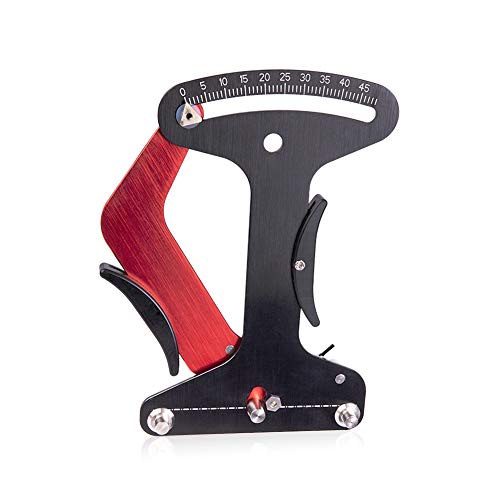
NINEFOX Bicycle Spoke Tension Meter Tensiometer Wheel Repair Tool
- Material: High-quality aluminum alloy construction
- Compatibility: Suitable for round and flat spokes
- Accuracy: Measures absolute and relative spoke tension
As an affiliate, we earn on qualifying purchases.
As an affiliate, we earn on qualifying purchases.
Conclusion
Using a wheel truing stand teaches you patience and precision, skills that go beyond bike maintenance. As you fine-tune your wheel, you realize that every spoke and spoke tension matters—much like a well-managed medieval tapestry. It’s a reminder that even in a world of modern tech, some craftsmanship—your own—remains timeless. So, embrace the process, and you’ll find your bike—and yourself—riding smoother than a knight’s lance through a joust.

Portable Bicycle Wheel Truing Stand Bike Mini Rims Adjustment Repair Mount Tools Spoke Wrench Black
- Package Includes: Wheel truing tool and spoke wrench
- Durable Materials: ABS and stainless steel construction
- Precise Adjustment: Millimeter-perfect truing with screw design
As an affiliate, we earn on qualifying purchases.
As an affiliate, we earn on qualifying purchases.
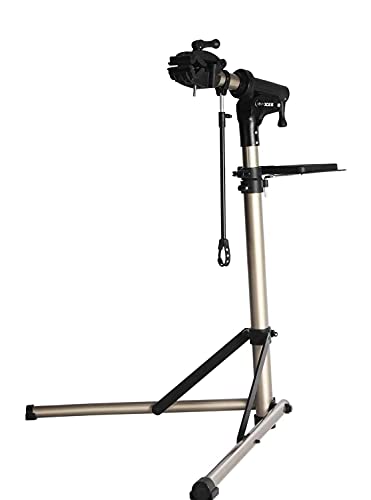
CXWXC Bike Workstand with Adjustable, Bicycle Repair Stand for Maintenance Folding and Lightweight (Champagne-3)
- 360° Rotatable Clamp: Secure and adjustable bike holding
- Height Adjustable Body: Customize to your working height
- Lightweight Alloy Barrel: Durable, corrosion-resistant, easy to carry
As an affiliate, we earn on qualifying purchases.
As an affiliate, we earn on qualifying purchases.