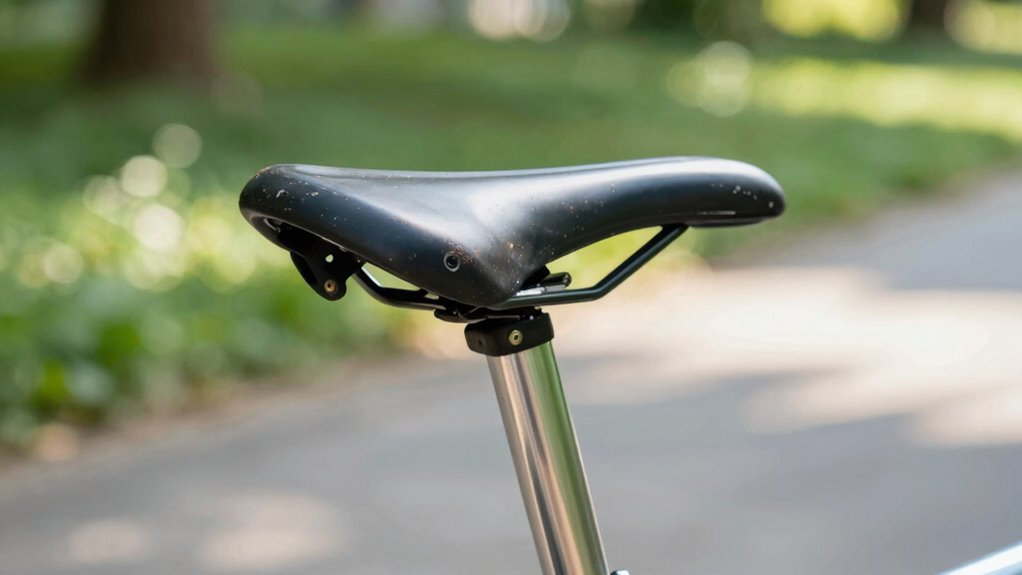

Your saddle height can drift over time due to mechanical loosening, shifts in your riding posture, and normal wear and tear. As you ride, changes in terrain or fatigue may cause you to unconsciously adjust your position, exerting different forces on the saddle. Over time, components like the seat post or clamp can loosen, leading to movement. Regularly checking and tightening these parts helps, but keep exploring for more tips on preventing saddle height changes.

Get your wardrobe favorites delivered free with Prime
- Fast, free delivery on millions of items
- Prime Video, Amazon Music and more included
- Member-only deals all year
Key Takeaways
- Loosening of the saddle clamp or seat post can cause gradual height shifts during rides.
- Changes in riding posture, such as leaning forward or stretching back, can alter saddle position.
- Mechanical issues or insufficient tightening of components allow the saddle to drift over time.
- Muscle fatigue and body movements during long rides can unconsciously shift saddle height.
- Inadequate bike setup or poor maintenance can contribute to inconsistent saddle stability.
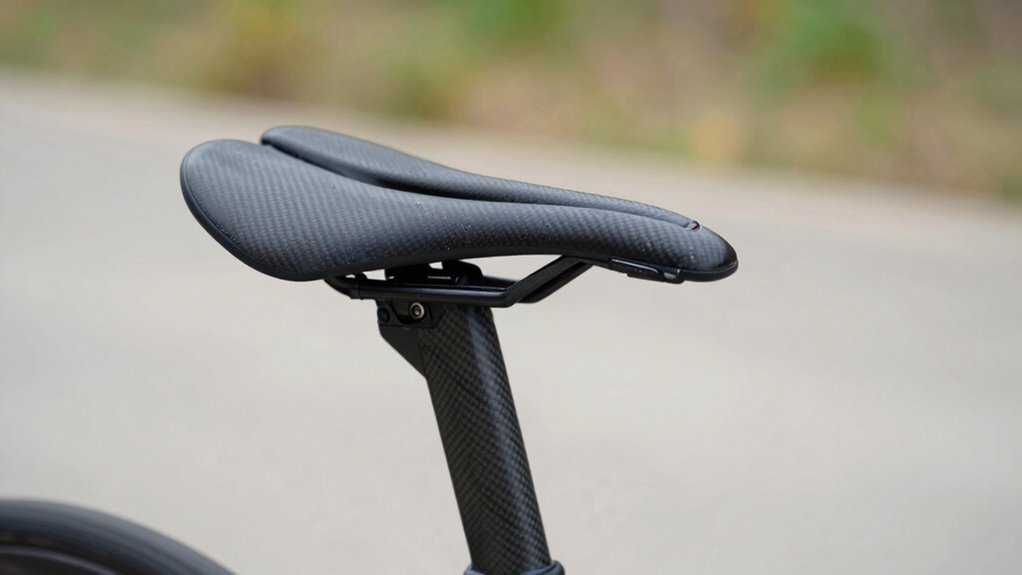
Have you ever noticed your saddle height seems to change slightly after a ride? It’s a common experience, and it can be puzzling if you’re diligent about setting everything perfectly. The reason behind this subtle drift often comes down to how your bike ergonomics and riding posture evolve during your time on the saddle. When you’re cycling, your body isn’t static; it shifts, adjusts, and responds to fatigue, terrain, and even your mental focus. These small movements can cause your saddle to shift slightly, especially if your bike isn’t perfectly secured or if the saddle itself isn’t designed to hold its position under repeated stress.
Throughout a ride, your riding posture naturally varies. You might lean forward more on steep inclines or stretch back during long climbs, subtly changing how your weight distributes across the bike. These shifts can cause your saddle to settle into a slightly different position, especially if your seat post or saddle clamp isn’t tightly secured. Even minor loosening over time can lead to noticeable drift, affecting your comfort and cycling efficiency. When your saddle isn’t at the proper height, your pedaling becomes less efficient, and you might experience discomfort or even pain, which is why maintaining the correct saddle height is vital. Additionally, bike maintenance plays a key role in preventing unwanted saddle movement, ensuring your setup remains consistent. Regularly checking your bike components can help identify potential issues before they cause significant shifts. Incorporating proper bike setup**** techniques can further enhance stability and comfort during your rides.
Varying riding posture and loose components can cause saddle height drift, impacting comfort and pedaling efficiency.
This continual change isn’t just about mechanical issues; it’s also about your body’s response to riding. As your muscles fatigue, you unconsciously alter your riding posture, leaning more into the handlebars or shifting your hips. These changes put different forces on your saddle, which can cause it to move slightly. If your bike setup doesn’t prioritize proper bike ergonomics, these small shifts can magnify, throwing off your saddle height. Over time, this can lead to inconsistent comfort and reduced performance.
To mitigate saddle height drift, it’s essential to check and tighten your saddle clamp regularly. Making sure your saddle is securely fastened helps it resist minor shifts caused by riding posture and terrain. Additionally, paying attention to your riding posture—keeping your core engaged and maintaining a balanced position—can help minimize unnecessary movements. Remember that your body’s natural adjustments are normal, but they shouldn’t compromise your saddle’s position or your comfort. Regularly inspecting your bike setup and making small adjustments can ensure your saddle stays at the ideal height, allowing you to ride efficiently and comfortably, ride after ride. Proper bike ergonomics and saddle setup are crucial for consistent riding performance.
As an affiliate, we earn on qualifying purchases.
Frequently Asked Questions
How Often Should I Check My Saddle Height?
You should check your bike fit and saddle height every few weeks or after any long rides. Regularly inspecting your saddle wear and guaranteeing proper saddle height helps prevent discomfort and injury. Changes in your riding position, fatigue, or saddle wear can cause your saddle height to drift. Staying proactive ensures your ride remains comfortable and efficient, so make it a habit to reassess your saddle height regularly for peak performance.
Can Saddle Height Changes Cause Discomfort or Injury?
Saddle pressure and alignment issues can subtly lead to discomfort or even injury if ignored. When your saddle height drifts, it affects how your weight distributes, potentially causing strain on your knees, hips, or back. Maintaining proper saddle height guarantees ideal saddle pressure and alignment, reducing the risk of pain. Regular checks help you stay comfortable and safe, preventing long-term issues that can arise from unnoticed misalignment.
Does Saddle Height Affect Cycling Performance?
Yes, saddle height greatly impacts your cycling performance. A proper bike fit guarantees your saddle height promotes an ergonomic posture, allowing efficient pedaling and reducing fatigue. When your saddle is correctly adjusted, you generate more power, maintain better control, and ride comfortably longer. Conversely, an improper saddle height can hinder your efficiency, cause discomfort, or even lead to injury, making regular adjustments essential for maximum performance.
Are There Specific Signs Indicating Saddle Height Adjustment Is Needed?
If you notice your saddle slipping or uneven wear on the seat post, it’s time to check your saddle height. You might feel discomfort, like your hips rocking or knees aching, signaling the adjustment is needed. Keep an eye out for saddle wear that indicates instability, and if your seat post slips during rides, it’s a clear sign to re-evaluate and tighten your seat post clamp for a smoother, safer ride.
What Tools Are Best for Adjusting Saddle Height Accurately?
You should use precise adjustment tools like a torque wrench or a saddle measurement gauge to set your saddle height accurately. These tools help guarantee you tighten bolts to the correct specifications and measure saddle height consistently. A simple ruler or a specialized saddle height gauge can also work well for accurate adjustments. Always double-check your saddle’s position after making adjustments to maintain comfort and prevent injury during rides.
As an affiliate, we earn on qualifying purchases.
Conclusion
Just like Odysseus steering a constantly shifting sea, your saddle height requires regular attention to stay true. Over time, subtle changes can throw off your balance and comfort, so don’t ignore those small adjustments. Keep checking in, just as sailors read the stars, and you’ll maintain smooth sailing on your rides. Remember, a well-tuned saddle is your steady compass—helping you conquer every ride with confidence and ease.
As an affiliate, we earn on qualifying purchases.
As an affiliate, we earn on qualifying purchases.
Halloween Picks
halloween
As an affiliate, we earn on qualifying purchases.