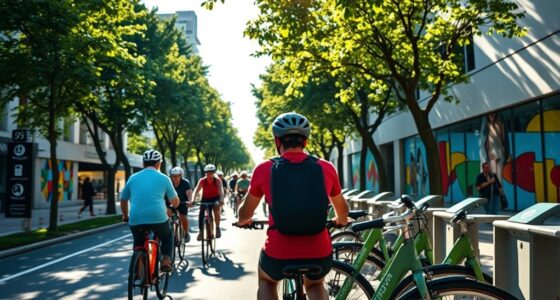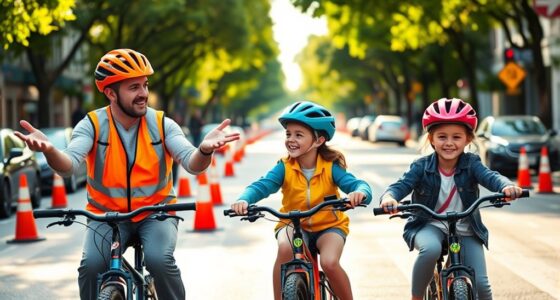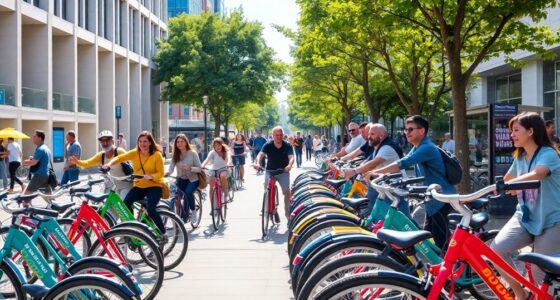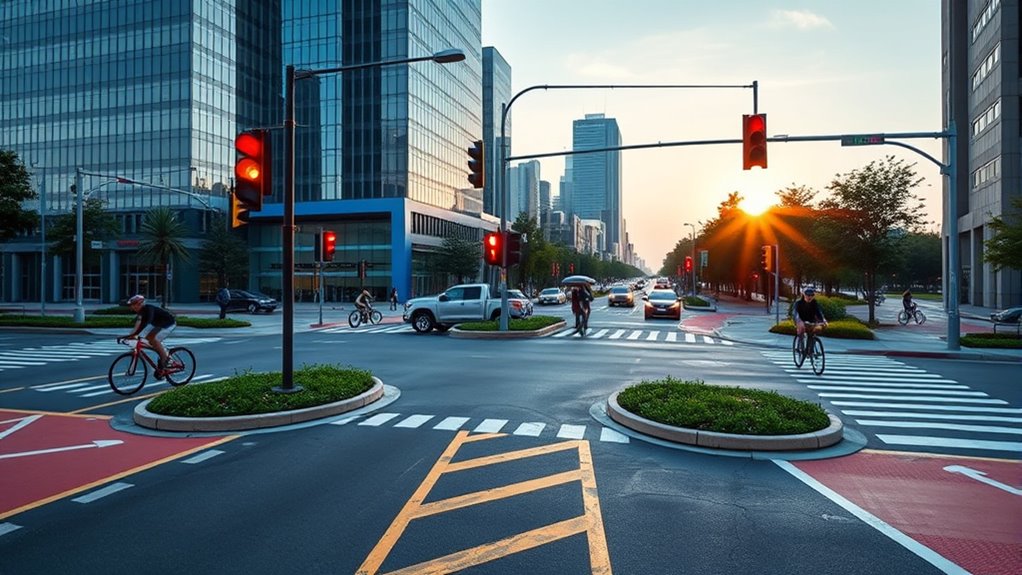
At protected intersections, you’ll notice that pedestrians, cyclists, and vehicles are separated by physical features like curb extensions and refuge islands. Traffic signals are synchronized to give pedestrians a dedicated crossing phase, often with countdown timers. This setup reduces conflicts and makes crossing safer and more predictable. You’ll feel more comfortable moving through, especially as driver attention is focused during these phases. To discover all the helpful features and benefits, keep exploring what protected intersections have to offer.
Key Takeaways
- Dedicated pedestrian phases with timed crossings and countdown signals enhance safety and reduce conflicts.
- Physical features like curb extensions and refuge islands improve visibility and ease pedestrian crossings.
- Traffic signals are synchronized to create protected crossing phases, stopping all vehicle directions simultaneously.
- Clear markings, tactile cues, and audible signals assist pedestrians, including those with disabilities.
- Overall, protected intersections promote safer, more predictable, and accessible environments for all road users.
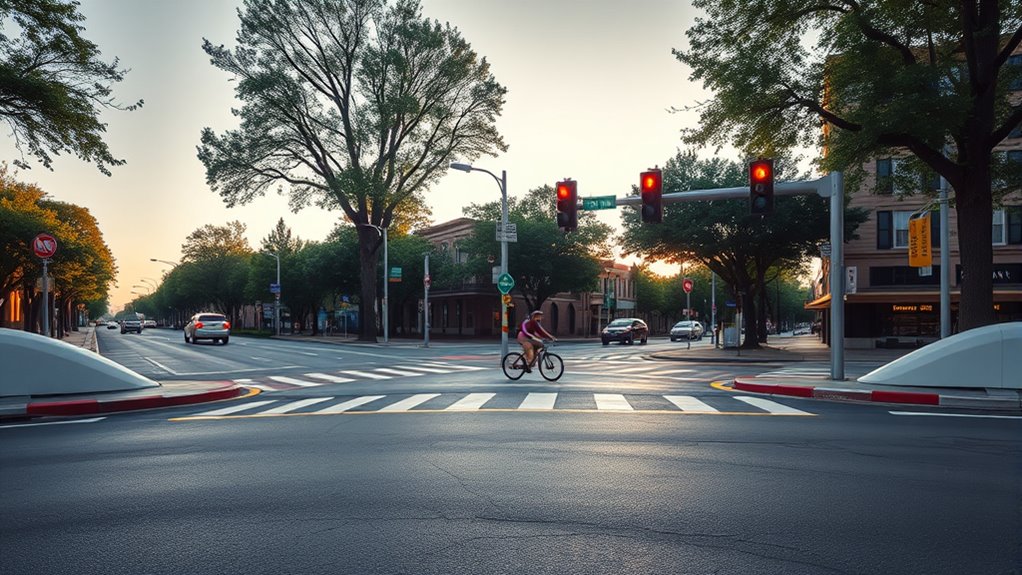
Protected intersections are designed to improve safety for all road users by physically separating turning and crossing movements from through traffic. This setup creates a safer environment by reducing conflicts between vehicles, cyclists, and pedestrians, making the intersection more predictable and easier to navigate. As a pedestrian, you’ll notice that crossing becomes safer and more straightforward, thanks to dedicated pedestrian zones and traffic signal design that prioritize your movement. These intersections often feature curb extensions, refuge islands, and clearly marked crosswalks that guide you safely across the street. The traffic signal design at protected intersections is carefully coordinated to give pedestrians a dedicated phase, reducing wait times and minimizing conflicts with turning vehicles. These signals often have countdown timers, so you know exactly how much time you have to cross, enhancing your confidence and safety.
When approaching a protected intersection, you’ll see that the traffic signals are synchronized to create a ‘pedestrian scramble’ or a protected crossing phase. This means vehicles are stopped in all directions while you cross, providing a safer environment without the worry of turning cars cutting across your path. The design also encourages drivers to be more attentive, knowing that pedestrians have a dedicated crossing period. This emphasis on pedestrian safety is a key feature of these intersections, making walking more comfortable and less stressful, especially for older adults, children, or anyone with mobility challenges. Proper signal timing is essential to ensure that pedestrians have enough time to cross safely without causing unnecessary delays for vehicles.
The traffic signal design at protected intersections often incorporates visual and auditory cues to assist all users, including those with disabilities. Some signals are equipped with tactile paving or audible signals to help visually impaired pedestrians identify when it’s safe to cross. As a pedestrian, you’ll appreciate the clarity these signals provide, making your crossing predictable and secure. Moreover, the physical separation of crossing zones from vehicle paths not only enhances safety but also reduces the likelihood of accidents. This separation encourages more walking and cycling, contributing to healthier communities and less car congestion.
Frequently Asked Questions
How Do Protected Intersections Impact Emergency Vehicle Response Times?
Protected intersections can improve emergency response times by ensuring quicker intersection clearance. You’ll find that vehicles move more smoothly and predictably, reducing delays during emergency response. The designated space and clear signage help emergency vehicles navigate more efficiently, minimizing the risk of congestion. Overall, protected intersections facilitate faster movement through busy areas, allowing emergency responders to reach scenes promptly and effectively, ultimately saving lives and reducing response times.
Are Protected Intersections Suitable for All Urban Environments?
Protected intersections aren’t suitable for all urban environments because they can disrupt traffic flow and may not fit well with existing urban design. In busy downtown areas, they help improve safety, but in less dense neighborhoods, they might cause unnecessary congestion. You should consider factors like traffic volume, street layout, and overall urban planning when deciding if protected intersections will work effectively in your area.
What Maintenance Is Required for Protected Intersection Infrastructure?
You’ll want to keep an eye on maintenance requirements to guarantee infrastructure durability. Regular inspections help spot wear and tear early, while cleaning keeps markings visible and surfaces safe. Repainting traffic lines and repairing signage as needed prevent deterioration. Think of it as tending a garden—consistent care keeps protected intersections functioning smoothly and extends their lifespan, safeguarding cyclists and pedestrians alike. Proper upkeep is key to maintaining a safe, durable infrastructure.
How Do Protected Intersections Accommodate Pedestrians and Cyclists?
Protected intersections prioritize pedestrian safety and enhance cycling infrastructure by creating dedicated spaces. You’ll find marked crosswalks and curb extensions that reduce crossing distances, making it safer for pedestrians. Cyclists benefit from designated bike lanes that lead directly into the intersection, minimizing conflicts with vehicles. These features encourage walking and cycling, making the area more accessible and safer for everyone. You’ll notice smoother, more secure interactions between pedestrians, cyclists, and drivers.
What Costs Are Involved in Implementing Protected Intersections?
Implementing protected intersections is like planting a garden—you need resources, planning, and care. The costs involve infrastructure upgrades, signage, and safety features, which can add up quickly. You ought to do a thorough cost analysis to understand expenses and explore funding options like government grants, local budgets, or public-private partnerships. This approach ensures you maximize safety improvements without overextending your budget, making the project sustainable and effective.
Conclusion
Protected intersections are transforming urban mobility, making streets safer for everyone. With studies showing a 40% reduction in cyclist injuries in cities that adopt these designs, it’s clear they make a real difference. As you navigate your daily commute, expect safer crossings and smoother interactions between drivers and pedestrians. Embracing these innovations not only protects lives but also encourages more active, sustainable transportation. Get ready to experience safer streets that prioritize everyone’s safety equally.