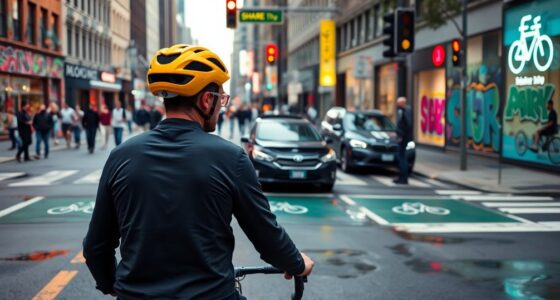

To guarantee your bike stays safe in the city, always park in well-lit, surveillance-enabled areas with lockable racks. Use high-quality locks that secure both your frame and wheels, and remove valuables before leaving your bike. Choose official, designated bike parking spots for added security. Avoid secluded or poorly-lit areas, and follow local regulations. If you keep these best practices in mind, you’ll reduce the risk of theft, and there’s more to discover on how to maximize your bike’s safety.
Key Takeaways
- Choose designated, well-lit bike parking areas with security features like lockable racks and surveillance cameras.
- Use high-quality locks to secure both the bike frame and at least one wheel to a sturdy, fixed rack.
- Remove accessories and valuables before parking to prevent theft and reduce attractiveness to thieves.
- Prefer official bike parking zones with integrated security measures and consistent surveillance coverage.
- Familiarize yourself with local regulations and best practices to ensure compliance and maximize security.
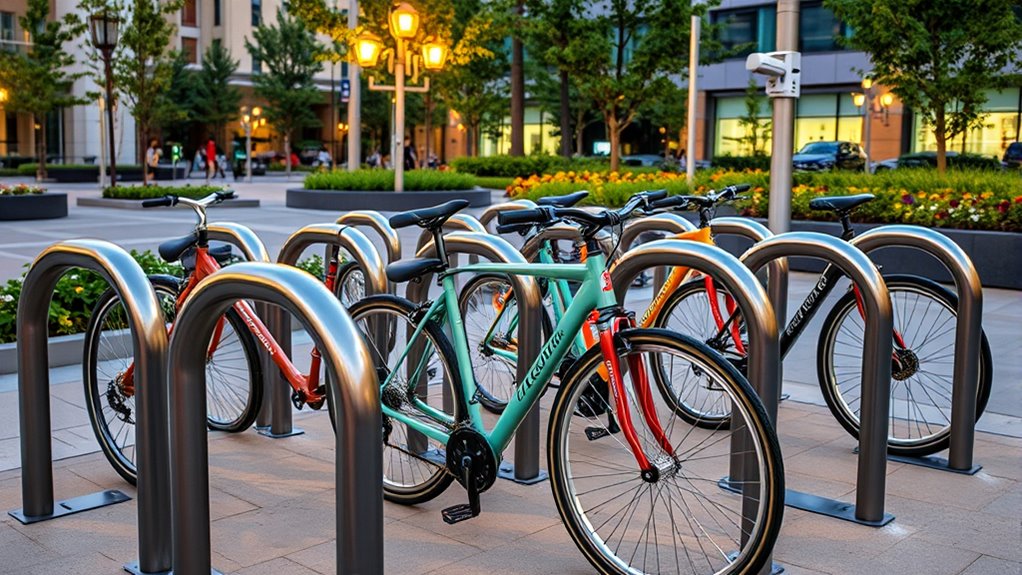
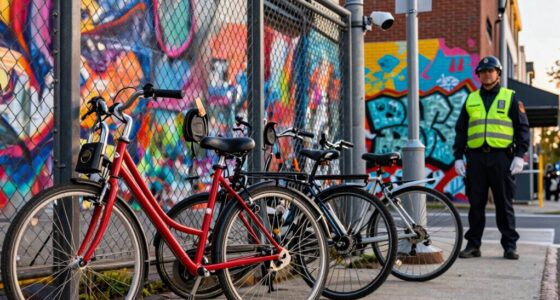
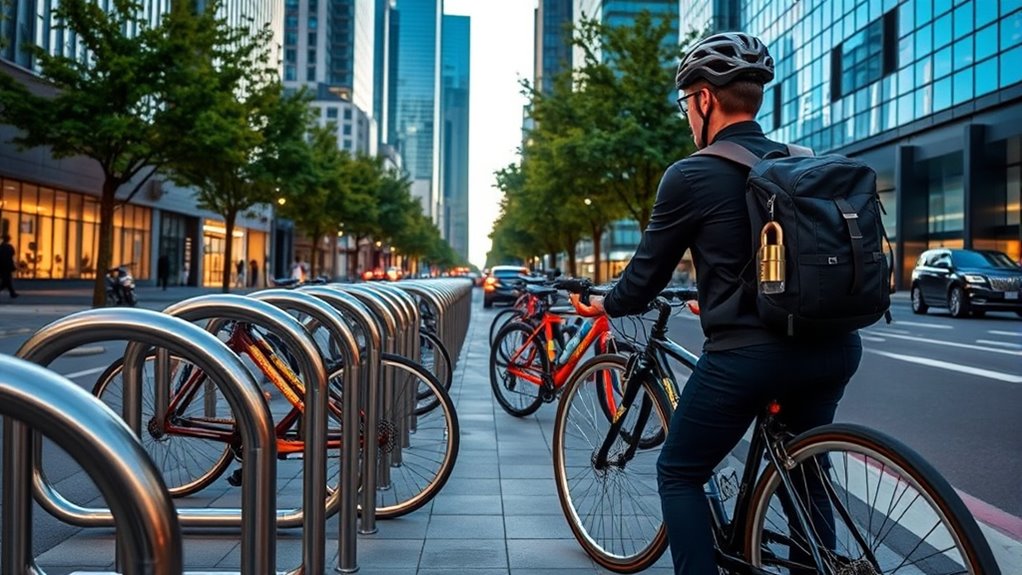
Finding a secure place to park your bike is essential to prevent theft and damage. When you’re steering through the city, look for bike parking options that feature lockable racks. Unlike simple stands, lockable racks allow you to secure your bike with a sturdy lock, making it much harder for thieves to steal it. Choose racks that are designed to lock both the frame and the wheels for added security. This way, even if someone tries to lift the bike, it’s firmly attached to a solid structure, deterring casual thieves.
In addition to lockable racks, pay attention to the presence of surveillance cameras. Areas monitored by cameras act as a significant deterrent against theft. Thieves are less likely to target bikes when they know they’re being recorded, and the footage can be useful if you need to report a theft. Look for parking zones that are well-lit and have visible cameras, as these features signal increased security. When cameras are in place, avoid parking in secluded or poorly lit areas, which can become hotspots for theft.
Another best practice is to avoid parking your bike in crowded, high-traffic spots that lack proper security features. While busy areas might seem safer, they’re often targeted by opportunistic thieves looking for an easy target. Instead, opt for locations with designated bike parking zones that are recognized by local authorities or businesses. These spots typically have better security measures, including lockable racks and surveillance systems, making them safer choices.
Furthermore, always use a high-quality lock, such as a U-lock or a heavy-duty chain lock, in combination with the lockable racks. Don’t leave your bike unlocked or secured with flimsy cable locks, as these can be easily cut. Always lock your bike’s frame and at least one wheel to the rack, and whenever possible, remove any accessories or valuables. Securing your bike properly reduces the risk of theft and guarantees your ride remains in good condition.
Finally, familiarize yourself with the bike parking policies in your city or area. Many cities have designated bike parking zones with enhanced security features. By choosing these official spots, you benefit from the combined security measures of lockable racks and surveillance cameras, giving you peace of mind that your bike is safe. Being aware of bike parking regulations and secure locations can make a significant difference in preventing theft. Remember, investing in proper security practices and choosing the right parking spots can save you from the frustration and inconvenience of bike theft.
Frequently Asked Questions
How Do I Choose the Best Bike Lock for Security?
To choose the best bike lock for security, focus on lock types like U-locks or heavy-duty chain locks, which offer strong resistance against theft. Security tips include selecting locks with a high security rating, ensuring they lock the frame and wheel to a sturdy fixture, and avoiding cable locks alone. Invest in quality, durable locks, and always lock your bike in well-lit, busy areas for added safety.
Are There Legal Requirements for Bike Parking in the City?
Yes, there are legal requirements for bike parking in your city. You need to follow local ordinances and zoning regulations that specify where and how you can park your bike. These rules ensure safety and accessibility, so check your city’s official website or contact local authorities for details. By adhering to these regulations, you avoid fines and help maintain organized, secure bike parking areas for everyone.
What Maintenance Is Needed for Secure Bike Racks?
You need to regularly maintain your secure bike racks by inspecting their structure for any damage or wear, ensuring they remain sturdy. To prevent rust, clean off dirt and moisture and apply protective coatings or paint when necessary. Conduct routine structural inspections to identify and fix issues early, which helps prolong their lifespan and maintain safety. Consistent maintenance keeps your bike racks secure, durable, and welcoming for cyclists.
How Can I Prevent Bike Theft in Crowded Areas?
To prevent bike theft in crowded areas, you should promote community vigilance and encourage people to watch out for suspicious activity. Use strategic placement by parking bikes in well-lit, high-traffic spots near security cameras or police stations. Encourage cyclists to lock their bikes with sturdy, high-quality locks and always secure both the frame and wheels. Staying alert and choosing visible, monitored locations considerably reduces theft risks.
What Technology Options Exist for High-Tech Bike Security?
You can enhance your bike security with smart locks that offer keyless entry and remote control, making theft harder. GPS tracking devices are also effective; they let you monitor your bike’s location via a smartphone app. By combining smart locks with GPS tracking, you create a high-tech security system that deters thieves and helps recover your bike quickly if stolen. These options give you peace of mind in crowded urban areas.
Conclusion
By implementing these best practices, you create a fortress around your bike, turning everyday parking into a safeguarded sanctuary. Think of your bike as a precious gem tucked away in a well-guarded vault—secure, protected, and ready to be enjoyed again. When you prioritize safety, you transform simple parking into a confident stride, knowing your bike is shielded from harm. With these strategies, you build a city where every cyclist can park their ride with peace of mind.