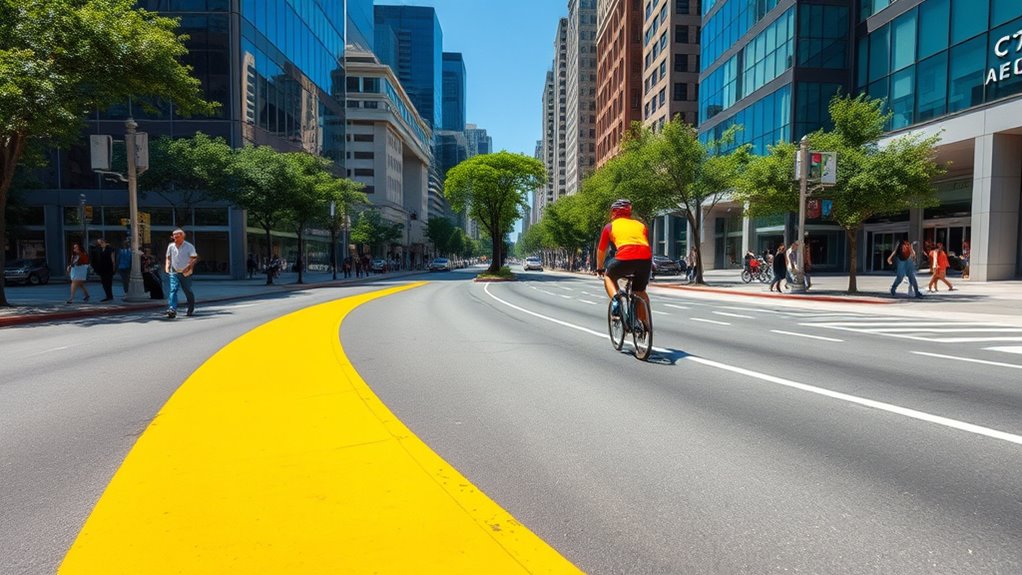

Taking the lane is essential when riding in heavy traffic, narrow roads, or areas with limited visibility. You should occupy the full lane when the shoulder is unsafe or unavailable, especially near intersections or parked cars. Ride near the center or slightly to the right within your lane to signal confidence and prevent unsafe passes. Staying steady and making your presence known helps communicate your intentions clearly. Keep going to discover more tips for safe lane positioning and riding strategies.

Get your wardrobe favorites delivered free with Prime
- Fast, free delivery on millions of items
- Prime Video, Amazon Music and more included
- Member-only deals all year
Key Takeaways
- Take the lane when the shoulder is narrow, uneven, or unavailable to prevent unsafe passing.
- Use full lane positioning near intersections, turns, or limited visibility areas to increase safety.
- Ride near the center or slightly to the right within lane boundaries to signal control and discourage risky passes.
- Maintain steady lane position when approached from behind to communicate confidence and intent.
- Prioritize taking the lane in congested or complex traffic situations to enhance visibility and predictability.
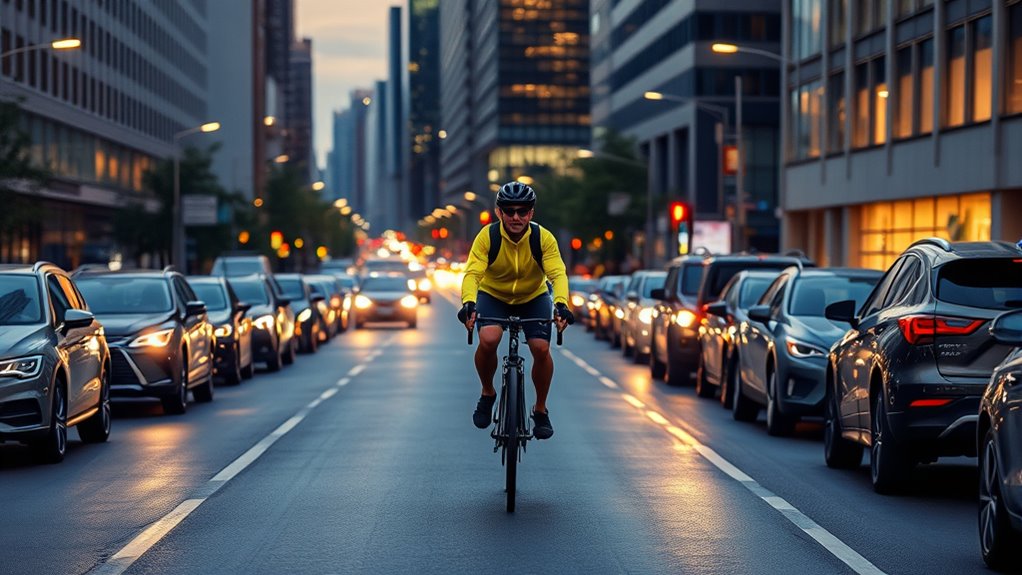
Have you ever wondered why taking the lane is essential for cyclists on busy roads? When traffic gets heavy or the road narrows, it’s crucial to understand how to position yourself safely and confidently. Proper lane positioning isn’t just about personal safety; it also helps other road users recognize your presence and intentions. Knowing when and how to take the lane can prevent dangerous situations, especially when navigating through congested areas or near parked cars. It’s a vital part of road sharing etiquette that ensures everyone’s safety and smooth traffic flow.
Taking the lane means occupying the full width of a lane rather than riding close to the curb or edge of the road. In situations where the shoulder is narrow, uneven, or non-existent, you may need to move toward the center of the lane to stay safe. This prevents drivers from attempting to pass you by squeezing into the same lane, which can be risky and frustrating. By choosing to take the lane, you communicate clearly that you’re riding confidently and that passing should be done safely. It’s especially important when approaching intersections, turns, or areas with limited visibility, as it makes you more visible and predictable to drivers.
Understanding road sharing etiquette is key when taking the lane. You want to position yourself in a way that’s visible and predictable, without causing unnecessary disruption for motorists. Typically, riding near the center of the lane or slightly to the right, but within the lane boundaries, is most effective. This positioning discourages unsafe passing and signals to drivers that you’re in control of your ride. If a car approaches from behind and wants to pass, you can maintain your lane position and stay steady, encouraging the driver to wait until it’s safe to go around. Remember, it’s better to take the lane confidently than to ride too close to the curb, where you’re more vulnerable to hazards like parked car doors or debris.
bike lane positioning safety gear
As an affiliate, we earn on qualifying purchases.
As an affiliate, we earn on qualifying purchases.
Frequently Asked Questions
How Do I Signal Other Drivers When Taking the Lane?
You signal other drivers when taking the lane by using hand signals and making eye contact. Extend your arm straight out to the side to indicate a turn or lane change, and use clear, deliberate movements. Look at drivers around you to establish eye contact, ensuring they understand your intentions. This combination of hand signals and eye contact helps communicate your actions effectively, making your ride safer for everyone on the road.
What Are the Legal Implications of Taking the Lane?
A stitch in time saves nine, so knowing your legal rights is essential. Legally, traffic laws often give you the right to take the lane for safety, especially in traffic or lane sharing situations. However, you must follow local laws and signals to avoid legal trouble. Always stay informed about your jurisdiction’s rules, and take the lane responsibly—it’s your right, but safety and legality go hand in hand.
How Can I Stay Safe When Occupying a Full Lane?
To stay safe when occupying a full lane, you should stay centered within the lane markings to maximize your visibility and avoid surprises from other drivers. Keep your speed steady and be extra cautious if visibility concerns exist, like fog or rain. Use your mirrors frequently, signal your intentions clearly, and remain alert for vehicles trying to pass. Maintaining these habits helps protect you and promotes safer sharing of the road.
When Is It Inappropriate to Take the Lane?
You shouldn’t take the lane if it causes lane distraction for other drivers or if your riding becomes aggressive, risking your safety. Avoid occupying the full lane in heavy traffic, narrow roads, or when it’s unnecessary, as it can escalate tension or lead to dangerous situations. Always assess the environment, and remember that aggressive riding or forcing your way into a lane can increase risks rather than reduce them.
How Do Weather Conditions Affect Lane Positioning Strategies?
Weather conditions turn your lane positioning into a dance with the elements. In rainy conditions, you should take the lane to stay visible and avoid puddles that could hide hazards. High winds require you to assert control and avoid being blown into other lanes. When weather worsens, taking the lane helps maintain safety and stability, ensuring you’re seen and your ride stays steady amidst nature’s unpredictable choreography.
cycling reflective vest for road riding
As an affiliate, we earn on qualifying purchases.
As an affiliate, we earn on qualifying purchases.
Conclusion
Now that you know when and how to take the lane, imagine the next ride. Will you step in confidently, or hesitate at the edge? Sometimes, the right move can change everything—your safety, your journey, even your confidence. So, next time you’re unsure, remember this: taking the lane might just be the move that keeps you safe. Are you ready to own your space and ride with purpose? The road’s waiting—what’s your next move?
As an affiliate, we earn on qualifying purchases.
As an affiliate, we earn on qualifying purchases.
Columbus Day / Indigenous Peoples' Day Picks
long weekend sales
As an affiliate, we earn on qualifying purchases.