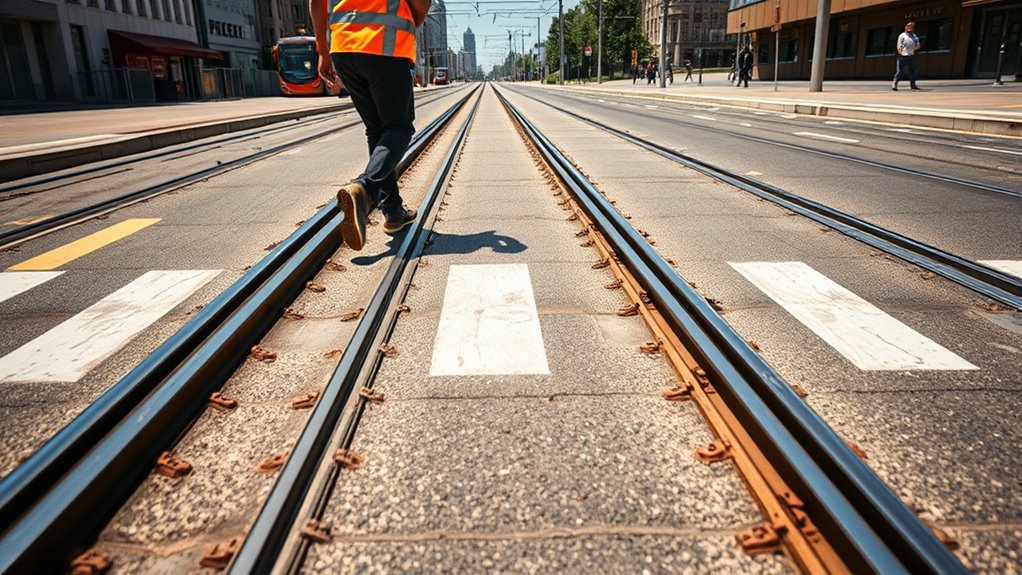

To guarantee safe crossing at rail and tram tracks, always obey signals and barriers. Wait for flashing lights, lowered barriers, and accompanying sounds before crossing. Cross only at designated pedestrian crossings, look both ways, and never rush across, even if signals indicate safe. Stay alert and avoid distractions like phones. Proper awareness and adherence to safety rules keep you safe; if you’d like to know more, you’re on the right path to better understanding.
Key Takeaways
- Always cross at designated pedestrian crossings with proper signals and infrastructure.
- Observe and interpret crossing signals carefully, including flashing lights, barriers, and sounds.
- Pause and look both ways before crossing, even if signals indicate it’s safe.
- Avoid rushing or crossing during malfunctioning signals to prevent accidents.
- Educate children and inexperienced pedestrians on safe crossing practices and signal meanings.
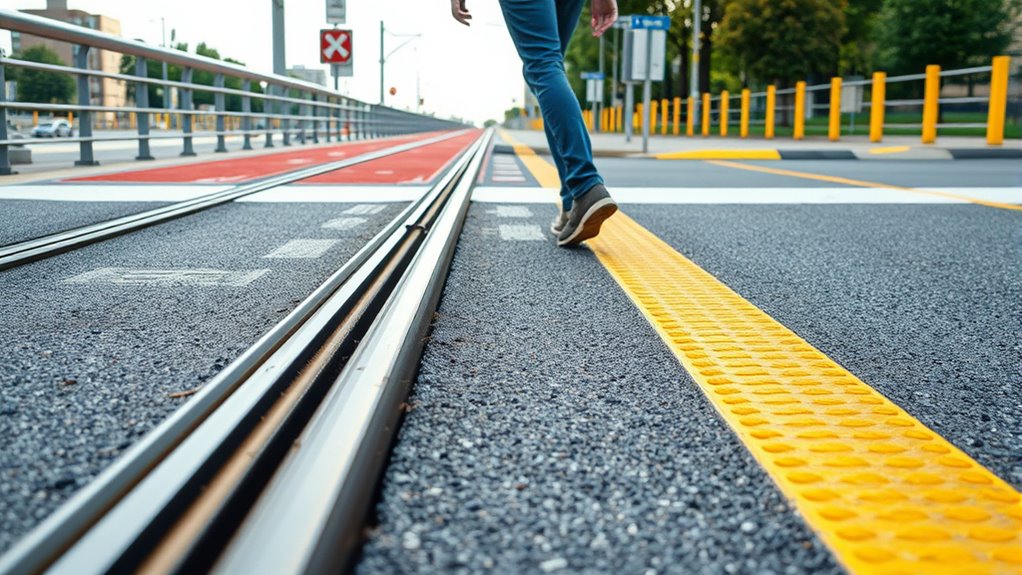
Have you ever wondered what keeps trains and trams moving smoothly and safely along their routes? It’s a combination of well-maintained tracks, vigilant operators, and, importantly, safety measures designed to protect everyone around the rails. If you’re a pedestrian or a driver near rail and tram tracks, understanding safe crossing techniques is essential. One of the most critical elements for pedestrian safety is the use of crossing signals. These signals act as clear communication tools that inform you when it’s safe to cross and when you should wait. Ignoring these signals can lead to dangerous situations, so always pay attention to them.
Safety signals are essential for pedestrians and drivers near rail and tram crossings.
When you approach a crossing, look out for the crossing signals—lights, bells, or barriers—that alert you to an approaching train or tram. These signals are carefully synchronized with the track system to ensure maximum safety. For example, flashing lights and lowering barriers mean a train or tram is imminent, and you should not attempt to cross. On the other hand, when the signals are inactive and barriers are raised, it’s generally safe to proceed. However, don’t rely solely on visual cues; always listen for warning sounds like bells or horns, which serve as additional alerts. Being attentive to all crossing signals helps prevent accidents and keeps pedestrian safety a top priority.
It’s also important to cross at designated pedestrian crossings. These are specifically designed to minimize risk, often featuring raised platforms, clear signage, and signals that work in conjunction with the railway system. When you arrive at a crossing, pause and observe all signals carefully. Never try to beat the train by rushing across; trains and trams can be surprisingly quiet until they’re very close, and the stopping distance can be longer than you expect. Remember, even if the signals seem to indicate it’s safe, always look both ways before crossing, because sometimes signals malfunction or are ignored by others.
If you’re with children or others unfamiliar with crossing procedures, take a moment to explain the importance of waiting for signals. Encourage them to stay alert and avoid distractions like phones. Pedestrian safety isn’t just about following rules—it’s about actively paying attention and respecting the signals designed to keep everyone safe. By doing so, you not only protect yourself but also set an example for others. Crossing tracks responsibly creates a safer environment for everyone, ensuring that trains and trams can operate smoothly while minimizing the risk of accidents. Always remember, safety begins with awareness and adherence to crossing signals.
A new sentence to consider is: Regular maintenance and technological upgrades of crossing signals significantly enhance safety, ensuring reliable communication between trains, trams, and pedestrians.
Frequently Asked Questions
How Can I Identify Safe Crossing Points at Unfamiliar Tracks?
To identify safe crossing points at unfamiliar tracks, always look for designated crossings with visible crossing barriers and warning signals. Before crossing, perform a quick track inspection for any oncoming trains or obstructions. Never attempt to cross if barriers are down or signals are active. Stick to marked crossings, obey all signs, and stay alert, ensuring your safety when crossing unfamiliar tracks.
Are There Specific Signs Indicating Safe Crossing Zones?
Think of crossing signs as the lighthouse guiding you safely through dark waters. Yes, there are specific signs indicating safe crossing zones. Look for visual warning signals like flashing lights, crossing gate indicators, and clear signage. These signs are designed to catch your eye and signal when it’s safe to cross. Always reduce your speed, stay alert, and obey these signs—they’re your best tools for safe passage across unfamiliar tracks.
What Should I Do if a Tram or Train Is Approaching?
When a tram or train approaches, you should immediately observe railway signals and crossing barriers. If signals are flashing or barriers are down, stop and wait patiently. Never try to cross until the signals turn off and barriers lift. Keep your distance from the tracks, stay alert, and listen for any horn sounds. Your safety depends on obeying these signals and barriers, ensuring you cross only when it’s safe.
How Do Weather Conditions Affect Crossing Safety?
Weather conditions can considerably impact crossing safety. Rain, snow, and fog reduce visibility, making it harder to see trains or trams approaching. Wet tracks can be slippery, increasing your risk of slipping or losing control. Poor weather may also cause track maintenance issues or weather-related hazards like fallen debris or ice. Always slow down, stay alert, and look both ways carefully before crossing, especially during adverse weather, to stay safe.
Can Mobile Apps Help Locate Safe Crossing Areas?
Yes, mobile apps can absolutely be your lifesaver when locating safe crossing areas. Imagine an app that’s so powerful it practically has a sixth sense! You just open your favorite app store, download a GPS navigation app designed for transit safety, and it guides you effortlessly to the safest crossing spots. These apps use real-time data, making sure you cross where it’s safest, saving you from risky surprises.
Conclusion
Remember, crossing rail and tram tracks is like walking a tightrope—you need focus and caution. Always look both ways, listen carefully, and wait for the clear signal before crossing. If you’re ever unsure, it’s better to pause than to risk a fall. Think of these tracks as a guarded gate—respect them, stay alert, and you’ll cross safely, like a seasoned traveler maneuvering through a busy city street. Your safety depends on staying vigilant every step of the way.