Choosing the right premium suspension forks for gravel requires balancing weight savings with impact absorption. My top overall pick is the Fox 32 TC Grip SL because it offers exceptional tuning for mixed surfaces without adding excessive mass. For riders prioritizing aggressive traction on loose terrain, the RockShox Domain Gold Isolator provides robust support, though it adds noticeable weight. The main tradeoff in this category is between minimalist efficiency and all-day comfort. Continue reading to see how each model stacks up against specific riding styles and budget constraints.

Get your wardrobe favorites delivered free with Prime
- Fast, free delivery on millions of items
- Prime Video, Amazon Music and more included
- Member-only deals all year
Key Takeaways
- Short-travel forks (30-40mm) like the Cane Creek Invert SL offer the best power transfer for racing, while longer-travel models sacrifice stiffness for comfort.
- Air spring consistency varies widely; premium brands like Fox and RockShox provide more linear damping curves than budget alternatives.
- Offset geometry significantly impacts handling; 50mm offset forks maintain traditional gravel steering, while 44mm offset models lean toward mountain bike agility.
- Carbon steerers and legs reduce weight but increase cost and potential vulnerability to crash damage compared to aluminum options.
- Maintenance requirements for sealed damper systems are lower on premium units, reducing long-term ownership hassle despite higher upfront costs.
| RockShox Domain Gold Isolator RC3 Suspension Fork – 29″, 170mm Travel |  | Best for Heavy-Duty Adventure | Travel: 170 mm | Wheel Size: 29 inches | Axle Standard: 15x110mm Boost | VIEW ON AMAZON | See Our Full Breakdown |
| Magnesium Alloy Air Suspension Fork 700C Gravel Off-Road Bike |  | Best Budget Entry Point | Material: Magnesium Alloy | Wheel Size: 700C | Thru Axle: 100x12mm | VIEW ON AMAZON | See Our Full Breakdown |
| Fox 32 TC Grip SL Factory Tapered Fork – 700c, 40mm travel |  | Best Overall for Performance Gravel | Travel: 40 mm | Wheel Size: 700c | Axle Standard: 12×100 mm | VIEW ON AMAZON | See Our Full Breakdown |
| BUCKLOS 26/27.5/29 inch Travel 140mm MTB Air Suspension Fork |  | Best for Multi-Bike Compatibility | Travel: 140 mm | Wheel Sizes: 26/27.5/29 inch | Steerer Type: Threadless | VIEW ON AMAZON | See Our Full Breakdown |
| Cane Creek Invert SL Gravel Suspension Fork, Raw Carbon to Black Fade |  | Best Lightweight Carbon Option | Travel: 30 mm | Weight: 990 g | Crown Material: Carbon Fiber | VIEW ON AMAZON | See Our Full Breakdown |
| RockShox Domain Gold Isolator RC3 Suspension Fork | | Best for Heavy-Duty Enduro Adaptation | Travel: 150 mm | Wheel Size: 29 inches | Axle Standard: 15 x 110 mm Boost | VIEW ON AMAZON | See Our Full Breakdown |
| ZTZ 26/27.5/29″ Mountain Bike Air Suspension Fork |  | Best Budget High-Travel Option | Travel: 180mm | Wheel Size: 26/27.5/29 inches | Axle Type: QR 9x100mm | VIEW ON AMAZON | See Our Full Breakdown |
| BUCKLOS GRVS 1 1/8 700C Gravel Road Bike Air Suspension Fork |  | Best Dedicated Gravel Value | Travel: 40 mm | Axle Size: 100 x 12 mm thru-axle | Weight: 1716 g (3.78 lbs) | VIEW ON AMAZON | See Our Full Breakdown |
| BOLANY Road Bike Suspension Fork 60mm Travel |  | Best Mid-Range Travel Balance | Travel: 60 mm | Axle Type: 12×100 mm Thru-Axle | Weight: 1.7 kg | VIEW ON AMAZON | See Our Full Breakdown |
| WCS 700C Carbon Fiber Gravel Bike Fork |  | Best Lightweight Rigid Alternative | Material: T800 Carbon Fiber | Weight: 410g | Steerer Size: 1-1/8″ Straight | VIEW ON AMAZON | See Our Full Breakdown |
| premium suspension forks for gravel | Travel | Weight | Material | Wheel Size |
|---|---|---|---|---|
| RockShox Domain Gold Isolator | 170 mm | — | — | 29 inches |
| Magnesium Alloy Air Suspension | — | — | Magnesium Alloy | 700C |
| Fox 32 TC Grip SL Factory Tape | 40 mm | 6.2 lb | — | 700c |
| BUCKLOS 26/27.5/29 inch Travel | 140 mm | 1976 g | Aluminum/Magnesium Alloy | — |
| Cane Creek Invert SL Gravel Su | 30 mm | 990 g | — | — |
| RockShox Domain Gold Isolator | 150 mm | 7.8 lbs | Aluminum | 29 inches |
| ZTZ 26/27.5/29" Mountain Bike | 180mm | 2400g | — | 26/27.5/29 inches |
| BUCKLOS GRVS 1 1/8 700C Gravel | 40 mm | 1716 g (3.78 lbs) | Aluminum alloy | — |
| BOLANY Road Bike Suspension Fo | 60 mm | 1.7 kg | Aluminum + Magnesium alloy | — |
| WCS 700C Carbon Fiber Gravel B | — | 410g | T800 Carbon Fiber | — |
More Details on Our Top Picks
RockShox Domain Gold Isolator RC3 Suspension Fork – 29″, 170mm Travel
This fork is built for riders who treat gravel like a trail race. With 170mm of travel, it absorbs massive impacts that would rattle a standard gravel bike apart. Compared to the Fox 32 TC, which offers a modest 40mm for light compliance, the Domain is a tank designed for rock gardens and drops. Its DebonAir spring provides a plush start to the stroke, essential when you are not expecting the ground to disappear. However, this capability comes with a penalty: it is heavy and changes your bike’s geometry significantly. It is overkill for smooth fire roads but indispensable if your route includes technical singletrack.
Pros:- Massive 170mm travel handles severe terrain
- Robust chassis resists flex under heavy braking
- DebonAir spring offers excellent small-bump sensitivity
Cons:- Significantly heavier than dedicated gravel forks
- Alters head angle, slowing steering response
- Overkill for smooth pavement or hardpack
Best for: Gravel riders who frequently detour into technical singletrack or bikepacking routes with significant obstacles.
Not ideal for: Riders prioritizing speed and climbing efficiency, as the added weight and travel create pedal bob and sluggish handling.
- Travel:170 mm
- Wheel Size:29 inches
- Axle Standard:15x110mm Boost
- Offset:44 mm
- Steerer Tube:Tapered Aluminum
- Max Tire Width:81 mm
- Chassis Material:Aluminum/Magnesium
Our verdict“Choose this only if your gravel bike needs to double as a light trail bike.”
Magnesium Alloy Air Suspension Fork 700C Gravel Off-Road Bike
This option serves as an affordable entry into suspension for riders unwilling to commit to premium brands. While the Cane Creek Invert SL offers refined tuning and carbon construction, this magnesium alloy fork delivers basic functionality at a fraction of the complexity. It fits 700C wheels and uses a standard 100x12mm thru-axle, ensuring decent stiffness for light gravel paths. The primary tradeoff is refinement; the suspension lacks the nuanced damping found in the Fox 32 TC, meaning it can feel harsh on high-frequency vibrations. It is a utilitarian choice for commuting or casual weekend rides rather than performance-oriented racing.
Pros:- Low cost of entry for suspension
- Lightweight magnesium alloy construction
- Standard 700C and disc brake compatibility
Cons:- Limited adjustability compared to premium forks
- Build quality lags behind Fox or RockShox
- Single-speed compatibility limits versatility
Best for: Commuters or casual riders wanting basic shock absorption without investing in high-end components.
Not ideal for: Performance-oriented gravel racers, as the damping lacks the precision needed for fast cornering on rough surfaces.
- Material:Magnesium Alloy
- Wheel Size:700C
- Thru Axle:100x12mm
- Suspension Type:Air (Dual)
- Brake Compatibility:Disc Brake
- Structure:Conical
Our verdict“A pragmatic choice for budget-conscious riders who need basic comfort on rough city streets.”
Fox 32 TC Grip SL Factory Tapered Fork – 700c, 40mm travel
This fork strikes the ideal balance between compliance and efficiency, making it the top pick for serious gravel riders. The 40mm of travel is sufficient to smooth out washboard roads without inducing the pedal bob associated with the RockShox Domain. Its Grip SL damper offers three positions, allowing you to lock it out for climbs or open it up for descents. Unlike the Cane Creek Invert, which is lighter but less adjustable, the Fox provides a broader range of tuning options. The tapered steerer ensures the front end feels rigid and precise, though the 6.2lb weight is noticeable on very steep grades compared to ultra-light carbon alternatives.
Pros:- Optimal 40mm travel for mixed terrain
- Grip SL damper offers versatile tuning
- Tapered steerer enhances steering stiffness
Cons:- Heavier than carbon fiber competitors
- Premium price point
- Travel limit restricts aggressive trail use
Best for: Competitive gravel racers and enthusiasts who demand precise handling and adjustable damping.
Not ideal for: Riders seeking the absolute lightest component, as the aluminum chassis adds weight over carbon options.
- Travel:40 mm
- Wheel Size:700c
- Axle Standard:12×100 mm
- Offset:50 mm
- Steerer Tube:Tapered
- Weight:6.2 lb
- Damper:Grip SL
- Finish:Kashima Coating
Our verdict“The definitive choice for riders who want race-ready performance without excessive weight.”
BUCKLOS 26/27.5/29 inch Travel 140mm MTB Air Suspension Fork
Designed for versatility across mountain bike platforms, this fork offers 140mm of travel, bridging the gap between cross-country and trail riding. It is significantly more capable than the Magnesium Alloy Gravel Fork, handling larger impacts with ease thanks to its robust aluminum-magnesium alloy construction. However, it lacks the dedicated gravel geometry of the Fox 32 TC, which means steering may feel slower on tight gravel turns. The adjustable rebound and lockout are welcome features for climbing, but the 1976g weight makes it a burden for lightweight gravel builds. It suits riders converting older MTBs for mixed-use rather than those building a dedicated gravel machine.
Pros:- Compatible with 26, 27.5, and 29-inch wheels
- Adjustable rebound and lockout for climbing
- Durable alloy construction withstands abuse
Cons:- Heavy at nearly 2kg
- Geometry not optimized for gravel handling
- Installation requires technical expertise
Best for: Riders with multiple bike sizes or those converting mountain bikes for light gravel and trail use.
Not ideal for: Dedicated gravel racers, as the heavy weight and high travel compromise efficiency on smooth roads.
- Travel:140 mm
- Wheel Sizes:26/27.5/29 inch
- Steerer Type:Threadless
- Brake Type:Disc Brakes
- Material:Aluminum/Magnesium Alloy
- Weight:1976 g
- Max Tire Size:3.0 inches
Our verdict“A flexible option for multi-bike owners, but too heavy for dedicated gravel performance.”
Cane Creek Invert SL Gravel Suspension Fork, Raw Carbon to Black Fade
Weighing just 990 grams, this fork is the lightest in the lineup, making it ideal for riders obsessed with climbing efficiency. The carbon fiber crown and steerer provide a distinct advantage over the aluminum constructions of the Fox 32 TC and BUCKLOS, reducing rotating mass significantly. With only 30mm of travel, it is the most subtle option, designed to dampen high-frequency vibrations rather than absorb big hits. While the Magnesium Alloy fork is cheaper, the Cane Creek offers superior refinement and stiffness. The tradeoff is a lower weight limit of 250 lbs and less adjustability than the Grip SL damper, but for weight-sensitive builds, it remains the premier choice.
Pros:- Extremely lightweight at 990g
- Carbon fiber construction reduces vibration
- Progressive air spring improves traction
Cons:- Limited 30mm travel for big impacts
- 250 lbs maximum rider weight limit
- Higher price per gram of travel
Best for: Ultralight gravel builders and climbers who prioritize minimal weight over maximum suspension travel.
Not ideal for: Heavier riders or those encountering very rough terrain, as the 30mm travel and weight limit may be insufficient.
- Travel:30 mm
- Weight:990 g
- Crown Material:Carbon Fiber
- Axle:12 x 100 mm
- Max Tire Width:50 mm
- Offset:45 mm
- Max Rider Weight:250 lbs
Our verdict“The ultimate choice for weight-weenies who want just enough compliance to stay comfortable.”
RockShox Domain Gold Isolator RC3 Suspension Fork
This fork stands out for riders attempting to push gravel boundaries into aggressive trail territory. With 150mm of travel, it dwarfs the 40mm offered by the BUCKLOS GRVS, making it suitable for rougher, technical terrain rather than just rough pavement. The DebonAir spring provides a plush initial stroke, absorbing large impacts that rigid forks or short-travel options cannot handle. However, the 7.8-pound weight is a significant penalty on a gravel bike, potentially making climbing feel sluggish compared to lighter carbon alternatives. It is overkill for pure gravel racing but makes sense for hybrid builds where downhill capability is prioritized over climbing efficiency.
Pros:- Generous 150mm travel handles severe impacts and drops
- DebonAir spring technology offers tunable, responsive damping
- Robust aluminum construction withstands heavy off-road abuse
Cons:- Heavy weight negatively impacts climbing performance
- Overly aggressive geometry for standard gravel applications
Best for: Riders building a ‘gravel-plus’ or hybrid bike that needs mountain bike-level impact absorption for technical descents.
Not ideal for: Gravel racers or climbers who prioritize weight savings and efficiency over maximum suspension travel.
- Travel:150 mm
- Wheel Size:29 inches
- Axle Standard:15 x 110 mm Boost
- Offset:44 mm
- Weight:7.8 lbs
- Material:Aluminum
Our verdict“Choose this only if your gravel route includes serious mountain bike trails.”
ZTZ 26/27.5/29″ Mountain Bike Air Suspension Fork
The ZTZ offers an unusual proposition: 180mm of travel at a price point accessible to budget-conscious builders. Compared to the RockShox Domain, it lacks brand prestige and refined damping tuning, but it provides massive cushioning for rough terrain. The QR 9x100mm axle limits its compatibility with modern gravel frames, which typically use 12mm thru-axles or 15x110mm Boost standards. While the forged aluminum construction is durable, the 2.4kg weight makes it a clunky addition to a lightweight gravel frame. It serves best as a temporary or budget solution for riders wanting to test extreme suspension before investing in premium gear.
Pros:- Exceptional 180mm travel for its category
- Adjustable air pressure and rebound damping
- Cost-effective entry into high-travel suspension
Cons:- QR axle limits compatibility with modern gravel frames
- Heavy at 2400g, affecting handling and climbing
- Build quality and damping refinement trail premium brands
Best for: DIY builders converting older MTB frames or those testing extreme suspension without high upfront cost.
Not ideal for: Modern gravel bikes requiring thru-axle compatibility and sleek, integrated aesthetics.
- Travel:180mm
- Wheel Size:26/27.5/29 inches
- Axle Type:QR 9x100mm
- Steerer Tube:1-1/8″ Straight
- Weight:2400g
- Max Tire Width:3.0 inches
Our verdict“A functional, high-travel budget option for non-standard builds, not for refined gravel riding.”
BUCKLOS GRVS 1 1/8 700C Gravel Road Bike Air Suspension Fork
Designed specifically for gravel, the BUCKLOS GRVS offers a more appropriate 40mm travel profile than the mountain-bike-derived RockShox Domain. Its 100 x 12 mm thru-axle ensures compatibility with contemporary gravel frames, unlike the QR-only ZTZ fork. The lightweight aluminum alloy construction keeps the weight reasonable at roughly 3.78 lbs, balancing durability with performance. While it lacks the remote lockout convenience of higher-end forks, the manual lockout is effective for efficiency on smooth sections. It is a pragmatic choice for riders who want suspension benefits without the weight penalty of enduro forks.
Pros:- Optimized 40mm travel for gravel terrain
- Compatible with modern 12mm thru-axle frames
- Full fender compatibility and good tire clearance
Cons:- Manual lockout is less convenient than remote systems
- Heavier than carbon fiber alternatives
- Damping tuning is basic compared to premium brands
Best for: Gravel riders on a budget who need thru-axle compatibility and moderate bump absorption.
Not ideal for: Riders seeking premium damping refinement or remote lockout controls.
- Travel:40 mm
- Axle Size:100 x 12 mm thru-axle
- Weight:1716 g (3.78 lbs)
- Steerer:1-1/8″ tapered
- Brake Mount:160 mm disc (70 mm a-pillar)
- Material:Aluminum alloy
Our verdict“The sensible middle ground for modern gravel bikes needing affordable, functional suspension.”
BOLANY Road Bike Suspension Fork 60mm Travel
The BOLANY fork splits the difference between the modest BUCKLOS GRVS and the extreme ZTZ, offering 60mm of travel. This amount is sufficient for rougher gravel paths while remaining manageable for climbing. The use of magnesium alloy helps keep the weight at 1.7 kg, lighter than the aluminum ZTZ but heavier than carbon options. It supports 12×100 mm thru-axles, ensuring modern compatibility. However, the manual lock requires stopping to adjust, which interrupts flow compared to remote-levered systems. It suits riders who encounter varied terrain where 40mm feels too short but 150mm is excessive.
Pros:- 60mm travel provides a versatile sweet spot
- Lightweight magnesium/aluminum blend construction
- Modern 12x100mm thru-axle compatibility
Cons:- Manual lockout reduces riding flow
- Heavier than premium carbon gravel forks
- Limited brand reputation for long-term durability
Best for: Commuters and mixed-surface riders who need more cushion than 40mm but less than enduro levels.
Not ideal for: Performance-focused racers who prioritize minimal weight and remote adjustability.
- Travel:60 mm
- Axle Type:12×100 mm Thru-Axle
- Weight:1.7 kg
- Material:Aluminum + Magnesium alloy
- Brake Mount:A-pillar, up to 160 mm
- Tube Diameter:39.8 mm
Our verdict“A balanced choice for mixed-terrain riders needing more travel than standard gravel forks.”
WCS 700C Carbon Fiber Gravel Bike Fork
While not a suspension fork, the WCS Carbon Fork challenges the need for suspension in many gravel scenarios. At just 410g, it is significantly lighter than the BUCKLOS GRVS or any air fork listed here. The T800 carbon fiber construction absorbs high-frequency vibrations effectively, offering compliance without the mechanical complexity or weight penalty of air springs. It includes rack mounts, adding utility for bikepacking that some suspension forks lack. However, it offers zero impact protection for large rocks or drops. It is ideal for riders on smoother gravel roads who value speed and weight savings over impact isolation.
Pros:- Ultra-lightweight at only 410g
- Carbon fiber provides natural vibration damping
- Integrated rack mounts enhance bikepacking utility
Cons:- No suspension travel for large impacts
- Limited to flat mount disc brake systems
- Higher stiffness may feel harsh on very rough terrain
Best for: Riders on smooth-to-medium gravel who prioritize low weight and simplicity over impact protection.
Not ideal for: Riders on highly technical, rocky, or broken gravel surfaces requiring shock absorption.
- Material:T800 Carbon Fiber
- Weight:410g
- Steerer Size:1-1/8″ Straight
- Brake Type:Flat Mount Disc
- Mounts:Rack Mounts (3 per side)
- Finish:Matte
Our verdict“The superior choice for efficiency-focused gravel riding where suspension is unnecessary.”
How We Picked
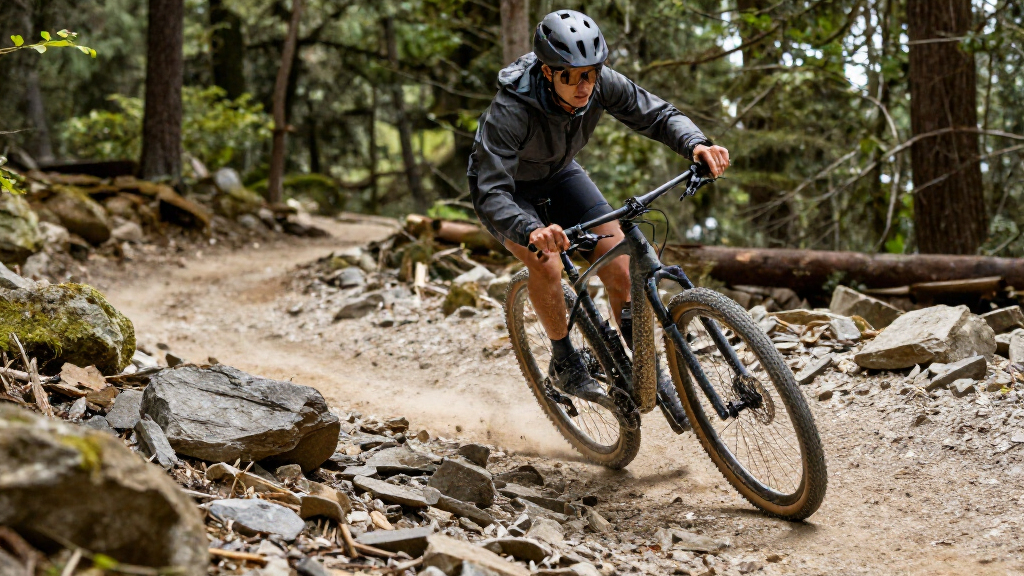
I evaluated these forks based on travel-to-weight ratio, damping adjustability, and compatibility with modern gravel geometries. Premium status was determined by the quality of the internal cartridge, material construction, and brand reputation for reliability. I prioritized models that offer meaningful compliance without compromising steering precision, a common pitfall in lower-tier suspension.
The ranking logic favors forks that integrate seamlessly into high-performance gravel builds. Products were compared on their ability to filter high-frequency vibrations versus absorbing large impacts. I also considered the ease of setup, as complex tuning can negate the benefits of a premium component for casual riders. This approach ensures the recommendations align with the specific demands of mixed-surface riding rather than generic mountain bike use.
| premium suspension forks for gravel | Material |
|---|---|
| RockShox Domain Gold Isolator | — |
| Magnesium Alloy Air Suspension | Magnesium Alloy |
| Fox 32 TC Grip SL Factory Tape | — |
| BUCKLOS 26/27.5/29 inch Travel | Aluminum/Magnesium Alloy |
| Cane Creek Invert SL Gravel Su | — |
| RockShox Domain Gold Isolator | Aluminum |
| ZTZ 26/27.5/29" Mountain Bike | — |
| BUCKLOS GRVS 1 1/8 700C Gravel | Aluminum alloy |
| BOLANY Road Bike Suspension Fo | Aluminum + Magnesium alloy |
| WCS 700C Carbon Fiber Gravel B | T800 Carbon Fiber |
Factors to Consider When Choosing Premium Suspension Forks For Gravel
Selecting a suspension fork for a gravel bike is distinct from choosing one for mountain biking. The priorities shift from pure impact absorption to efficiency and vibration damping. Here are the critical factors to weigh before making a purchase.Travel Amount and Compliance
Most gravel forks range from 20mm to 50mm of travel. Shorter travel (30-40mm) is ideal for maintaining pedaling efficiency and steering precision on smoother gravel roads. Longer travel (40-50mm) suits rougher, technical singletrack or broken pavement but can feel sluggish during sprints. I find that 40mm is the sweet spot for most mixed-terrain riders. Avoid forks with over 50mm travel unless you are building a bike specifically for aggressive, rocky descents, as the added weight and slop will hinder climbing performance.
Steerer Tube and Axle Standards
Compatibility is non-negotiable. Most modern gravel bikes use 1-1/8″ to 1.5″ tapered steerers and 12x100mm thru-axles. Older or budget frames may still use 1-1/8″ straight steerers and quick-release axles. Always verify your frame’s headset standard before buying. A mismatched fork can lead to dangerous play or require expensive adapters. Thru-axles provide superior stiffness and braking consistency compared to QR systems, which is why premium options almost exclusively feature them. If your frame lacks a thru-axle, you are limited to specific entry-level models.
Weight vs. Durability Tradeoffs
Carbon fiber legs and steerers save weight but increase cost and repair complexity. Aluminum forks are heavier but more forgiving in crashes and easier to repair. For racing or climbing-focused gravel riding, the weight savings of carbon are worth the premium. For touring or bikepacking where reliability is paramount, aluminum’s resilience might be preferable. Consider that a 200g weight difference is negligible for casual riding but impactful for competitive cyclists. I recommend matching the material to your riding intensity; casual riders rarely need the stiffness-to-weight ratio of high-end carbon.
Damping Adjustability and Tuning
Basic forks offer only a lockout, while premium models include rebound and compression adjusters. Rebound controls how quickly the fork returns after compression, affecting stability on rough terrain. Compression adjusters allow you to stiffen the fork for climbing or soften it for descents. More adjustment doesn’t always mean better; it means more complexity. Beginners should look for simple, intuitive controls rather than hundreds of clicks. Experienced riders benefit from fine-tuning to match specific trail conditions. I advise against buying a fork with features you do not know how to adjust, as improper setup can worsen performance.
Brake Mount Compatibility
Gravel bikes primarily use Flat Mount disc brakes. Ensure the fork supports the rotor size (140mm, 160mm, or 180mm) your caliper requires. Some older or budget forks use Post Mount adapters, which add weight and potential flex. Premium forks integrate Flat Mount directly for a cleaner, stiffer connection. Verify that the fork’s mount matches your current brake hardware to avoid buying unnecessary adapters. Mismatched mounts can also affect tire clearance, so double-check the manufacturer’s specifications for your intended tire width.
Frequently Asked Questions
Can I install a suspension fork on any gravel bike?
No, not every gravel bike frame is compatible with suspension forks. You must check your frame’s headset standard (straight vs. tapered) and axle type (QR vs. thru-axle). Additionally, some frames have limited crown clearance, meaning a fork with a thick crown or large air canister might hit the downtube. Always consult your bike manufacturer’s compatibility guide before purchasing. Installing an incompatible fork can lead to safety hazards or improper handling.Does a suspension fork make my gravel bike slower?
A suspension fork can slightly reduce pedaling efficiency due to added weight and energy absorption (bobbing). However, on rough surfaces, it keeps the front wheel planted, maintaining traction and reducing rider fatigue. Modern forks with good lockout or compression damping minimize this penalty during climbs. For smooth roads, the extra weight is a disadvantage, but for mixed terrain, the speed gained from better control often outweighs the efficiency loss. It depends on your typical route conditions.How often do I need to service a gravel suspension fork?
Premium forks like those from Fox or RockShox typically require a lower-leg service every 50 hours of riding or every few months, depending on conditions. Full damper services are needed less frequently, often annually. Budget forks may require more frequent attention due to less durable seals and bushings. Regular maintenance prevents wear and ensures consistent performance. Ignoring service intervals can lead to costly internal damage and reduced damping quality.Is 100mm of travel too much for a gravel bike?
Yes, 100mm is generally considered excessive for most gravel applications. This amount of travel is designed for cross-country or trail mountain biking. On a gravel bike, it alters the head angle drastically, making steering vague and unpredictable. It also adds significant weight and increases the risk of toe overlap. Most gravel riders find 30-50mm sufficient for comfort and control. Stick to shorter travel unless you are building a specific hybrid bike for very rough trails.Do I need a thru-axle fork for gravel riding?
While not strictly mandatory, a thru-axle fork is highly recommended for performance gravel riding. It provides superior stiffness under braking and cornering compared to quick-release systems. This results in more precise steering and better power transfer. If your frame supports it, choose a thru-axle fork. If your frame is older with QR dropouts, you are limited to specific models, but be aware that you may experience slightly more flex and less consistent braking feel.Conclusion
Choosing the right fork depends on your riding style and frame compatibility. For the best overall balance of weight and performance, the Fox 32 TC Grip SL remains the benchmark. Riders seeking maximum comfort on rougher terrain should consider the RockShox Domain Gold Isolator, accepting the weight penalty for superior traction. For those on a tighter budget, the Bucklos GRVS offers decent functionality, though it lacks the refined damping of premium brands. Beginners should prioritize ease of use over adjustability, looking for models with simple lockout mechanisms. Ultimately, match the fork’s travel and stiffness to your typical terrain to maximize enjoyment and efficiency.