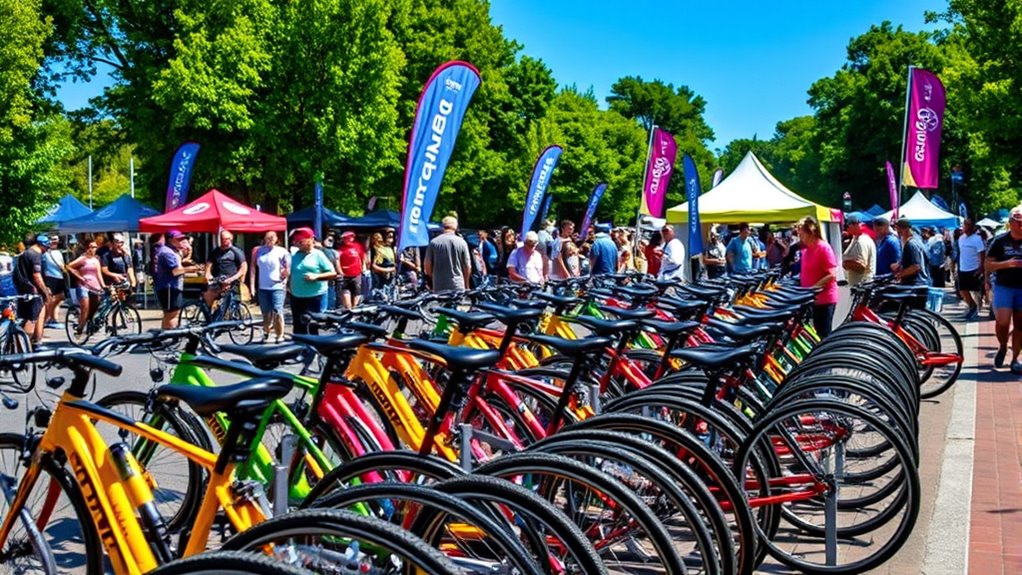

To set up bike valet parking at your event, choose a visible, secure location near entrances with enough space for multiple bikes. Install sturdy racks and encourage the use of locks to deter theft. Hire staff or volunteers to assist with bike handling and offer basic maintenance tools like pumps and multi-tools. Use clear signage and lighting for safety, and educate cyclists on proper parking and bike care. If you want to learn more about creating a safe, organized bike valet, keep going.
Key Takeaways
- Select secure, visible, and spacious areas near event entrances with proper signage and lighting.
- Install sturdy bike racks or locking stations and encourage the use of locks for theft prevention.
- Provide basic maintenance tools and on-site repair support to keep bikes in good condition.
- Staff the valet area with trained personnel to assist with bike handling and ensure proper parking.
- Educate users on bike safety, proper parking practices, and maintenance to promote responsible cycling.
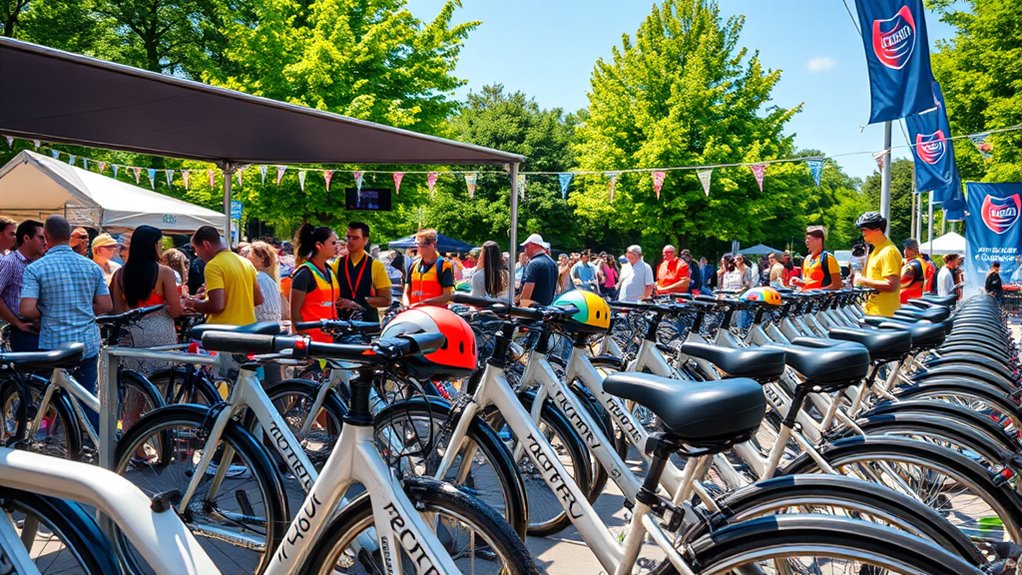
Attending events can be exciting, but finding a convenient and secure place to park your bike often isn’t easy. When you arrive, you might worry about the safety of your bike or how to keep it in good condition during the event. Setting up a bike valet parking system can solve these concerns, offering a safe, organized, and accessible option for cyclists. By establishing a dedicated bike valet, you not only enhance bike safety but also promote bike maintenance by encouraging proper parking and handling.
A well-designed bike valet setup begins with selecting a secure, visible location near the event entrance. It’s important to provide enough space for multiple bikes and ensure the area is monitored or staffed to prevent theft or vandalism. When you create a designated parking zone, you make it easier for attendees to trust that their bikes will be safe. Clear signage and proper lighting also help in making the area inviting and easy to navigate, reducing the risk of accidental damage to bikes or confusion among users.
To promote bike safety, consider installing sturdy bike racks or locking stations that allow cyclists to secure their bikes properly. Providing these options encourages riders to use locks, which is essential for preventing theft and protecting their equipment. Additionally, you might want to include volunteers or staff trained in bike handling to assist riders, ensuring bikes are parked correctly and safely. This not only minimizes potential damage but also educates users about good bike maintenance practices, like checking tire pressure or securing loose parts before parking.
Another key aspect is offering basic bike maintenance support at the valet station. Simple tools such as tire pumps, multi-tools, and cleaning supplies can help cyclists perform quick fixes on-site, which keeps their bikes in good shape and ready to ride home. Having staff available to advise on bike safety checks can make a significant difference, encouraging riders to inspect their bikes regularly and maintain them properly. This proactive approach reduces issues like flat tires or broken chains that could occur during the event or afterward.
Furthermore, providing informational materials or signage about bike maintenance tips can empower riders to care for their bikes better and extend their lifespan. Setting up a bike valet isn’t just about convenience; it’s about creating a safe environment that encourages cycling as an eco-friendly, healthy transportation choice. When you prioritize bike safety and maintenance, you’re helping attendees enjoy the event without worry and promoting responsible bike use. A well-organized bike valet system demonstrates your commitment to sustainability, reduces congestion, and makes your event more accessible to cyclists. With proper planning and attention to safety and maintenance, your bike parking can become a highlight of the event experience, ensuring everyone rides in and out with peace of mind.
Frequently Asked Questions
How Do I Handle Damaged Bikes During Valet Parking?
When handling damaged bikes during valet parking, you should assess the damage quickly and communicate with the owner immediately. Offer to assist with bike repair if possible, or guide them to nearby repair services. For lost bikes, follow your lost bike recovery procedures, such as recording details and notifying authorities. Always stay professional, make certain safety, and document the incident to prevent future issues.
What Insurance Coverage Is Recommended for Bike Valet Services?
Think of it as your shield against unforeseen storms. You should carry liability insurance that covers any damages or accidents involving bikes under your care. This guarantees you’re protected from claims, much like a safety net. Accident coverage is essential too, so you’re prepared if a rider gets injured or bikes get damaged during parking. Together, these insurances help you manage risks confidently and keep your bike valet service secure.
How Can I Promote Bike Valet to Increase Participation?
To boost participation in your bike valet, focus on community outreach and effective promotional strategies. Use social media, flyers, and local partnerships to spread the word. Engage with community groups and event attendees directly to highlight the convenience and environmental benefits. Offering incentives or discounts can also motivate more people to use the service. Consistent promotion and personalized outreach will make your bike valet more popular and well-utilized.
What Are the Best Locations for Bike Valet Stations?
You should place bike valet stations near high-traffic areas like event entrances and along main pathways. Install sturdy bike racks nearby to encourage riders to park their bikes securely before handing them over. Positioning the stations close to the entrance makes it convenient for cyclists, boosting participation. Confirm the location is visible and accessible, guiding attendees seamlessly from bike racks to the event itself.
How Do I Manage Overflow Bike Parking When Full Capacity Is Reached?
When your bike valet hits capacity, you need a quick plan. Redirect overflow bikes to nearby secure bike racks, guaranteeing bike rack security remains tight. Train your staff to communicate clearly, guide cyclists efficiently, and handle overflow smoothly. Use signage to direct riders and maintain safety. This proactive approach prevents chaos, keeps bikes secure, and ensures everyone has a positive experience, even when space runs out.
Conclusion
By setting up bike valet parking at your events, you create convenience, promote sustainability, and enhance the attendee experience. You show care for the environment, support active lifestyles, and demonstrate your commitment to community well-being. You make transportation easier, reduce congestion, and foster a positive atmosphere. Together, you can turn an ordinary event into an extraordinary one—where safety meets accessibility, where eco-friendly choices meet convenience, and where every rider feels valued and welcomed.