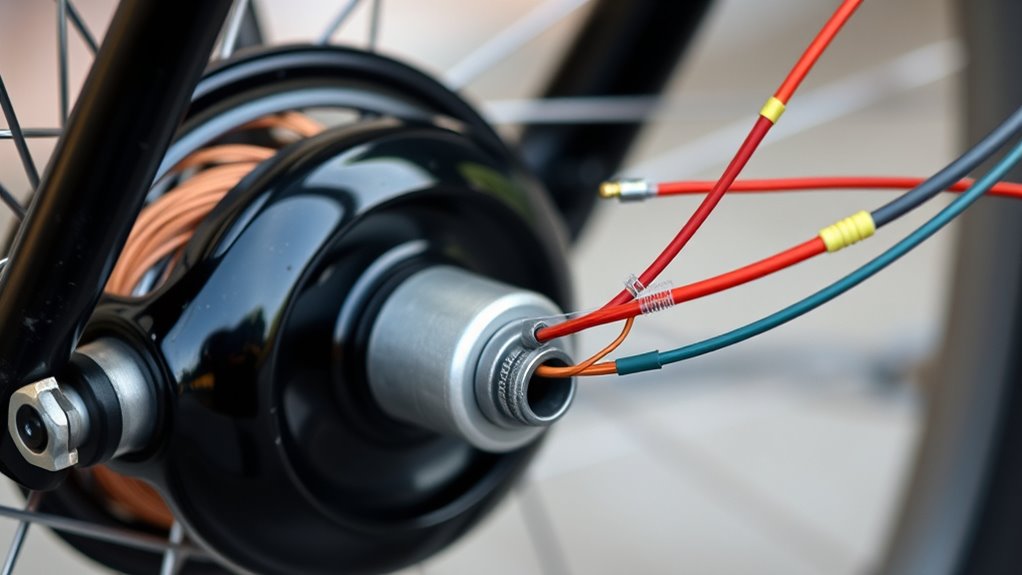

To wire your dynamo hub to the headlight, connect the positive (+) wire from the hub directly to the headlight’s positive terminal, and the negative (–) wire to the frame or designated negative connection. Make sure your cables are secure, insulated, and routed neatly along the fork or frame to prevent damage. Using proper gauge cables and connectors guarantees reliable operation. Keep details in mind, and you’ll discover even more about optimizing your system.
Key Takeaways
- Identify and connect the positive (+) and negative (–) wires from the dynamo hub to the headlight using proper connectors.
- Ensure wiring is routed securely along the fork or frame to prevent damage and maintain neat cable management.
- Use cables of appropriate gauge and waterproof insulation to protect against moisture and dirt.
- Confirm that the headlight is compatible with the dynamo’s voltage and current ratings for reliable operation.
- Tighten all connections securely to prevent loose contacts, flickering, or electrical issues during riding.

Understanding the basics of dynamo wiring is essential for anyone looking to set up or troubleshoot a dynamo system. The wiring connects the dynamo hub to your lighting system, guaranteeing that power flows efficiently from the hub to your headlight and taillight. Getting this right means paying attention to proper connections, cable quality, and compatibility with your lighting components. When it comes to battery maintenance, it’s important to remember that most traditional dynamo systems don’t rely on batteries; instead, they generate electricity directly as you pedal. However, if your setup includes a battery or a lighting system with a built-in battery, wiring must be compatible to avoid issues like flickering or insufficient power. Guaranteeing lighting compatibility means selecting the right wiring and components that match your dynamo’s output voltage and current ratings, so your lights shine brightly and reliably.
The wiring from the dynamo hub generally consists of two main wires—one positive and one negative—running along your fork or frame to your lighting fixtures. You need to guarantee these wires are securely connected to the dynamo terminals, often marked with symbols for positive (+) and negative (–). A common mistake is mixing these connections, which can cause lighting malfunction or damage. Use connectors designed for bicycle wiring, and make sure they’re properly insulated to prevent short circuits. Proper wiring also involves routing cables neatly to avoid damage from movement or dirt, which can degrade signals and reduce lighting performance over time. When connecting to your headlight, check if the light system is compatible with the dynamo’s voltage output; many modern LED lights are designed specifically for dynamo systems, but older or incompatible lights may not work well or could be damaged. Additionally, understanding top projectors for gaming can help you see how high-quality components boost overall performance in your setup.
Lighting compatibility is vital because some lights require specific wiring configurations or additional components like resistors or regulators. If you’re upgrading your lights, verify that they’re designed for dynamo use, so you don’t end up with flickering or dim lighting. It’s also wise to periodically review your wiring connections during maintenance to prevent corrosion or loose contacts that can diminish light output. Properly maintained wiring not only guarantees consistent illumination but also prolongs the lifespan of your lighting system. Remember, good wiring practices involve using appropriate gauge cables, securing connections tightly, and protecting them from moisture and debris. This keeps your system reliable, safe, and efficient, giving you peace of mind during every ride. Whether you’re setting up a new system or troubleshooting an existing one, understanding these wiring basics makes all the difference in achieving ideal lighting performance and maintaining your bike’s electrical health.
Frequently Asked Questions
How Do I Troubleshoot a Malfunctioning Bicycle Dynamo?
For dynamo troubleshooting, start by inspecting the wiring diagnosis; look for loose or damaged wires between the hub and headlight. Make certain connections are secure and free of corrosion. Spin the wheel to see if the headlight lights up; if not, test the dynamo with a multimeter to check voltage output. Replace faulty wiring or the dynamo itself if needed, and retest to confirm proper operation.
Can I Upgrade My Existing Dynamo Wiring System Easily?
Upgrading your existing dynamo wiring system is like upgrading a bike; it’s doable with the right tools. You can often enhance compatibility by following detailed wiring diagrams and choosing compatible components. Check your current wiring setup first, then select upgrade parts that match your dynamo model. With patience and a basic understanding of wiring, you can upgrade your system smoothly, improving performance without a complete overhaul.
What Safety Precautions Should I Take When Wiring a Dynamo?
When wiring a dynamo, you should prioritize safety by wearing personal protective equipment like gloves and eye protection. Always check that electrical insulation on wires is intact to prevent shorts or shocks. Work in a dry, well-lit area, and disconnect the dynamo from the bike before starting. Use insulated tools, and double-check all connections to guarantee safety and proper operation.
Which Tools Are Essential for Dynamo Wiring Installation?
Imagine you’re assembling a vintage radio—your essential tools for dynamo wiring include a wire connector to secure connections and a wire stripper to remove insulation. You’ll also need pliers for gripping and bending wires, a multimeter to test continuity, and electrical tape for insulation. These tools guarantee safe, reliable wiring from hub to headlight, helping you complete your project efficiently and accurately.
How Long Does a Typical Dynamo Wiring Setup Last?
A typical dynamo wiring setup lasts around 5 to 10 years, depending on usage and maintenance. Your dynamo’s lifespan can be extended by regularly checking wiring durability and protecting it from moisture and debris. Proper installation, using quality components, and routine inspections help guarantee the wiring remains intact longer, reducing the risk of failures. Keep an eye on signs of wear to maximize your dynamo’s performance and longevity.
Conclusion
Think of your dynamo wiring like a well-orchestrated symphony, where each component plays its part in harmony. When you understand the basics from hub to headlight, you’re conducting a smooth flow of energy that keeps your ride shining bright. With this knowledge, you can troubleshoot, upgrade, or simply appreciate the magic behind your bike’s lighting system. Mastering these connections guarantees your journey stays illuminated, no matter how dark the road gets.