Wrap your bar tape like a pro by anchoring it firmly at the handlebar end and working toward the stem with slight overlaps. Keep the tape tension consistent, shaping it smoothly around curves and drops without wrinkles. Finish with bar end plugs or strips for a sleek look and added durability. Practice neat overlaps and even tension to achieve a professional feel. Want expert tips to perfect your technique? Keep going for detailed guidance.
Key Takeaways
- Anchor the tape securely at the handlebar end, then work toward the stem, overlapping each layer slightly for a neat finish.
- Maintain consistent tension and wrap tightly to ensure a smooth, wrinkle-free surface.
- Conform the tape neatly around curves and drops, avoiding wrinkles and ensuring full coverage.
- Use finishing strips or bar end plugs to secure the tape and prevent unraveling.
- Practice wrapping techniques, focus on even overlaps, and experiment with tension to achieve a professional look.
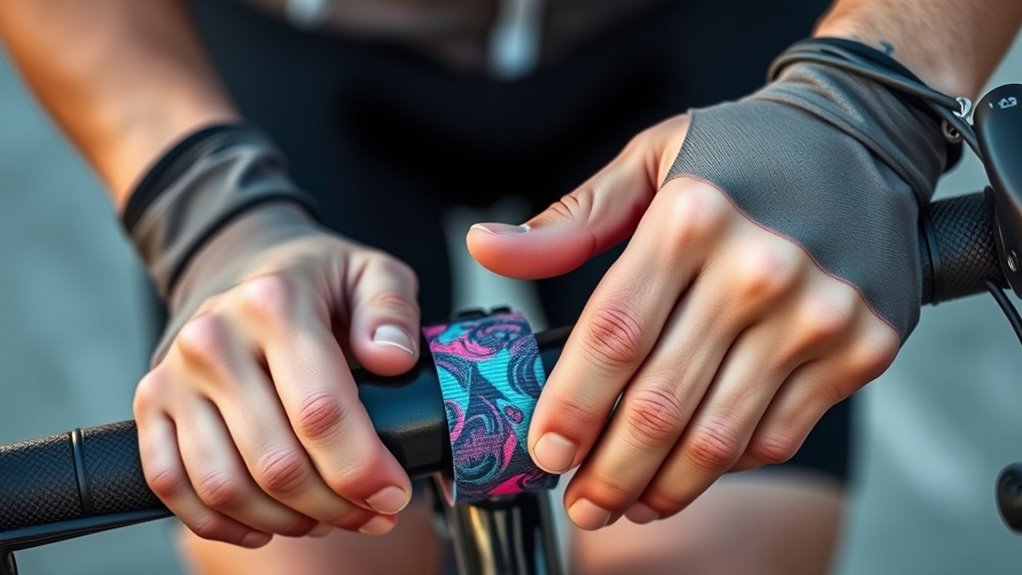
Wrapping your handlebars with bar tape is an easy way to improve comfort, grip, and control on your bike. When you choose quality tape and wrap it properly, you’ll notice a significant difference in how securely you hold your handlebars, especially during long rides or tough climbs. Grip enhancement is one of the main reasons cyclists opt to wrap their bars, as a well-wrapped tape prevents slipping and keeps your hands firmly in place, even when your palms get sweaty. Plus, the right tape can absorb vibrations from uneven pavement, reducing fatigue and making every ride smoother. Selecting the appropriate tape can also contribute to your bike’s overall style and aesthetic appeal.
Beyond function, aesthetic customization plays a huge role in selecting and wrapping your bar tape. You can match your tape to your bike’s color scheme, or go for bold patterns that make your bike stand out. Wrapping your bars gives you the opportunity to showcase your personal style—whether you prefer sleek, minimalist designs or vibrant, eye-catching patterns. It’s a simple way to upgrade your bike’s look without spending a lot of money. When you choose different colors or textures, you’re not just improving performance; you’re also making your bike uniquely yours. Proper wrapping techniques can also help prevent the tape from unraveling over time, ensuring a clean look.
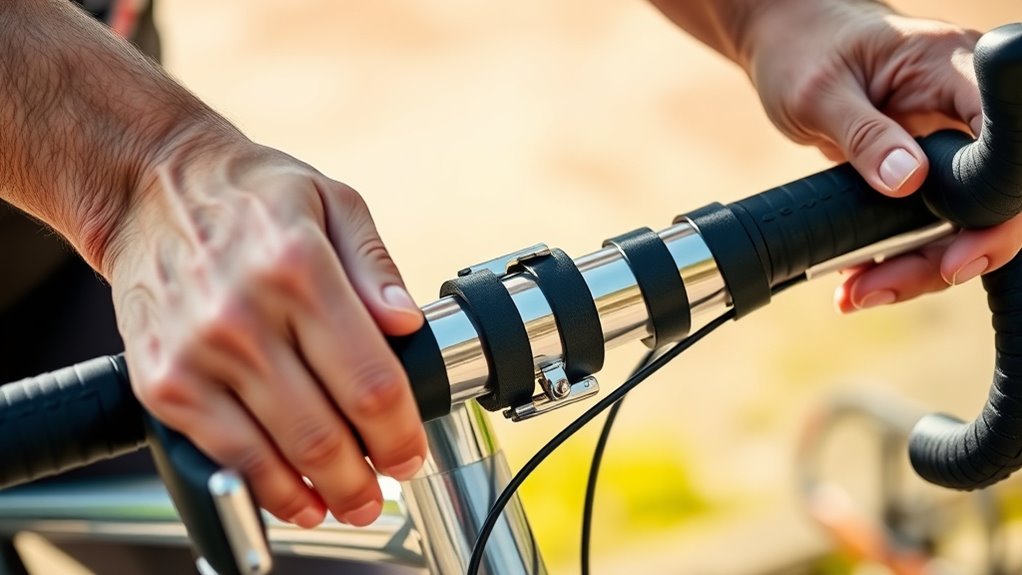
The key to mastering the wrap is in the technique. Start by anchoring the tape at the end of the handlebar and work your way toward the stem, overlapping each layer slightly to ensure a secure, even cover. Tension is vital—pull the tape firmly as you wrap to create a tight, smooth finish that won’t loosen over time. Pay close attention to the curves and drops of the handlebar, making sure the tape conforms neatly without wrinkles or gaps. This not only enhances grip but also elevates the overall aesthetic by giving your handlebars a clean, professional look. Using high-quality tape designed for cycling can also extend the durability of your wrap.
Don’t forget about finishing touches. Use finishing strips or bar end plugs to secure the tape and keep it from unraveling. This detail not only improves durability but also ensures your wrap looks polished. As you get more experienced, you’ll develop your own preferred patterns and tension techniques, but the basics remain the same: wrap tightly, overlap evenly, and customize with color and texture to suit your style. With a little practice, wrapping your bar tape like a pro becomes second nature, transforming your bike into a personalized, comfortable, and stylish ride. Properly wrapped handlebars can also contribute to better performance tuning by maintaining consistent grip and control.
Frequently Asked Questions
What Type of Tape Provides the Best Grip and Comfort?
You should choose a tape with excellent grip enhancement and comfort padding, like cork or cushioned silicone options. These materials provide a secure hold even when your hands get sweaty, ensuring safety and control. Comfort padding absorbs vibrations and reduces hand fatigue, making long rides more enjoyable. Look for high-quality tapes that balance grip and cushioning, so you stay comfortable and confident on every ride.
How Do I Prevent Tape From Slipping During Rides?
To prevent tape from slipping during rides, focus on proper grip enhancement techniques. Make sure you wrap the tape tightly and overlap each layer slightly more at the ends. Use high-quality tape designed for longevity, which provides better adhesion and durability. Secure the ends with finishing tape or electrical tape, and periodically check your tape during long rides to re-secure any loose spots. This keeps your grip secure and extends tape longevity.
Can I Reuse Old Bar Tape for Repairs?
Did you know that about 30% of cycling enthusiasts recycle or reuse parts? Yes, you can reuse old bar tape for repairs if it’s still in good condition, but be cautious. Recycling old tape reduces waste and saves money. When choosing replacement materials, consider durability and grip. Reusing tape works best for minor repairs, but for safety, replace it if it’s worn out or damaged to guarantee maximum performance.
What’s the Ideal Tension When Wrapping Bar Tape?
You should aim for moderate tension when wrapping bar tape, ensuring it’s snug but not too tight. This helps prevent slipping and maintains comfort. Pay attention to pad thickness; thicker pads may require a slightly looser wrap. Also, consider color coordination to create a sleek look. Keep even tension throughout, and overlap the tape evenly for a professional finish that feels good and looks sharp.
How Do I Clean and Maintain My Bar Tape?
Think of your bar tape as the bike’s smile – it needs regular care to stay bright. To clean it, gently wipe with a damp cloth and mild soap, avoiding harsh chemicals. Check your cycling accessories for wear and replace when needed. Keeping your grip enhancement spotless ensures a firm hold and comfort on every ride. Regular maintenance preserves its look and function, making every cycling session more enjoyable.
Conclusion
Mastering the art of wrapping bar tape not only improves your bike’s look but also enhances your grip and comfort. Some believe that a perfectly wrapped bar can even boost your cycling efficiency by reducing hand fatigue. While this theory isn’t fully proven, a snug, even wrap does help prevent slipping and blisters. So, take your time, follow these steps, and enjoy a smoother, more confident ride—your hands will thank you.