
To store your e-bike battery safely, keep the charge between 20% and 80%, ideally around 50%, and recheck it every few months. Store it in a cool, dry environment between 50°F and 68°F to prevent damage from overheating or cold. Make sure the terminals are clean, the battery is removed from the bike, and the storage area has proper ventilation. Keep these tips in mind to protect your battery’s health—more details follow.

Get your wardrobe favorites delivered free — and shop member deals
- Fast, free delivery on millions of items
- Access to Prime Big Deal Days deals on October 6–7
- Prime Video, Amazon Music and more included
Key Takeaways
- Keep the battery charge between 20% and 80%, ideally around 50%, before storage for optimal longevity.
- Store the battery in a cool, dry environment between 50°F and 68°F (10°C–20°C).
- Remove the battery from the bike, clean terminals, and inspect for damage prior to storage.
- Avoid storing the battery at full charge or fully drained for extended periods.
- Use insulation and proper airflow to maintain stable temperatures and prevent overheating or cold damage.
As an affiliate, we earn on qualifying purchases.
What’s the Best Charge Level for My E‑Bike Battery?

To maximize your e-bike battery’s lifespan, it’s best to keep the charge level between 20% and 80%. Maintaining this range helps prevent unnecessary stress on the battery, which can shorten its overall battery lifespan. Your charging habits play a vital role in preserving the battery’s health over time. Avoid letting the battery drain completely or staying at a full charge for extended periods. Instead, charge it regularly and remove it from the charger once it hits around 80%. This practice reduces the risk of capacity loss and keeps the battery performing at its best longer. Being mindful of your charging habits and keeping the charge level within this ideal window can also help prevent misinformation about battery care and prolong your e-bike’s battery life, ensuring better performance over time. Additionally, understanding the contrast ratio in your charger’s design can help optimize charging efficiency and battery longevity. Recognizing the importance of battery chemistry can further guide you in choosing appropriate charging and storage practices for your specific e-bike battery type. Moreover, paying attention to temperature management during charging and storage can significantly impact the overall health of your battery. For example, maintaining proper temperature ranges during charging can prevent overheating and extend the battery’s usable life.
As an affiliate, we earn on qualifying purchases.
Why Does Temperature Matter When Storing Your E‑Bike Battery?
Temperature plays a vital role in keeping your e‑bike battery healthy during storage. Storing it at the right temperature helps prevent risks like overheating or damage from cold weather. Knowing the ideal range and what to avoid ensures your battery stays in top shape. Additionally, maintaining proper air quality around your storage area can help reduce potential contaminants that may affect the battery’s performance. For example, storage safety checklists can guide you in creating optimal conditions and avoiding common pitfalls. Maintaining optimal storage conditions is crucial for prolonging your battery’s lifespan and ensuring safe, efficient performance. Furthermore, being aware of industry standards for precious metal investments can help you choose secure storage options if you are investing in valuable assets like gold or silver.
Optimal Storage Temperatures
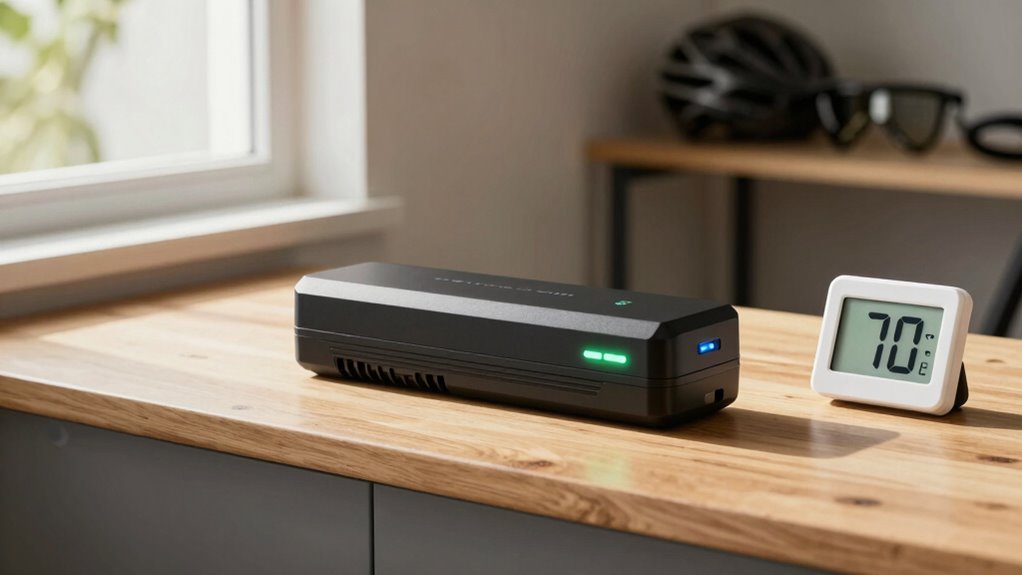
Since extreme temperatures can considerably affect your e-bike battery’s performance and lifespan, it’s essential to store it within the ideal temperature range. Maintaining proper temperatures helps preserve battery insulation and ensures maximum charging cycles. The recommended storage temperature is between 50°F and 68°F (10°C to 20°C). Proper indoor air quality can help maintain consistent temperatures and protect your battery from environmental stress.
To keep your battery healthy:
- Avoid exposing it to freezing or scorching conditions.
- Store it in a cool, dry place, away from direct sunlight.
- Check that the temperature remains stable, especially if stored long-term.
Storing your battery within this range minimizes stress on its components, prevents capacity loss, and extends its overall lifespan. Proper temperature control is key to maximizing your e-bike battery’s performance.
Risks of Overheating
Overheating your e-bike battery can cause significant damage, reducing its capacity and lifespan. Excess heat accelerates chemical reactions inside the battery, leading to capacity loss and potential swelling or failure. To prevent this, proper battery insulation is essential; it helps regulate temperature and shields the battery from external heat sources. Additionally, using ventilation techniques allows heat to dissipate effectively, stopping hot air from building up around the battery. Proper ventilation facilitates heat dissipation and helps maintain a stable temperature. Avoid storing your e-bike in confined spaces or direct sunlight, which can trap heat. Regularly check the storage area’s temperature and ensure good airflow. Keeping your battery cool not only preserves its longevity but also maintains safe operation, reducing the risk of thermal runaway or other heat-related hazards. Implementing proper storage methods, such as using insulated containers or covering the battery, can further help in preventing overheating. Proper storage methods are crucial for maintaining battery health and safety over time. Additionally, selecting storage locations with optimal temperature control can significantly extend your battery’s lifespan.
Cold Weather Effects
Cold weather can substantially affect your e-bike battery’s performance and longevity if not stored properly. Exposure to cold temperatures reduces battery capacity, making it harder to get full power when you ride. Extreme cold can also cause internal damage, leading to reduced lifespan. To protect your battery, keep these points in mind:
- Store your battery in a warm, dry place to prevent capacity loss.
- Avoid charging or discharging the battery in freezing temperatures, as it can damage the cells.
- Maintain a moderate temperature, ideally between 50°F and 68°F (10°C–20°C), to preserve ideal battery capacity and lifespan.
- Temperature management is crucial for maintaining optimal battery health and performance.
- Proper storage practices can help extend the overall life of your e-bike battery and maintain its performance over time.
- Implementing smart home automation can help you monitor and control storage conditions, ensuring your battery remains within the recommended temperature range.
- Monitoring battery temperature regularly is essential for preventing damage and ensuring longevity. Additionally, understanding the chemical reactions within the battery can help you better appreciate how temperature impacts its function and safety.
Keeping your e-bike battery at the right temperature ensures it stays healthy and ready to perform when you need it.
As an affiliate, we earn on qualifying purchases.
How to Store Your E‑Bike Battery for Long-Term Safety
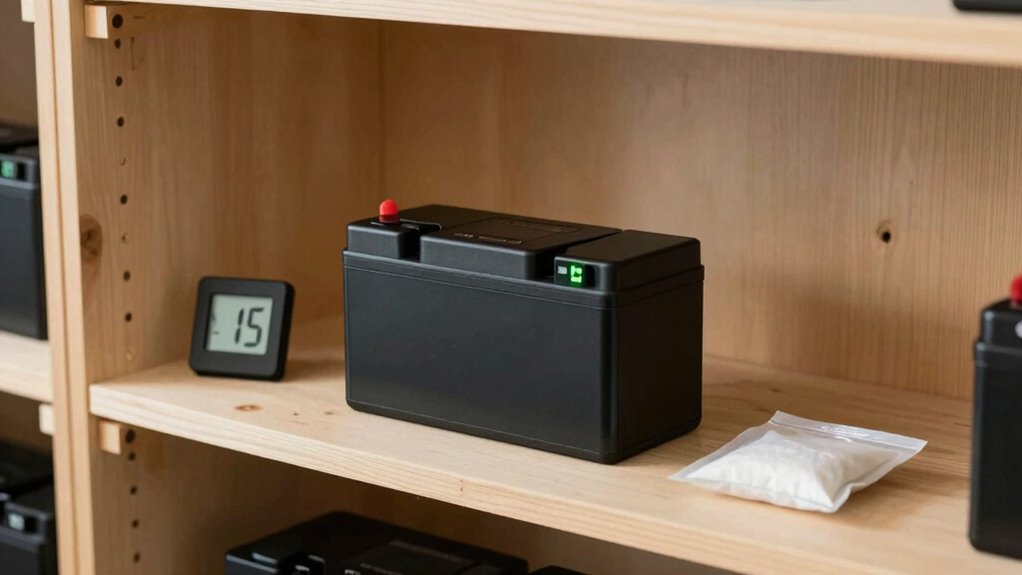
To keep your e-bike battery safe during long-term storage, you should maintain it at the ideal charge level—about 40-60%. Store it in a cool, dry place with stable temperatures to prevent damage. Properly managing these factors helps prolong your battery’s lifespan and ensures it’s ready to go when you need it. Additionally, regular battery maintenance can help identify potential issues early and maintain overall performance. Being aware of storage best practices can further reduce risks associated with improper handling, such as using appropriate safety gear when handling batteries. Following sustainable storage methods can also contribute to eco-friendly practices and reduce environmental impact, aligning with the goal of mindful sustainability in modern battery care.
Optimal Charge Levels
When storing your e-bike battery for the long term, maintaining the ideal charge level is essential for preserving its health. Proper charging habits help prevent capacity loss and ensure better battery maintenance over time. Aim to keep the battery between 30% and 60% charge; this range minimizes stress and degradation. Avoid fully charging or completely draining the battery before storage, as both can harm its longevity. Regularly check the charge level during storage to keep it within the recommended range. To maximize battery health, follow these key ideas:
- Charge to 50% before long-term storage.
- Recheck and top off the charge every few months.
- Avoid storing at full or empty capacity for extended periods.
- Proper storage conditions such as temperature control are also vital for maintaining battery integrity over time.
Ideal Storage Temperatures
Storing your e-bike battery at the right temperature is essential for maintaining its longevity and performance. Ideally, keep it in a cool, dry place between 50°F and 68°F (10°C to 20°C). Extreme heat accelerates battery degradation, while cold temperatures can temporarily reduce capacity. To protect the battery, use proper battery insulation, such as a padded sleeve or insulated storage container, which helps stabilize temperature fluctuations. When choosing a storage container, opt for options that are ventilated and moisture-resistant, preventing condensation and corrosion. Avoid storing the battery in direct sunlight or near heat sources. Keeping the battery within the recommended temperature range, along with suitable insulation and containers, ensures ideal long-term safety and preserves its capacity.
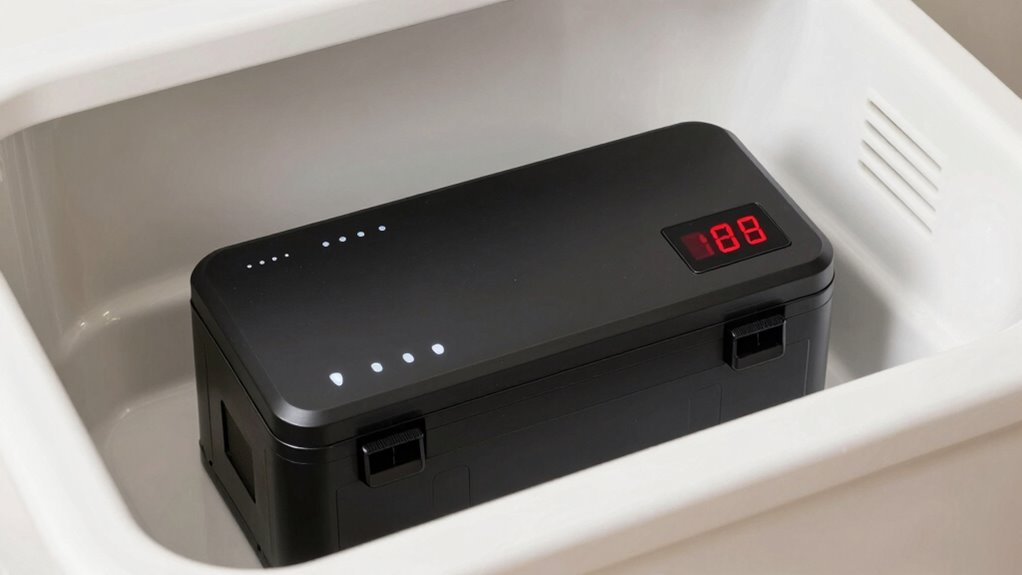
temperature-controlled battery storage
As an affiliate, we earn on qualifying purchases.
As an affiliate, we earn on qualifying purchases.
Signs Your Battery Storage Is Causing Damage
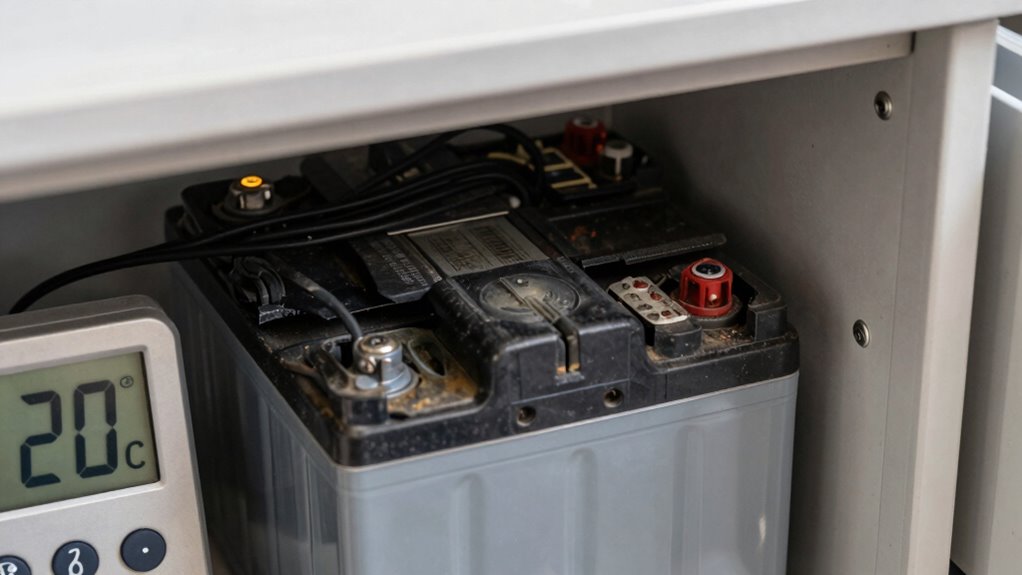
If your e-bike battery storage setup isn’t ideal, you might start noticing some warning signs that damage is occurring. One common sign is battery corrosion around terminals, which indicates moisture or poor connections. Another issue is inconsistent charging, often caused by incompatible chargers, leading to overcharging or undercharging. You may also experience a sudden drop in battery performance or reduced range, signaling degradation from improper storage conditions. Keep an eye out for these signs to prevent further damage. Remember, using the wrong charger or neglecting proper storage temperatures can accelerate deterioration. Addressing these issues early can prolong your battery’s lifespan and ensure safe, reliable riding.
How to Prepare Your Battery Before Storage

Preparing your e-bike battery properly before storage is essential to prevent damage and extend its lifespan. Start by adjusting your charging routines so the battery is stored at a partial charge, ideally around 50-60%. Avoid fully charging or depleting it completely, as extremes can harm the battery. Perform basic battery maintenance, such as cleaning terminals and inspecting for damage. If your battery has a removable pack, remove it from the bike to prevent accidental discharges or corrosion during storage. Ensure the battery is cool and dry. Charging routines and proper battery maintenance help keep the cells healthy and ready for use when you’re ready to ride again. Taking these steps now will help preserve your battery’s performance over the long term.
Troubleshooting Common Battery Storage Problems
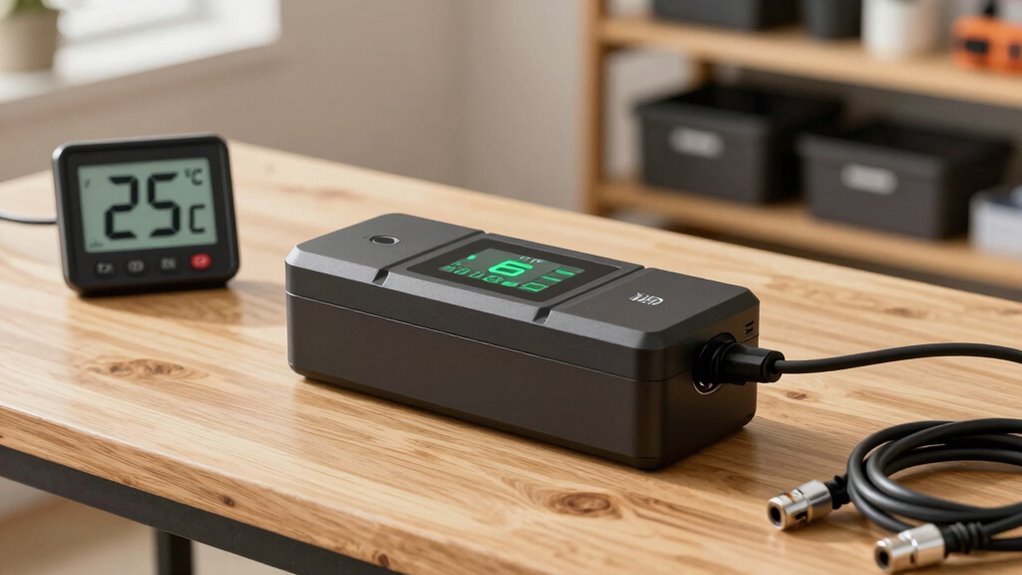
Even with proper storage practices, you might encounter common battery problems that can affect performance and longevity. Battery cycling issues can cause capacity loss over time, especially if you don’t regularly discharge and recharge your battery properly. Voltage regulation problems may lead to inconsistent power output, making your ride less reliable. To troubleshoot, consider these points:
Battery issues like cycling and voltage regulation can reduce performance; regular checks help maintain optimal function.
- Check if your battery has undergone excessive cycling, which can degrade its capacity and trigger performance issues.
- Ensure the voltage regulation system functions correctly to maintain steady voltage levels, preventing power fluctuations.
- Inspect for signs of voltage drops or inconsistent charging patterns, which could signal internal damage or aging components. Addressing these problems early helps extend your battery’s lifespan and keeps your e-bike running smoothly.
Frequently Asked Questions
How Often Should I Check My Battery’s Charge Level During Storage?
You should check your battery’s charge level at least once a month during storage. Regular battery maintenance and storage monitoring help prevent over-discharging or damage. Keep the charge around 50-70% and guarantee it’s stored in a cool, dry place. If you notice the charge dropping considerably, recharge it promptly. Consistent checks and proper storage monitoring extend your battery’s lifespan and keep it ready for your next ride.
Can Storing the Battery in a Garage Affect Its Lifespan?
Storing your e-bike battery in a garage can impact its lifespan due to temperature effects. If your garage gets too hot or cold, it can cause battery degradation over time. To safeguard your battery, keep it in a temperature-controlled environment, ideally between 50-68°F (10-20°C). Avoid extreme temps, and store the battery in a cool, dry place to ensure it lasts longer and performs well.
What Safety Precautions Should I Take When Handling a Stored Battery?
When handling your stored e-bike battery, always wear insulated gloves and keep it in a fire-resistant container to prevent fire hazards. Make certain the battery is not damaged, and avoid exposing it to extreme temperatures. Store it in a cool, dry place, away from flammable materials. Checking for any signs of swelling or damage before handling can prevent accidents. Proper insulation and cautious handling keep you safe and extend the battery’s lifespan.
How Do Different Climates Impact Battery Storage Recommendations?
Ironically, climate changes your storage environment more than you might think. In hot climates, you should avoid high temperatures that can damage the battery, so keep it cool and shaded. Cold climates demand insulation to prevent freezing, which can harm internal cells. For ideal climate adaptation, always tailor your storage practices to your local weather, ensuring your e-bike battery stays safe and functional regardless of external conditions.
Is It Safe to Leave a Partially Charged Battery Plugged in During Storage?
Leaving a partially charged e-bike battery plugged in during storage isn’t usually safe. It can lead to overcharging, causing damage over time. You should disconnect it once it reaches around 50-70% to prevent stress on the battery insulation and reduce unnecessary charging cycles. Regularly check the battery to make sure it stays in a safe charge range, especially in varying climates, which can affect battery health and longevity.
Conclusion
Remember, a well-stored e-bike battery is like a garden kept in bloom—care and attention make all the difference. Keep it charged at the right level, store it in a cool, dry place, and check on it periodically. Don’t let neglect turn your battery into a wilted plant. With proper care, you’ll keep your e-bike ready to ride and prevent costly damage. After all, an ounce of prevention is worth a pound of cure.
Fall Picks
fall essentials
As an affiliate, we earn on qualifying purchases.