
To winterize your bike, start by checking and adjusting your tire pressure for cold temperatures, guaranteeing ideal handling. Clean and lubricate your chain with a high-quality wet lube to prevent rust and ensure smooth operation. Install fenders to protect against salt, slush, and dirt, and rinse your bike after each ride to remove corrosive materials. Regular maintenance and protective sprays keep your bike in top shape; for detailed tips, keep exploring how to keep your bike winter-ready.
Key Takeaways
- Regularly clean and dry your bike to remove salt and dirt that cause corrosion.
- Apply a high-quality, wet-condition chain lubricant frequently to prevent rust.
- Install fenders to protect components from snow, slush, and salt splashes.
- Check and maintain tire pressure to ensure safety and optimal handling in cold weather.
- Conduct routine inspections of brakes and gears to detect and address corrosion early.

As winter approaches, it’s essential to prepare your bike to withstand the cold, snow, and salt that can cause damage. One of the first steps is to check your tire pressure. Cold temperatures cause air to contract, so you’ll want to ensure your tires are inflated to the recommended pressure. Underinflated tires increase rolling resistance, making pedaling harder and risking flats from rough or icy surfaces. Overinflated tires, on the other hand, can reduce grip and make your ride uncomfortable. Regularly check and adjust your tire pressure before each ride during winter to maintain optimal performance and safety. This simple step helps prevent punctures and ensures your bike handles properly on slippery or uneven terrain.
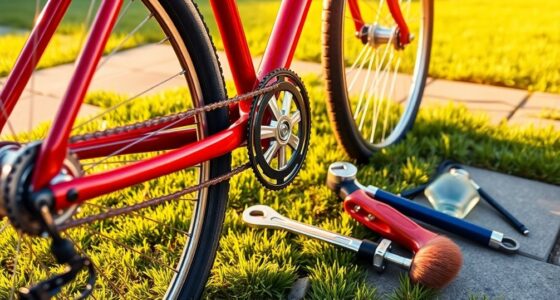
Next, focus on chain maintenance. During winter, moisture, road salt, and dirt can quickly corrode your chain, leading to rust and poor shifting. Before winter rides, clean your chain thoroughly with a degreaser and a brush to remove grime. Once clean, dry it completely and apply a high-quality chain lubricant designed for wet conditions. This prevents rust and keeps your chain moving smoothly, which is crucial when riding through snow or slush. Remember, a well-lubricated chain reduces wear on your drivetrain and improves pedaling efficiency. During winter, you might need to reapply lubricant more frequently, especially if you ride in wet or salty environments.
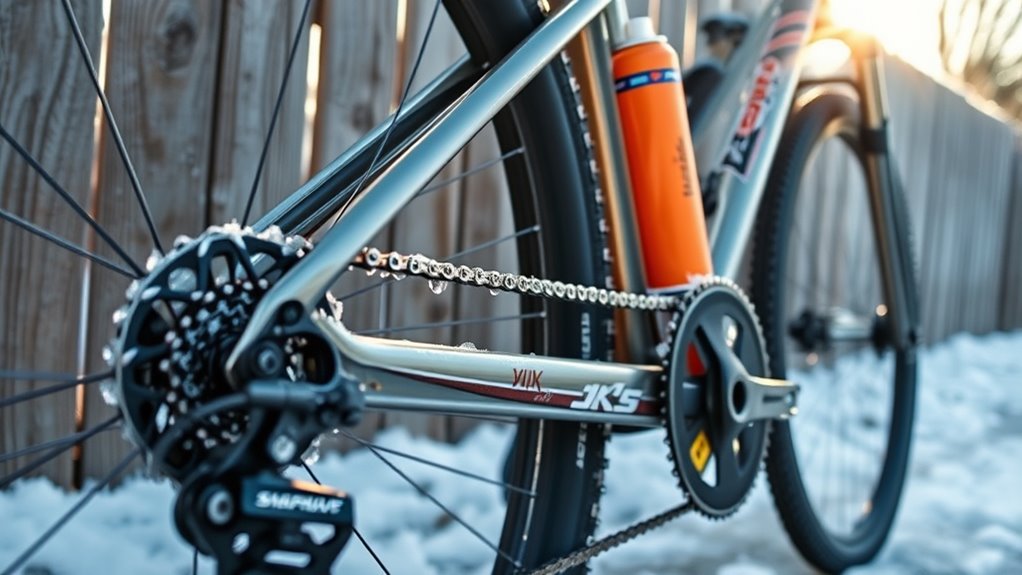
In addition to tire pressure and chain maintenance, consider other protective measures. Invest in fenders to keep snow, slush, and salt from splashing onto your frame and components. Cleaning your bike after each ride is vital—rinse off salt and dirt to prevent corrosion, and dry all parts thoroughly. Applying a light coat of bike-specific protective spray can add an extra barrier against moisture and salt. Also, inspect your brakes and gears regularly for any signs of corrosion or wear, adjusting and lubricating as needed.
Frequently Asked Questions
How Often Should I Reapply Salt-Resistant Coatings?
You should reapply salt-resistant coatings every six to twelve months to maintain corrosion prevention and coating durability. Regular reapplication ensures your bike stays protected from salt and moisture, especially during winter months. Keep an eye on the coating’s condition; if you notice chips or wear, reapply sooner. This routine helps prevent rust and extends your bike’s lifespan, ensuring it remains in top shape throughout harsh weather conditions.
Can I Use the Same Lubricant Year-Round?
You can use the same lubricant year-round if it’s suitable for seasonal maintenance, but it’s usually better to switch based on weather conditions. For summer, lightweight lubes work well, while winter requires thicker, more resistant types to prevent freezing and corrosion. Regularly check your lubricant’s condition and reapply as needed to keep your bike protected. Using the right lubricant type for the season guarantees peak performance and longevity.
What’s the Best Storage Location for Winter Protection?
You should store your bike in a garage with good organization and climate control for winter protection. Keep it in a dry, cool spot away from direct sunlight and fluctuating temperatures to prevent rust and damage. Make sure the area is well-ventilated, and avoid areas prone to dampness or extreme cold. Proper garage organization helps keep your bike safe and in top shape until spring.
How Do I Prevent Rust on Exposed Bike Parts?
Did you know that rust can reduce a bike’s lifespan by up to 50%? To prevent rust on exposed parts, regularly clean and dry your bike, especially after riding in wet conditions. Apply a corrosion control spray or bike-specific rust prevention product, and keep moving parts well-lubricated. Store your bike in a dry, covered area to minimize exposure to moisture, helping you maintain its condition year-round.
Is It Necessary to Remove All Water From the Bike?
Yes, removing water from your bike is essential for corrosion prevention. You should thoroughly dry all parts, especially those prone to rust, like the chain and frame joints, after riding in wet conditions. Water elimination helps prevent moisture from lingering, which can cause rust and damage. Use a clean cloth or compressed air to reach tricky spots. Proper drying ensures your bike stays protected and runs smoothly through winter.
Conclusion
As winter approaches, taking the time to salt, lubricate, and protect your bike can extend its lifespan and keep you riding smoothly next season. Did you know that bikes stored improperly during winter can suffer up to 30% more corrosion? By winterizing now, you safeguard your investment and ensure your bike’s performance when spring rolls around. Don’t skip these steps—your bike will thank you, and you’ll be ready to hit the road as soon as the weather warms.