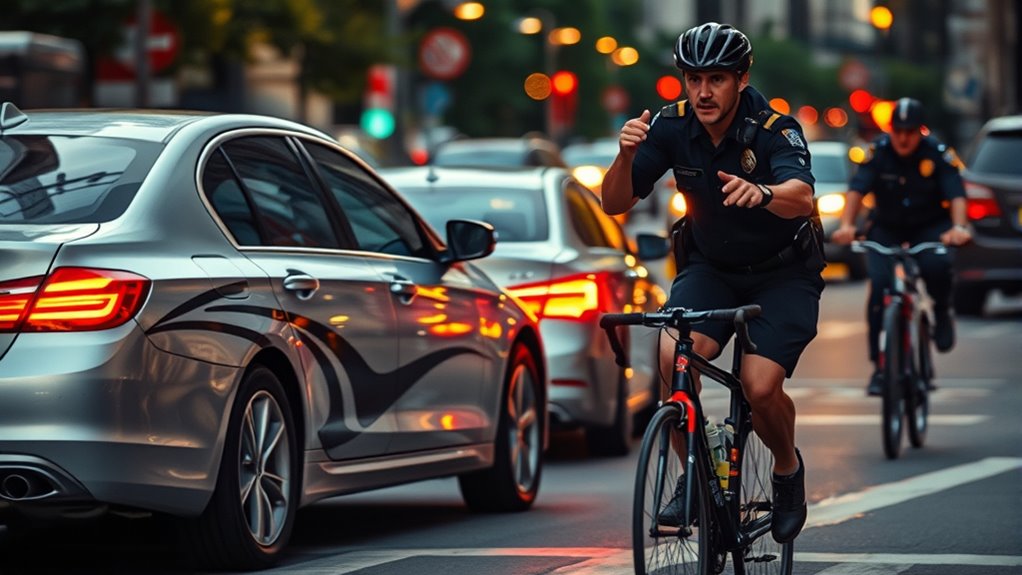

When faced with aggressive drivers, it’s vital to set clear boundaries to protect yourself. Stay calm, avoid eye contact, and create distance by changing lanes or pulling over if needed. If the driver approaches or acts threatening, keep your windows up, lock your doors, and drive to a safe location. Refrain from retaliating or engaging. Want to learn more about effectively handling these situations and maintaining safety? Keep going for essential tips and strategies.
Key Takeaways
- Set clear personal boundaries by avoiding eye contact and refusing to engage with aggressive drivers.
- Maintain a safe distance and slow down or change lanes to create physical space.
- Stay calm and use a calm demeanor to de-escalate the situation without retaliating.
- If threatened, drive to a safe, populated area or law enforcement location.
- Report dangerous or aggressive driving to authorities to help prevent future incidents.

Aggressive driving can escalate quickly and pose serious dangers on the road. When you encounter someone behaving aggressively, it’s natural to feel your own frustration rise. But responding impulsively can worsen the situation, increasing the risk of accidents or dangerous confrontations. Recognizing the signs of road rage—such as yelling, gesturing, or tailgating—is essential. Instead of engaging, your goal should be to defuse the conflict and prioritize safety. Conflict de-escalation techniques are your best tools here. Keep your emotions in check, avoid eye contact or provocative gestures, and try to create distance by changing lanes or pulling over if necessary. Your calm demeanor can influence the other driver, possibly prompting them to settle down.
Stay calm, avoid provocative gestures, and create distance to defuse road rage safely.
It’s important to remember that most aggressive drivers are acting out of frustration or impatience, often unrelated to you personally. When you’re faced with road rage, don’t take it personally. Instead, focus on maintaining your own composure. Sometimes, the best way to handle a tense situation is to give the aggressive driver space. Yielding or slowing down can prevent escalation, showing that you’re not interested in engaging in a conflict. This act of conflict de-escalation not only keeps you safe but can also serve as a signal to the other driver that you’re choosing patience over provocation. Avoid making obscene gestures, yelling, or retaliating—these actions tend to escalate rather than resolve the conflict.
If the aggressive driver is approaching your vehicle or trying to confront you, don’t hesitate to seek safety. Call the authorities if you feel threatened or if the situation becomes dangerous. Remember, your priority is to protect yourself and any passengers. Don’t attempt to argue or argue back; instead, keep your windows up, lock your doors, and drive to a safe location. It’s better to remove yourself from the situation than to engage in a dangerous confrontation. If you’re able, report aggressive driving behavior to law enforcement so they can handle the situation appropriately. Additionally, understanding the importance of projector technology can help you stay focused and calm, especially if you’re using a device for navigation or entertainment during your drive.
In the end, handling aggressive driving is about establishing boundaries and knowing your next steps. By staying calm, practicing conflict de-escalation, and acting responsibly, you not only protect yourself but also contribute to safer roads for everyone. Remember, no matter how aggressive the other driver gets, your calmness and clear boundaries are your best defenses. Stay alert, stay composed, and prioritize safety above all else.
Frequently Asked Questions
How Can I Prevent Aggressive Drivers From Targeting Me?
To prevent aggressive drivers from targeting you, practice defensive driving by staying calm and avoiding eye contact. Keep a safe distance, use your mirrors frequently, and stay within speed limits. Implement safety precautions like signaling early and staying in the right lane when possible. If an aggressive driver approaches, don’t engage—slow down, stay alert, and if necessary, exit the highway or pull over to a safe location until it’s safe to continue.
Are There Legal Limits to What I Can Do During Road Rage?
Yes, there are legal boundaries to what you can do during road rage. You have the right to defend yourself if threatened, but it must be reasonable and proportionate. Your self-defense rights don’t extend to escalation or retaliation, and aggressive actions could lead to legal trouble. Stay calm, avoid physical confrontations, and if necessary, report the incident to authorities to protect yourself legally and safely.
What Emotional Steps Can I Take to Stay Calm?
To stay calm during road rage, practice mindfulness techniques like focusing on your breath and observing your surroundings without judgment. Take deep breaths—inhale slowly through your nose and exhale through your mouth—to reduce tension. Remind yourself that losing control won’t help. By staying present and centered, you can manage your emotions better and avoid escalating the situation, keeping yourself and others safer on the road.
How Do I Report Aggressive Driving Incidents Effectively?
Think of yourself as Sherlock Holmes, carefully investigating. To report aggressive driving effectively, follow proper reporting procedures by calling emergency numbers or local authorities. Document incidents thoroughly—note the vehicle’s license plate, time, location, and behavior. Take photos if safe, and stay calm. Your detailed accounts help authorities address the issue, making roads safer for everyone. Stay alert, be precise, and act promptly.
Can Confronting an Aggressive Driver Escalate the Situation?
Yes, confronting an aggressive driver can escalate the situation and lead to road rage or driver intimidation. When you confront someone, they might feel challenged, which can trigger more aggressive behavior. Instead, it’s safer to avoid eye contact, stay calm, and give them space. If you feel threatened, pull over or call authorities. Your priority should be avoiding escalation and ensuring your safety on the road.
Conclusion
Remember, staying calm and setting boundaries helps you handle aggressive drivers safely. It’s natural to feel frustrated, but reacting with anger only escalates the situation. Instead, focus on your safety and avoid retaliation. Sometimes, the best move is to distance yourself and let authorities handle the situation. By maintaining control and prioritizing your well-being, you not only protect yourself but also set a responsible example on the road. Your calmness makes a difference.