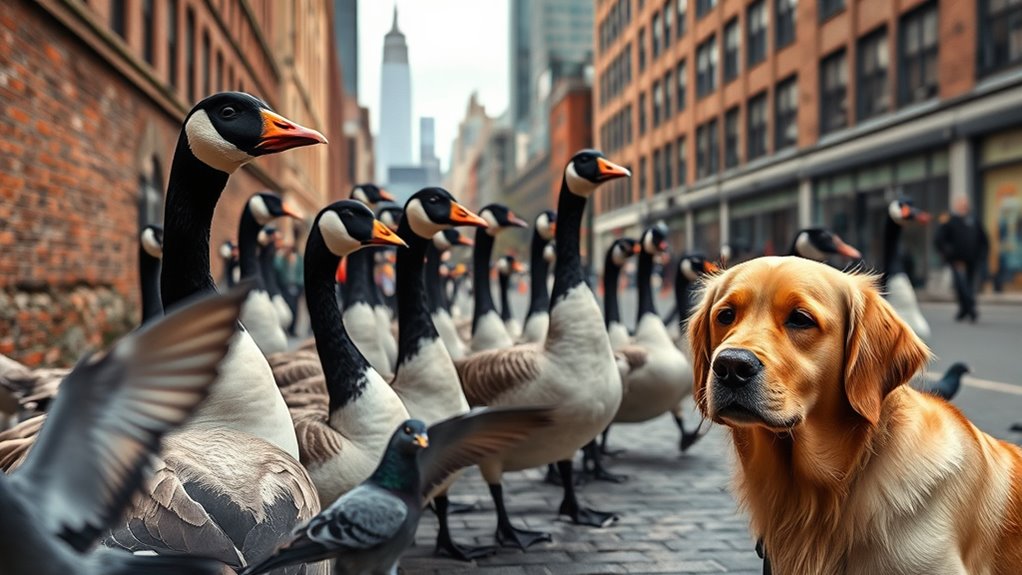

In urban areas, you’ll often encounter wildlife like dogs, geese, and more. Dogs are common pets, but you may also see stray or park dogs adapting to city life. Geese are frequently found in ponds and parks, often reacting to human activity. Other animals like foxes and migratory birds also make appearances, showing how wildlife adjusts to city environments. To understand more about these everyday encounters, you’ll discover how urban ecosystems support diverse species.
Key Takeaways
- Urban areas host diverse wildlife including dogs, geese, foxes, and migratory birds, demonstrating adaptable behaviors.
- Geese often inhabit city parks and ponds, while dogs are common pets and street animals interacting with urban environments.
- Foxes adapt to city life by scavenging food and hiding in yards or alleyways, contributing to urban biodiversity.
- Observing wildlife like geese and foxes requires respectful distance, avoiding feeding or disturbing animals.
- Maintaining green spaces supports urban wildlife, promoting coexistence and ecological health amid city development.

Urban wildlife encounters are becoming increasingly common as animals adapt to city life alongside humans. As you walk through parks, neighborhoods, or even along busy streets, you might notice birds migrating overhead, a familiar sign that nature persists amid urban chaos. During migration seasons, flocks of birds traverse the city, using tall buildings and trees as temporary stopovers. These migrations are essential for their survival, and you can witness the spectacle firsthand, often without leaving your neighborhood. Their calls echo through the air, reminding you that the city isn’t just a concrete jungle—it’s also a corridor for wildlife on the move. Watching these birds migrate offers a glimpse into the resilience of nature and highlights the importance of maintaining green spaces within urban areas to support these seasonal travelers.
Alongside these migratory birds, neighborhood foxes are increasingly making appearances in many cities. These clever animals have learned to thrive in urban environments, scavenging for food in trash cans, gardens, or alleyways. You might see a fox darting across a backyard or peering out from behind bushes, blending seamlessly into the urban landscape. Their adaptability is a proof to how wildlife can flourish despite human development. If you encounter a neighborhood fox, it’s essential to observe from a distance and avoid feeding or disturbing it. These animals play a crucial role in controlling rodent populations and maintaining a balanced ecosystem within the city. Watching a fox’s cautious movements and sharp senses can be fascinating, offering a rare glimpse into animal survival strategies in a human-dominated environment.
Both bird migration and neighborhood foxes exemplify how urban wildlife adapts to city life, often in surprising ways. You may find yourself reflecting on the interconnectedness of ecosystems as you observe these animals navigating the urban landscape. The presence of migrating birds signals the health of local habitats, while foxes demonstrate how wildlife can carve out space amidst human activity. Recognizing these signs helps foster a greater appreciation for urban biodiversity and underscores the importance of preserving natural corridors and green spaces. By keeping an eye out for these creatures, you not only enrich your understanding of city life but also become part of a larger effort to coexist peacefully with the wildlife that shares your environment. Their resilience and adaptability are silent reminders that nature continues to thrive, even in the most unexpected places.
Frequently Asked Questions
How Can I Tell if a Wild Animal Is Dangerous?
You can tell if a wild animal is dangerous by observing its behavior; animals that display aggression, hiss, growl, or make warning signs are likely a threat. Stay alert to signs of fear or stress, like rapid movements or vocalizations. For wildlife safety, always keep a safe distance and avoid trying to touch or feed wild animals. Recognizing these cues helps prevent risky encounters and keeps both you and the animal safe.
What Should I Do if I Encounter a Distressed Goose?
Imagine you’re in a scene straight out of a classic film, witnessing a distressed goose flapping wildly. Stay calm and keep your distance. Use gentle, soothing sounds and slow movements to calm it down. Follow rescue procedures by gently guiding it away from danger if needed, without forcing. Avoid sudden gestures, and give it time to settle. Your calm approach helps guarantee both your safety and the goose’s well-being.
Are Urban Wildlife Carriers of Diseases?
Yes, urban wildlife can carry wildlife diseases that may affect you or your pets. These animals, like geese and stray dogs, sometimes harbor illnesses impacting urban animal health. To stay safe, avoid direct contact with wild animals and their droppings. Practice good hygiene, wash your hands after outdoor activities, and keep your pets vaccinated. Recognizing potential risks helps prevent the spread of wildlife disease in your city environment.
How Can I Safely Feed Urban Wildlife?
Ever wondered how to feed urban wildlife safely? You should follow proper feeding etiquette by offering small amounts of appropriate food and avoiding human snacks. Always observe wildlife from a distance, practicing respectful wildlife observation, to prevent stress or harm. Remember, feeding can inadvertently cause dependency or health issues. By being considerate and cautious, you help protect these animals while enjoying their presence responsibly. Wouldn’t you want to guarantee their well-being?
What Are Legal Considerations for Interacting With Urban Animals?
When interacting with urban animals, you must consider wildlife conservation laws and local regulations. Always respect wildlife and avoid disrupting their natural behavior, as urban animal behavior can be unpredictable. Check if feeding or approaching animals is permitted in your area, and follow guidelines to prevent harm or habituation. By doing so, you help protect urban wildlife while enjoying safe, responsible interactions that support healthy ecosystems.
Conclusion
As you walk through city streets, you see dogs trotting, geese waddling, and squirrels darting. You hear their calls, feel their presence, and witness their resilience. You share moments with these creatures, embracing their wildness amid concrete jungles. You watch, you listen, you connect. In this bustling world, their lives intertwine with yours—reminding you that nature’s spirit thrives everywhere, alive and vibrant, just waiting for you to notice, to appreciate, and to protect.