To stop disc brake rub quickly, start by checking and realigning your calipers to make certain they sit evenly around the rotor. Next, spin the wheel to see if the rotor is warped; gently true it if needed or replace it if seriously bent. Clean the rotor and pads with isopropyl alcohol to remove dirt and oil. Regular inspection and maintenance help prevent future rubbing, and following the full guide will reveal even more effective solutions.
Key Takeaways
- Ensure caliper is properly aligned and securely tightened around the rotor.
- Check and true the rotor to eliminate warping or wobbling.
- Inspect brake pads for uneven wear and replace if necessary.
- Clean rotor and pads with isopropyl alcohol to remove dirt and oil.
- Test wheel spin and brake application, readjust caliper and rotor if rubbing persists.

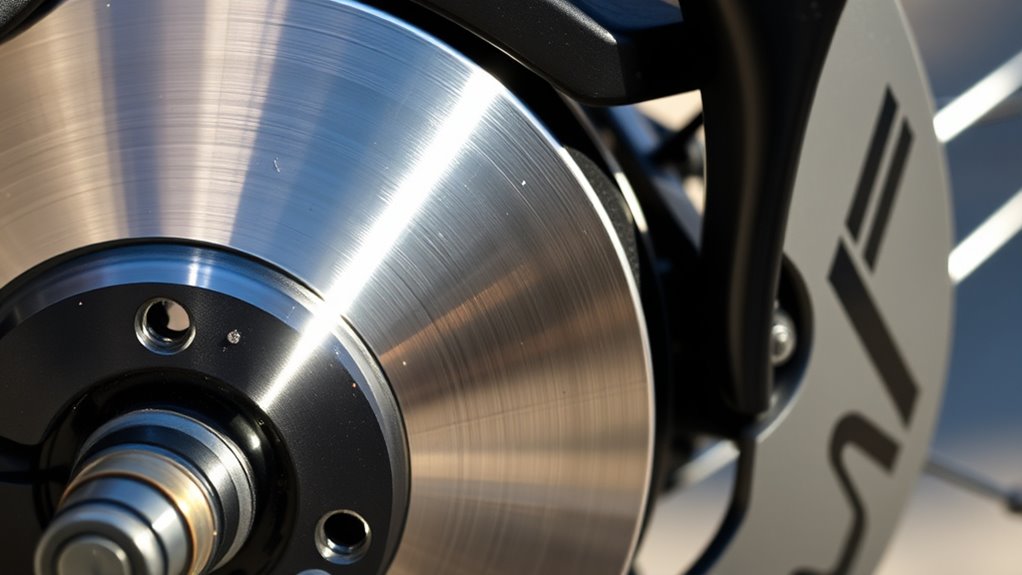
If your disc brakes are rubbing against the rotor, it can cause noise, uneven wear, and reduced braking efficiency. The first step to fixing this issue is to focus on caliper alignment. A misaligned caliper often causes the brake pads to contact the rotor unevenly, leading to persistent rubbing. To correct this, loosen the mounting bolts slightly so you can move the caliper freely. Then, carefully align the caliper so that the brake pads sit evenly around the rotor’s surface. Once you’re satisfied with the position, tighten the bolts securely. Proper caliper alignment ensures the pads press evenly against the rotor, preventing unnecessary contact and noise.
Align the caliper evenly around the rotor to prevent rubbing and noise.
Next, check the rotor trueness. Over time, rotors can become warped or bent, which results in uneven contact with the brake pads. To assess rotor trueness, spin the wheel and observe the rotor edges for wobbling or irregular movement. If you notice a wobble, you’ll need to true the rotor. This involves gently adjusting the rotor so it spins smoothly without wobbling. You can do this with a rotor truing tool or by carefully bending the rotor slightly with your fingers, but be cautious to avoid cracks or further warping. If the rotor is severely warped or damaged, replacing it is the best option. Ensuring rotor trueness is essential for smooth braking and eliminating that annoying rub.
Once you’ve addressed caliper alignment and rotor trueness, it’s a good idea to double-check the brake pads. Worn or uneven pads can also cause rubbing. If the pads are worn down unevenly, replace them. When installing new pads, make sure they’re seated correctly and move freely within the caliper. Sometimes, debris or dirt trapped between the pads and rotor can cause rubbing as well. Clean the rotor and pads with isopropyl alcohol and a clean cloth to remove any grit or oil.
Finally, test your brakes by spinning the wheel gently and applying the brake lever. The rotor should stop the wheel smoothly without contact or noise. If you still hear rubbing, recheck caliper alignment and rotor trueness. Regular maintenance, including cleaning and inspecting your disc brakes, will help prevent future issues. Keeping everything aligned and true ensures your brakes function efficiently and quietly, giving you safer, more reliable stopping power every ride. Additionally, incorporating performance upgrades like upgraded brake components or calipers can further enhance your braking performance and prevent issues like rub in the future.
Frequently Asked Questions
Can Disc Brake Rub Cause Long-Term Damage to My Wheels?
Disc brake rub can cause long-term damage to your wheels if left unchecked. It may lead to rim warping, which distorts the wheel’s shape, and could eventually result in wheel damage. Over time, the constant friction wears down the rim and brake components, potentially reducing your bike’s performance and safety. To prevent this, address brake rub promptly and regularly inspect your wheels for signs of damage.
How Often Should I Check for Brake Rub Issues?
Think of your bike as a heartbeat; regular checks keep it strong. You should inspect for brake rub weekly, especially if you notice uneven brake pad wear or rotor warping. These signs signal potential issues that could worsen over time. By staying vigilant, you prevent long-term damage, ensuring smooth rides. Quick, consistent checks help catch problems early, maintaining your bike’s health and your safety on every journey.
Is Brake Rub More Common in Certain Bike Types?
Brake rub is more common in certain bike types, especially those with carbon bike frames or lightweight alloy frames that can flex slightly under pressure. Your bike’s frame compatibility and brake pad materials also play a role; incompatible or low-quality pads may cause rubbing. To prevent this, make certain your brake calipers are properly aligned and your brake pads suit your bike’s material. Regular checks help catch issues before they worsen.
Can Temperature Changes Affect Disc Brake Alignment?
Yes, temperature changes can affect disc brake alignment due to thermal expansion. Metal components expand with heat, which may cause misalignment or brake rub. When it gets hot, you might notice increased rubbing or reduced braking efficiency. To fix this, perform misalignment correction by carefully adjusting the calipers. Regularly check your brakes after temperature fluctuations to guarantee they stay properly aligned and avoid unnecessary wear or noise.
What Tools Are Recommended for Minor Brake Adjustments?
You should use a hex wrench or Allen key to make minor brake adjustments, focusing on caliper alignment to guarantee it sits straight over the rotor. A rotor truing tool can help straighten any warped rotors, reducing rub. Also, a spoke wrench can be useful if you need to slightly realign the wheel itself. These tools help you precisely adjust your brakes for smooth, squeal-free riding.
Conclusion
Now that you know simple fixes for disc brake rub, you can save time and avoid costly repairs. Just a slight adjustment can make your ride smoother and safer. Did you know that brake issues cause over 20% of cycling accidents? Imagine yourself cruising without squeaks or rubbing sounds—feeling confident and in control. With these quick fixes, you’ll keep your bike in top shape and enjoy every ride to the fullest.